It is one of the smallest details in a tile job, yet it makes the difference between a project that looks finished and one that looks unfinished: the edge. A bullnose corner tile gives outside corners and exposed edges a smooth, rounded, professional finish that hides raw tile edges and protects them from chipping. If you are planning a backsplash, wainscot, or shower, understanding your edge options will help the whole installation look polished.
- What Is a Bullnose Corner Tile
- Why Edge Finishing Matters
- Types of Bullnose and Corner Pieces
- Where to Use Bullnose Corner Tile
- What Bullnose Corner Tile Costs
- Installation Tips
- Alternatives When Bullnose Is Not Available
- Choosing the Right Edge for Your Style
- How to Measure and Order Bullnose Pieces
- Bullnose on Floors and Steps
- Final Thoughts on Bullnose Corner Tile
What Is a Bullnose Corner Tile
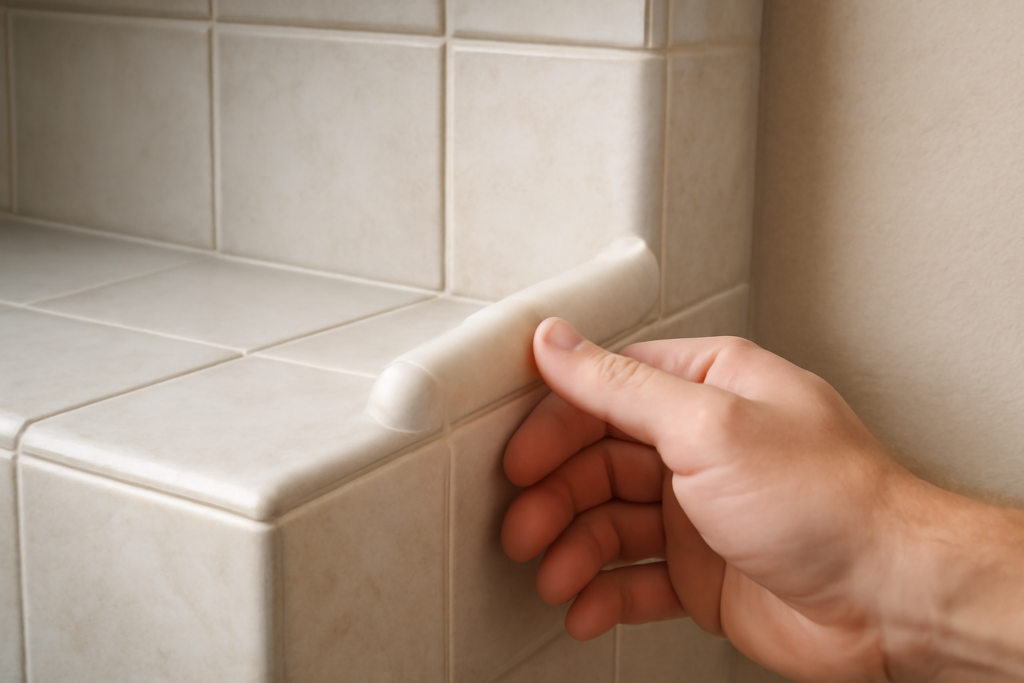
A bullnose tile has one or more edges finished with a rounded, glazed profile rather than a raw, cut edge. A standard bullnose has one rounded edge to finish the top or side of a tiled area. A corner bullnose, sometimes called a down-angle or double bullnose corner, has two adjoining finished edges so it can wrap a vertical outside corner cleanly, such as where a tiled column or the edge of a shower wall meets open wall. That rounded, glazed corner both looks intentional and shields the vulnerable tile edge from damage.
Why Edge Finishing Matters
Field tiles have unfinished edges that are never meant to be seen. When a tiled area ends at an outside corner or an exposed border, leaving those raw edges visible looks sloppy and invites chipping. A proper edge treatment solves several problems at once:
- It conceals the raw, unglazed tile body for a clean, finished appearance.
- It protects the fragile edge from chips and cracks over time.
- It creates a comfortable, rounded transition that is easier to clean.
- It signals craftsmanship, the mark of a job done right.
Types of Bullnose and Corner Pieces
Bullnose comes in several forms to handle different situations. Knowing the vocabulary helps when ordering:
- Single bullnose: one rounded edge, used to finish the top of a backsplash or the border of a wainscot.
- Double bullnose: two opposite rounded edges, for finishing both sides of a narrow band or step.
- Bullnose corner (down-angle): two adjoining rounded edges that wrap an outside vertical corner.
- Quarter-round and pencil trim: narrow rounded trim pieces for edges and transitions.
Not every tile line offers matching bullnose, which is an important detail to check before you commit to a tile, because a missing bullnose can force you into an alternative edge treatment.
Where to Use Bullnose Corner Tile
Bullnose corner pieces appear wherever tile turns an exposed outside corner or ends at a visible edge. Common applications include the outside corners of shower walls and curbs, the vertical edges of a tiled wainscot, the ends of a backsplash, tiled columns and half-walls, window and niche returns, and the front edge of tiled steps. Anywhere the eye can see the thickness of the tile, a bullnose or comparable trim gives a clean, finished result.
What Bullnose Corner Tile Costs
Because bullnose pieces are specialty items produced in smaller quantities, they cost more per piece than field tile. Individual bullnose corner pieces often run a few dollars to $10 or more each depending on the tile line and material, and premium or natural stone bullnose can cost considerably more. Since you typically need only a handful for the exposed edges of a project, the total is usually modest. Order extras, though, because matching the exact tile and dye lot later can be difficult or impossible.
Installation Tips
Installing bullnose corner tile is mostly about planning and alignment. Map out where your finished edges will fall before you start setting field tile, so the bullnose lands cleanly at corners and borders without awkward slivers. Set bullnose pieces with the same thinset and spacing as the field tile so grout lines stay continuous. At an outside corner, a bullnose corner piece should wrap the edge so both faces show a rounded, glazed profile. Take extra care with alignment here, since corners are highly visible and any misalignment stands out.
Alternatives When Bullnose Is Not Available
Many modern tiles, especially through-body porcelain and large-format lines, do not offer matching bullnose. Fortunately, there are excellent alternatives:
- Metal or PVC edge trim (Schluter-style): a strip installed at the edge that gives a crisp, contemporary finish in various metals and colors.
- Mitered edges: two tiles cut at 45 degrees and joined to form a seamless corner, a high-end look that requires skilled cutting.
- Rail or pencil trim: decorative narrow pieces that cap an edge.
Metal trim has become the modern default for many designers because it works with any tile and reads clean and current.
Choosing the Right Edge for Your Style
The edge treatment you pick shapes the overall feel of the room. Bullnose gives a soft, traditional, rounded look that suits classic and transitional interiors. Metal trim reads sharp and modern. Mitered edges deliver a nearly seamless, luxurious result. Consider your tile, your budget, and your aesthetic together; a heritage subway-tile bath may call for classic bullnose, while a sleek large-format shower may look best with slim metal trim or mitered corners.
How to Measure and Order Bullnose Pieces
Ordering the right quantity of bullnose corner tile takes a little forethought, because these pieces are specialty items you may not be able to reorder later in a matching lot. Walk your project and identify every exposed edge and outside corner before you buy. Then tally the pieces you need based on the linear footage of finished edge and the height of the tile. A simple method:
- Measure the total linear length of each exposed edge that needs finishing.
- Divide by the length of one bullnose piece to get the count per edge.
- Add a piece for each outside corner where you need a bullnose corner (down-angle) unit.
- Order 15 to 20 percent extra to cover cuts, breakage, and future repairs.
Because bullnose pieces are produced in smaller runs, confirm availability and lead time when you order your field tile, so you are not left waiting on trim after the main tile has arrived.
Bullnose on Floors and Steps
While bullnose is most associated with walls and backsplashes, it also plays an important role on floors, particularly at steps and edges where a tiled surface drops off. A bullnose or matching stair-tread piece finishes the front edge of a tiled step cleanly and safely, softening what would otherwise be a sharp, chip-prone corner. On raised hearths, tiled platforms, and pool coping, bullnose or specialized edge trim creates a smooth, rounded transition that is both attractive and comfortable to walk on. For these applications, slip resistance and durability matter even more than on walls, so choose a floor-rated tile with a matching bullnose or a metal edge trim designed for floor use. Planning these edges into the layout from the start ensures the finished floor looks deliberate and professional rather than abruptly cut off.
Final Thoughts on Bullnose Corner Tile
It is easy to overlook, but edge finishing is exactly the kind of detail that separates a professional installation from an amateur one. A bullnose corner tile offers a time-tested way to wrap exposed outside corners with a smooth, protected, glazed edge. Before you buy your tile, confirm whether matching bullnose exists; if it does not, metal trim or mitered corners give you a clean alternative. Plan your finished edges early, install them with care, and your tiled surfaces will look intentional and complete from every angle.
The best time to make these decisions is before you purchase your field tile, not after. Ask your supplier upfront whether matching bullnose and corner pieces exist for the tile you love, and if they do not, decide then whether metal trim or mitered edges will give you the finish you want. Factoring edge treatments into your plan and budget from the start prevents the all-too-common scramble at the end of a project, when the field tile is set and there is no clean way to finish an exposed corner. A little foresight on these small pieces pays off in a result that looks polished and professionally executed rather than left unfinished.
Prefer to explore on your own?
See how new flooring looks in your actual room in seconds — free, no signup.
Try the free Floor Studio →