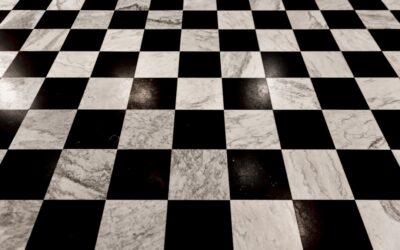
Checkerboard bathroom tile is one of the few floor patterns that looks equally right in a 1920s bungalow and a brand-new build, but it is also one of the easiest to get wrong in a small room. The pattern is unforgiving: an off-center layout leaves half squares at the tub, a busy color pair makes a 5 by 8 foot bath feel cramped, and the wrong grout turns crisp squares into a muddy grid. The three choices that decide the outcome are tile size, color contrast and where the first tile goes.
Part of our Bathroom Remodeling & Flooring guide — explore the full guide →
Bathrooms add their own wrinkles compared with a kitchen or entry. Floors are small, broken up by a toilet, vanity and tub, and they get wet, so slip resistance and grout performance matter. Plan for those up front and a checkered bathroom floor can be the strongest design element in the house.
- Why Checkerboard Bathroom Tile Works in Small Spaces
- Color Pairings Beyond Black and White
- Choosing the Right Tile Size: 8×8 vs 12×12 and Beyond
- Square Set vs Diagonal Set
- Planning the Layout Around Fixtures
- Grout Color and Spacing
- Cutting Tile Safely
- Troubleshooting Common Problems
- Cost Ranges and When to Hire a Pro
- Frequently Asked Questions
Why Checkerboard Bathroom Tile Works in Small Spaces
A repeating two-color grid gives the eye a rhythm to follow, which can make a small floor read as more deliberate and even larger, as long as scale and contrast match the room. Checkerboard tiles in a bathroom also hide minor dirt and water spots better than a single solid color, especially when the two tones are close in value. And because the pattern is classic, it pairs with almost any vanity, from a painted cabinet to a floating wood unit.
Where it struggles is with heavy contrast in a very small room, or with tiles so large that only a handful of squares fit between the walls. A floor with only three full squares across rarely looks like a checkerboard; it looks like a mistake.
Color Pairings Beyond Black and White
Black and white is the default, and for good reason, but softer or warmer pairs often suit modern bathrooms better. Think about contrast level first: high contrast is graphic and energetic, low contrast is calm and textural.
- Cream and terracotta: Warm and Mediterranean. Works with brass fixtures and wood vanities.
- White and sage or olive green: Fresh and natural, a popular choice with plaster-look walls and plants.
- Soft white and pale gray: Low contrast, nearly a texture. Best for very small or windowless baths.
- Navy and white: Crisp and coastal, slightly softer than black.
- Charcoal and warm gray: A modern, moody option that hides dirt well.
- Blush and burgundy or butter yellow and white: Retro-inspired, best when walls and fixtures stay neutral.
Pull one color from something already fixed in the room, such as a tub surround, a wall tile or the vanity top. If the walls are busy (patterned wallpaper, colorful zellige-style tile), choose a lower-contrast floor so the two do not compete.
Choosing the Right Tile Size: 8×8 vs 12×12 and Beyond
Scale is the most important decision for checkerboard bathroom tile. A useful test: you want at least six to eight full squares across the narrowest open part of the floor.
| Tile size | Best for | Look |
|---|---|---|
| 1×1 or 2×2 mosaic | Showers, tiny powder rooms | Vintage, very traditional |
| 4×4 to 6×6 | Small baths and half baths | Classic, busy but balanced |
| 8×8 | Most small to mid-size baths | Crisp, modern-classic |
| 12×12 | Larger primary baths | Bold, graphic |
In a typical 5 by 8 foot hall bathroom, 8×8 tiles give about seven squares across the width, which reads as a true checkerboard. Twelve-inch tiles fit only about five, and the toilet and vanity cover several of those. For a primary bath 10 feet or wider, 12×12 looks proportional and means fewer grout lines to clean.
Porcelain floor tile is the practical choice for most bathrooms. It absorbs very little water, resists stains, and many lines come in matched pairs of colors in the same size and thickness, which matters because mixing two products with different thicknesses creates lippage at every corner. Check that both colors share the same calibrated size and look for a slip resistance rating appropriate for wet interior floors. Matte or lightly textured finishes are safer underfoot than polished.
Square Set vs Diagonal Set
A straight, square-set checkerboard runs the grout lines parallel to the walls. It looks orderly and is easier to install, with fewer cuts. A diagonal set turns the grid 45 degrees, creating a diamond pattern. Diagonal layouts tend to make narrow bathrooms feel wider, draw the eye across the room, and disguise walls that are slightly out of square, but they need more cuts and more tile.
- Choose square set for a cleaner, modern look, a straightforward DIY install, or when tiles are large.
- Choose diagonal set for a long, narrow room, a vintage feel, or walls that are visibly out of square.
- Waste factor: Plan about 10 percent extra for square set and 15 percent for diagonal.
Planning the Layout Around Fixtures
The pattern only looks right if it is centered on what people see first. In most bathrooms that is the doorway view, not the back wall. Snap a centerline from the middle of the doorway into the room, then a perpendicular line across, and dry-lay a row of tiles in each direction. Adjust so cut tiles at the walls are at least half a tile wide, and so the door threshold gets a full or nearly full square.
- Remove the toilet and, if possible, the vanity, so tile runs under them.
- Snap chalk lines from the doorway centerline and check them against the tub face.
- Dry-lay both colors, starting with the color you want at the threshold.
- Shift the grid to balance cuts at opposite walls.
- Mark the toilet flange and plan the cut tile around it, keeping both colors in sequence.
- Set tiles in small sections with the correct trowel notch and check for lippage often.
Keep the alternating sequence perfect, even under the vanity toe kick. One reversed tile is surprisingly visible once the floor is grouted.
Grout Color and Spacing
Grout either sharpens a checkerboard or blurs it. A mid-tone grout that falls between the two tile colors is the safest choice; it disappears into both colors and lets the pattern carry the design. Matching the lighter color makes dark squares pop but shows dirt in high-traffic paths. Matching the darker color hides stains but can outline the light tiles in a way that looks busy.
Use a narrow joint, often 1/16 to 1/8 inch for rectified porcelain and 1/8 to 3/16 inch for tiles with softer edges. In bathrooms, consider a stain-resistant grout or apply a penetrating sealer to cement grout once it cures, then reseal as recommended.
Cutting Tile Safely
Porcelain and ceramic dust contains crystalline silica, which damages lungs when inhaled. Use a wet tile saw for straight and diagonal cuts so water captures the dust, and wear an N95 or better respirator when grinding notches, drilling or using a dry blade. Eye protection is a must because porcelain chips fly. Clean up with a HEPA vacuum or wet mopping instead of dry sweeping, and keep the area ventilated.
Troubleshooting Common Problems
- Pattern drifts off line: Snap new reference lines every few rows and use spacers consistently.
- Lippage at corners: Choose two colors from the same product line and thickness, back-butter tiles, and consider a leveling clip system.
- Thin slivers at the tub: Re-center the grid before setting; slivers are a planning issue, not a cutting one.
- Dark tiles show water spots: Pick a matte finish or a medium-dark color instead of glossy black.
Cost Ranges and When to Hire a Pro
Basic porcelain in standard colors sits at the low end of the tile market, while handmade-look, encaustic-style or specialty-color tiles can cost several times more per square foot. Because bathrooms are small, material is often a smaller part of the budget than labor. Professional installation for a patterned floor usually costs more than a solid floor because layout and cuts take longer, and a diagonal set adds more. Hire a tile contractor if the subfloor flexes, the room is badly out of square, or the bath has radiant heat under the tile. A licensed plumber should handle any toilet flange repairs or supply line changes.
Frequently Asked Questions
Is checkerboard tile good for a small bathroom?
Yes, when the tiles are small enough to show at least six full squares across the room and the colors are not too high in contrast. 4×4 to 8×8 tiles usually work best.
What size tile is best for a checkered bathroom floor?
8×8 is the most versatile size for small and mid-size bathrooms. Larger primary baths can handle 12×12 tiles.
Should checkerboard tile be laid diagonally?
It depends on the room. Diagonal layouts widen narrow rooms and hide out-of-square walls; square layouts are cleaner and easier to install.
What grout color goes with black and white checkerboard tile?
A medium gray is the most forgiving choice. It blends into both colors and hides dirt better than white grout.
Can I put checkerboard tile on a shower floor?
Yes, using small mosaic tiles that can follow the slope to the drain. Choose porcelain with good slip resistance and a sealed or stain-resistant grout.
Prefer to explore on your own?
See how new flooring looks in your actual room in seconds — free, no signup.
Try the free Floor Studio →