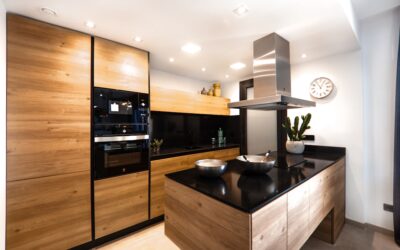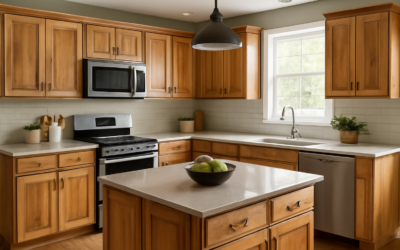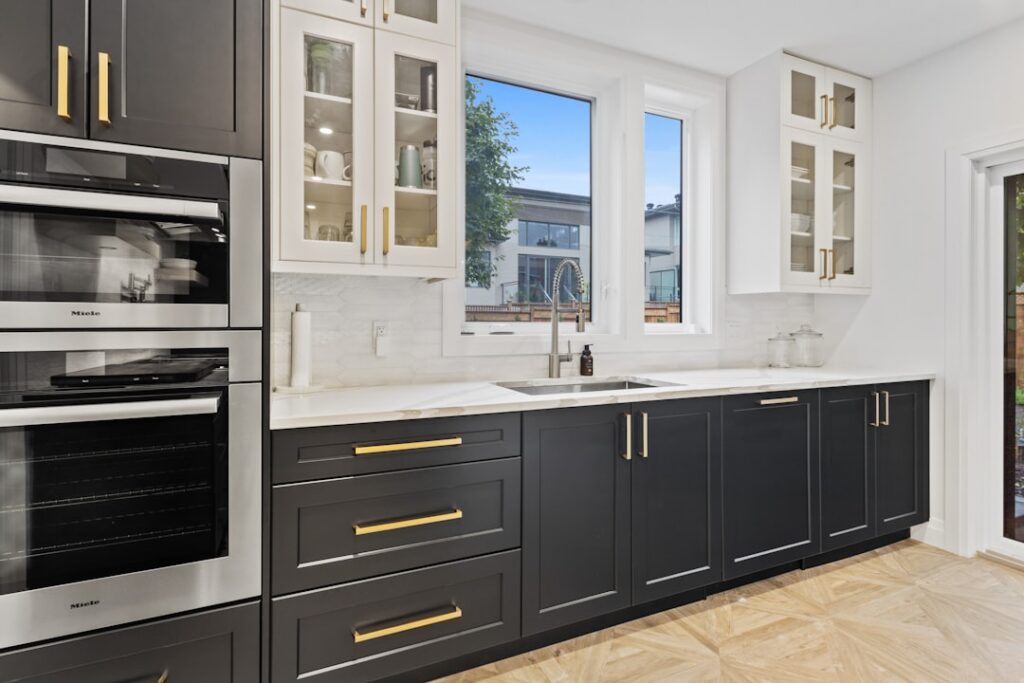
Dark cabinetry remains one of the most requested looks in renovations, and design surveys consistently show that deep navy, charcoal, forest green, and near-black finishes account for a large share of new kitchen installations. Choosing the right color schemes for kitchens with dark cabinets is what separates a moody, sophisticated space from one that feels like a cave. The cabinets set the tone, but the walls, countertops, flooring, hardware, and lighting decide whether the room reads as elegant or oppressive. At D and G Flooring we help homeowners coordinate these decisions every day, and the principles below will keep your kitchen feeling balanced and intentional.
Part of our Kitchen Remodeling guide — explore the full guide →
Why Dark Cabinets Need a Deliberate Plan
Dark surfaces absorb light, so a kitchen with dark cabinets can lose 20 to 30 percent of its perceived brightness compared with a white kitchen of the same size. That is not a flaw, it is simply a constraint to design around. The goal is contrast and reflection: you want at least one bright element to bounce light and several mid-tone elements to bridge the gap between the dark cabinets and the lighter accents. When every surface is dark, the eye has nothing to rest on. When you add deliberate contrast, the cabinets become a dramatic feature rather than a heavy mass.
Wall Colors That Complement Dark Cabinets
Walls are your largest opportunity to add light back into the room. The safest and most effective choice is a warm white or soft greige, which reflects light and lets the cabinets stand out as the star. Consider these directions:
- Warm white and cream walls create crisp contrast and keep the room feeling open and clean.
- Soft gray and greige walls produce a refined, modern look that softens the jump from dark to light.
- Muted sage or pale blue walls add subtle color while still reflecting plenty of light.
- Tonal deep walls, such as a charcoal cabinet paired with a slightly lighter gray wall, create a cocooning, high-end feel but require excellent lighting to succeed.
If your kitchen has limited natural light, lean toward the brightest wall option you are comfortable with. Save bold or dark walls for kitchens with large windows or strong artificial lighting.
Countertop Pairings
Countertops sit directly against the cabinets, so the contrast there is the most noticeable in the entire room. Light countertops are the classic counterbalance. A white or light gray quartz with subtle veining brightens the workspace and reads as timeless. Warm-toned stone with beige and cream movement softens black or espresso cabinets and adds organic interest. For a bolder, more contemporary statement, some homeowners choose a dramatic dark countertop with bright white veining, which keeps the dark palette but introduces the necessary light through the pattern. Avoid matching the countertop too closely to the cabinet color unless there is a strong vein or texture to create separation, or the two surfaces will blur into one heavy block.
Flooring Choices That Ground the Room
Flooring anchors the whole scheme, and with dark cabinets you generally have two successful strategies. The first is a light-to-medium floor, such as a warm oak, honey-toned wood-look plank, or pale stone, which creates breathing room beneath the cabinets and keeps the lower half of the kitchen from feeling top-heavy. The second strategy is a rich mid-tone floor that harmonizes with the cabinets while staying a few shades different, producing a layered, enveloping look. The pairing to avoid is matching a very dark floor to very dark cabinets with no contrast between them, which can make the room feel closed in. Whatever you choose, undertones matter: pair cool gray cabinets with floors that carry cool or neutral undertones, and warm espresso cabinets with warmer wood tones so the palette feels cohesive rather than clashing.
Hardware and Metal Finishes
Hardware is jewelry for the kitchen, and against dark cabinets the right metal pops beautifully. Brass and gold tones bring warmth and a touch of luxury, and they are especially striking on navy or green cabinets. Matte black hardware on dark cabinets creates a subtle, monochromatic look that feels modern but can disappear, so it works best when the cabinet finish has a different sheen. Polished chrome and brushed nickel offer a cooler, classic option that pairs well with gray and charcoal. Pick one primary metal and repeat it on faucets, pulls, and light fixtures so the room feels coordinated rather than collected at random.
Backsplash Strategy
A backsplash is where you can either reinforce contrast or add personality. A light subway tile or a bright slab backsplash is the most reliable way to inject light directly behind the counters. If you want more character, a tile with gentle pattern or a handmade, slightly irregular finish adds texture without overwhelming the dark cabinets. Keep grout color in mind too: a bright white grout sharpens a light backsplash, while a tinted grout softens it. The backsplash and countertop should feel like partners, so carry a shared undertone between them.
Adding Accent Colors
Once the major surfaces are set, accents bring the room to life. Because dark cabinets already provide drama, you can be playful with smaller touches. Greenery from potted herbs or a vase of cut stems is the easiest accent and reads as fresh against dark wood. Warm wood cutting boards and open shelving introduce texture and a lighter tone at eye level. Textiles such as a runner or seat cushions let you experiment with a bolder color like rust, mustard, or deep teal without commitment. The rule is restraint: choose one or two accent colors and repeat them, rather than scattering many competing hues.
Lighting Ties It All Together
No color scheme for dark cabinets succeeds without good lighting. Layer three types: ambient lighting from ceiling fixtures, task lighting under the upper cabinets where dark surfaces cast the deepest shadows, and accent lighting such as a statement pendant over an island. Aim for a neutral white color temperature in the 3,000K to 4,000K range so colors render accurately and the cabinets look rich rather than muddy. Under cabinet lighting in particular is almost mandatory with dark uppers, because it restores the light those cabinets absorb and makes the countertops usable.
Putting a Scheme Together
To pull it all into a workable plan, start with the cabinet color, then choose a bright counter and a light-to-mid floor, add a warm white or greige wall, pick one metal finish, and finish with one or two repeated accent colors. A proven example is navy cabinets, light quartz counters, warm oak flooring, soft white walls, brass hardware, and green plant accents. Another is charcoal cabinets, white veined counters, pale gray walls, light wood floors, and brushed nickel hardware. Both balance the weight of the dark cabinetry with enough light and warmth to feel inviting. With thoughtful coordination, dark cabinets deliver the depth and drama homeowners love, and the team at D and G Flooring can help you make sure the flooring underneath ties the entire palette together.