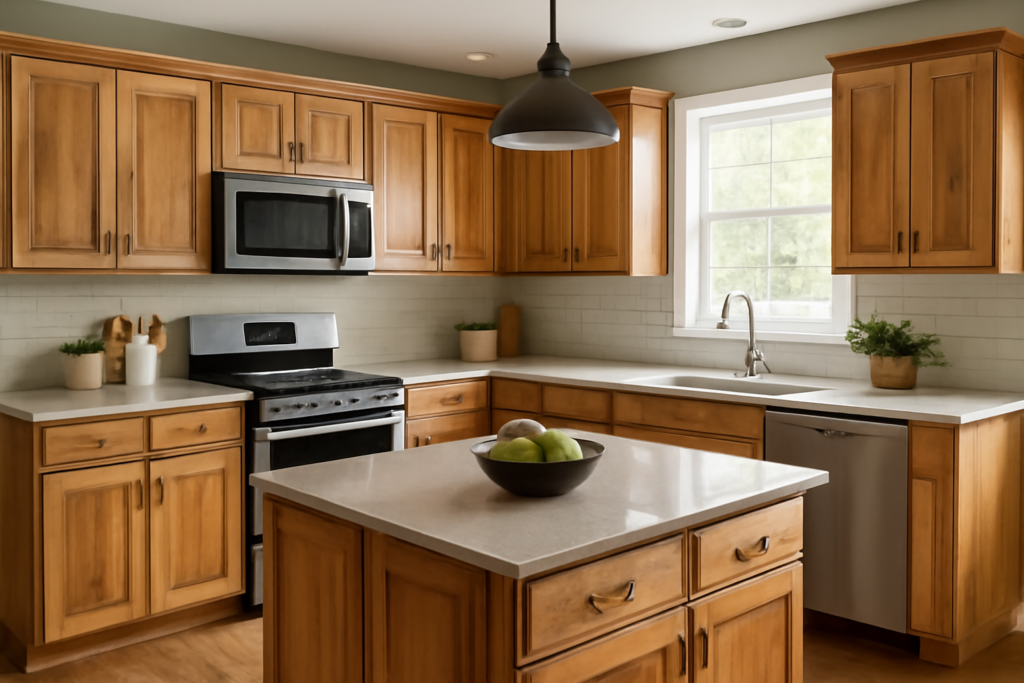
Hickory cabinets bring a bold, rustic personality to a kitchen, with dramatic grain swings from pale blond to deep reddish brown all within a single door. Choosing the right color schemes for kitchens with hickory cabinets can either tame that natural drama or celebrate it, and the wrong palette can leave the space feeling busy or dated. This guide breaks down wall colors, countertops, backsplashes, flooring, and accents so your hickory cabinets look intentional and timeless.
Part of our Kitchen Remodeling guide — explore the full guide →
- Understanding Hickory’s Unique Character
- Neutral Wall Colors That Let Hickory Shine
- Bolder Wall Colors for a Dramatic Look
- Countertop Pairings
- Backsplash Ideas
- Flooring That Complements Hickory Cabinets
- Hardware, Fixtures, and Accent Colors
- Putting It All Together: Sample Schemes
- Lighting and Its Effect on Your Palette
- Common Mistakes to Avoid
- Final Thoughts
Understanding Hickory’s Unique Character
Before picking paint chips, it helps to appreciate what makes hickory different. Hickory is one of the hardest domestic hardwoods, prized for durability, but its visual signature is the strong contrast between light sapwood and dark heartwood. A single cabinet run can show creamy tan, golden honey, amber, and chocolate tones. Because the wood is already doing so much visually, your surrounding colors should provide balance rather than compete. Think of hickory as the statement piece and everything else as supporting cast.
Neutral Wall Colors That Let Hickory Shine
Soft, warm neutrals are the safest and most popular choice because they calm the busy grain and let the cabinets stand out. Consider these options:
- Warm white and cream: Shades like antique white or soft ivory brighten the room and create a clean contrast with the wood.
- Greige: A blend of gray and beige bridges the warm and cool worlds, complementing both the light and dark streaks in hickory.
- Soft taupe: This earthy neutral echoes the mid-tones of the wood for a cohesive, grounded feel.
- Pale sage or muted green: A whisper of green adds organic freshness without overpowering the cabinets.
Avoid stark cool grays with blue undertones, which can clash with hickory’s warmth and make the wood look orange by comparison.
Bolder Wall Colors for a Dramatic Look
If you want more personality, deeper or richer wall colors can frame hickory beautifully, especially in kitchens with ample natural light. Warm terracotta, olive green, navy on an accent wall, or a deep slate blue can create a cozy, sophisticated backdrop. The key is choosing colors with enough depth to hold their own against the cabinet grain. Test large swatches on the wall and observe them at different times of day, since hickory’s warm tones shift dramatically between morning and evening light.
Countertop Pairings
Countertops sit directly against the cabinets, so their relationship matters enormously. Lighter countertops generally work best because they break up the busyness of the wood and add breathing room. Excellent choices include:
- White or cream quartz with subtle veining, which keeps the look clean and modern while resisting stains.
- Light gray granite or quartz, offering a neutral counterpoint that cools the warmth slightly.
- Speckled stone in tan, brown, and cream that picks up the cabinet tones for a harmonious blend.
- Soft beige marble-look surfaces for an elegant, airy contrast.
Very dark countertops can work in spacious, bright kitchens but risk making smaller rooms feel heavy when paired with the already dark heartwood streaks.
Backsplash Ideas
The backsplash is your opportunity to tie the palette together. A classic white subway tile keeps things crisp and timeless, letting the cabinets remain the star. For more texture, a natural stone or travertine backsplash in warm beige reinforces the rustic feel. If you crave a focal point, a mosaic with hints of green, copper, or slate can introduce an accent color you repeat elsewhere in the room. Keep the backsplash relatively simple if your countertops or cabinets are busy, so the eye has a place to rest.
Flooring That Complements Hickory Cabinets
Flooring choice can make or break the harmony of the space. The goal is contrast without conflict. If your cabinets are mid-toned hickory, avoid matching the floor exactly, which can wash everything into a single muddy blur. Instead, choose flooring a few shades lighter or darker.
- Light oak or maple flooring brightens the room and lets dark cabinet streaks pop.
- Cool gray or greige luxury vinyl plank grounds the warmth and adds a contemporary edge.
- Wide-plank wood in a contrasting tone reinforces a rustic farmhouse aesthetic.
- Natural stone or tile in warm neutrals suits both traditional and transitional kitchens.
If you want hardwood with hickory cabinets, opt for a different species or a clearly different shade to avoid an unintentional matchy effect.
Hardware, Fixtures, and Accent Colors
Finishing details pull the whole scheme together. Oil-rubbed bronze and matte black hardware emphasize hickory’s rustic roots, while brushed nickel or stainless steel lends a cleaner, more modern feel. For a warm, on-trend look, brushed brass or champagne bronze pairs beautifully with the wood’s golden tones. Choose one or two accent colors, perhaps through bar stools, dish towels, a runner, or window treatments, and repeat them around the room for cohesion. Greens, deep blues, warm rust, and creamy whites all flatter hickory.
Putting It All Together: Sample Schemes
Here are three complete palettes to inspire your own combination:
- Bright and airy: Warm white walls, white quartz counters, white subway backsplash, light oak floors, and brushed nickel hardware.
- Rustic farmhouse: Soft sage walls, speckled tan granite, travertine backsplash, wide-plank wood floors, and oil-rubbed bronze fixtures.
- Modern transitional: Greige walls, light gray quartz, simple white tile, cool gray vinyl plank flooring, and matte black hardware.
Lighting and Its Effect on Your Palette
Lighting changes everything in a hickory kitchen, so factor it into your color decisions. Hickory’s warm undertones can look golden and rich under incandescent or warm LED bulbs but slightly orange under poor lighting, so choose bulbs in the 2700K to 3000K range for a flattering, cozy glow. North-facing kitchens receive cooler natural light, which pairs nicely with warm whites and creams that add warmth back into the room. South-facing kitchens get abundant warm light, so cooler greige and soft gray walls help balance the heat. Always view paint and countertop samples in your kitchen at morning, midday, and evening, since the dramatic hickory grain shifts noticeably as the light changes. Under-cabinet lighting also enhances the wood’s depth and makes the grain pop against your chosen countertops.
Common Mistakes to Avoid
A few missteps can throw off an otherwise great hickory kitchen. Avoid these pitfalls:
- Matching the floor too closely to the cabinets, which blends everything into a muddy, indistinct mass.
- Choosing cool blue-gray walls that fight hickory’s warmth and make the wood look unnaturally orange.
- Overloading the room with busy patterns on top of the already dramatic grain, creating visual chaos.
- Picking very dark countertops in a small kitchen, which combined with the dark heartwood streaks makes the space feel heavy and cramped.
- Mixing too many accent colors, which competes with the cabinets instead of complementing them.
Final Thoughts
Hickory cabinets are full of character, so the most successful color schemes give that natural drama room to breathe. Lean on warm neutrals for walls, choose lighter countertops to balance the busy grain, keep backsplashes relatively simple, and select flooring that contrasts rather than matches. Tie everything together with intentional hardware and one or two repeated accent colors. With a thoughtful palette, your hickory kitchen will feel cohesive, inviting, and timeless. For more design and flooring inspiration to complete your project, D and G Flooring is here to guide every step.