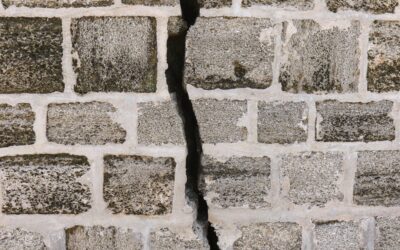
Walk the concrete aisle and you’ll find at least a dozen tubes and jugs all claiming to fix cracks, and picking the wrong one is why so many driveway repairs peel out within a year. The right concrete filler is determined by two things only: how wide the gap is and whether it moves. A hairline crack, a 1/2-inch driveway crack, and a 1-inch expansion joint are three different products — use the joint sealant on the hairline or the rigid filler on the moving joint and the repair fails either way. Here are the products that actually hold, sorted by the job.
- Match the Filler to the Crack Width
- Best for Hairline Cracks: Pourable Sealers
- Best All-Around: Polyurethane and Hybrid Caulks
- Best for Expansion Joints: Self-Leveling Sealants
- Best for Strength: Two-Part Epoxy Fillers
- Products That Disappoint
- Vertical and Overhead Gaps
- How Much to Buy: Quick Coverage Math
- Application Tips That Double the Lifespan
Match the Filler to the Crack Width
Use this quick triage before buying anything:
- Hairline to 1/8 inch: low-viscosity crack sealer or liquid filler that wicks in
- 1/8 to 1/2 inch: textured polyurethane or hybrid caulk, self-leveling on horizontal surfaces
- 1/2 to 1 inch and expansion joints: backer rod plus self-leveling joint sealant
- Structural cracks that need strength, not just sealing: two-part epoxy filler
- Wide spalls, broken edges, and holes: that’s concrete patch territory — a cement-based repair mortar with a concrete bonding agent, not a tube product
Best for Hairline Cracks: Pourable Sealers
Thin cracks need a thin product. Sakrete Concrete Crack Filler ($8–$12 per quart bottle) and Quikrete Concrete Crack Seal are pourable latex products that flow into cracks up to 1/4 inch and dry gray to blend with the slab. They’re honest budget fixes — expect to touch them up every couple of seasons. A step up, Rust-Oleum’s Concrete Patch & Crack Filler and DAP Liquid Cement Crack Filler cure harder and resist rain sooner. For hairline cracks in a garage floor about to be coated, use a fast-cure polyurea crack filler like Roadware 10 Minute Concrete Mender instead; it’s grindable in minutes and won’t shadow through a coating.
Best All-Around: Polyurethane and Hybrid Caulks
For the classic 1/4-inch driveway or sidewalk crack, a single tube of quality polyurethane sealant beats everything else per dollar. Sikaflex Concrete Fix ($8–$11 per 10.1-oz tube) is the reference product — it bonds ferociously, stays flexible through freeze-thaw, is paintable, and its textured gray blends into broom-finished concrete. Loctite PL Concrete Non-Sag is its equal for vertical and sloped work, holding position without slumping. Vulkem 116 is the spec-sheet favorite among contractors. Hybrid silane-modified polymers like Quad Max and Big Stretch’s masonry-rated cousins tool more easily and skin faster in cold weather. On any horizontal crack deeper than 1/2 inch, stuff foam backer rod in first — sealant should be roughly half as deep as it is wide, and a fat bead with no backer rod tears itself apart as the slab moves.
Best for Expansion Joints: Self-Leveling Sealants
Driveway and patio control joints move seasonally by design, so they need a self-leveling product that flows flat and stretches. Sikaflex Self-Leveling Sealant ($9–$13 per tube, about 12 lineal feet per tube on a 1/2-inch joint) is the DIY standard; Loctite PL Concrete Self-Leveling performs identically. For long runs, buy the 29-oz sausage tubes and a $30 large-format caulk gun — a typical driveway’s joints eat 4 to 8 small tubes. Rake out the old fiberboard or failed caulk, vacuum the joint, set closed-cell backer rod 1/4 to 1/2 inch below the surface, and pour. Done right, this repair lasts 10 to 15 years and keeps water from undermining the slab base — the actual point of the exercise.
Best for Strength: Two-Part Epoxy Fillers
When a crack needs to be welded rather than caulked — a cracked garage slab edge, a spalled step corner about to receive traffic — reach for structural epoxy. PC-Concrete ($20–$25 per dual cartridge) dispenses through a static mixing nozzle and cures harder than the surrounding slab; Abatron AboCrete and Simpson Strong-Tie CI-LV injection epoxy serve the same role at larger scale. Mix in clean sand to extend epoxy economically on wider gaps. Two cautions: epoxy is rigid, so it belongs only in cracks that have stopped moving, and it ambers outdoors in sunlight. For actively moving cracks, stay flexible or the crack simply reopens alongside your repair.
Products That Disappoint
Skip pure silicone on concrete — it repels the very substrate it’s supposed to grip, can’t be painted, and nothing (including fresh silicone) sticks to its residue when it fails. Cheap acrylic “concrete caulk” at $3 a tube shrinks hard and cracks within a season or two outdoors. Foam-in-a-can has no business in slab cracks. And rigid cement poured into a moving crack is a guaranteed repeat repair: the crack telegraphs right back through by spring. When in doubt about movement, choose flexible.
Vertical and Overhead Gaps
Walls, steps risers, and foundation gaps need non-sag formulas — self-leveling products simply run out of the joint. Loctite PL Concrete Non-Sag and Sikaflex Construction Sealant hold a bead on vertical faces, and Quikrete’s gray sanded acrylic caulk is a passable budget option for cosmetic mortar-joint lines. The gap where a driveway or patio meets the house foundation deserves special mention because it’s the most consequential joint on the property: water entering there runs straight down the foundation wall. Backer rod plus a generous bead of non-sag polyurethane, tooled with a soapy finger to a slight concave, seals it for a decade. For gaps wider than an inch at that junction, stuff foam backer rod deep, fill halfway with sand, then rod and seal — never try to bridge two inches of open air with sealant alone.
How Much to Buy: Quick Coverage Math
Caulk-tube coverage catches people off guard. A standard 10.1-oz tube holds about 18 cubic inches of sealant, which works out to roughly 12 lineal feet at a 1/2 x 1/4-inch bead, 24 feet at 1/4 x 1/4 inch, and only 6 feet on a fat 1/2 x 1/2-inch joint (which shouldn’t exist anyway — that’s what backer rod prevents). Walk your driveway and sidewalk with a tape measure, total the joint footage, and buy accordingly: a typical two-car driveway with three control joints plus both edges runs 60 to 80 lineal feet, or five to seven tubes of self-leveling sealant. Buy one extra — a partial tube skins over within weeks once opened, so matching a shortfall later means a fresh tube regardless. Pourable crack sealers cover about 20 to 40 lineal feet of hairline crack per quart depending on depth.
Application Tips That Double the Lifespan
Preparation is 80 percent of a filler repair. Chase the crack clean with a wire brush or an angle grinder fitted with a crack-chasing wheel, vacuum out every trace of dust, and make sure the concrete is dry — most polyurethanes won’t bond to damp walls of a crack. Apply between 40°F and 90°F, tape both sides of visible joints for straight lines, and give self-leveling products 24 hours before foot traffic and 72 before tires. Cut caulk-tube tips smaller than feels right — a 1/4-inch opening gives control a 1/2-inch gash never will, and you can always trim more. Broadcast a pinch of dry sand over the wet bead where you want the repair to disappear into a broom finish. Timing the work seasonally helps too: fill joints in spring or fall when the slab sits mid-range in its expansion cycle, so the sealant isn’t installed at maximum stretch or maximum compression. And inspect your work each spring — a filler bead that has pulled away from one wall of the joint is telling you the crack moved more than the product could handle, which means stepping up to a higher-movement sealant on the redo rather than recaulking with the same tube. Total cost for a typical driveway’s worth of concrete filler work: $40–$100 in materials and an afternoon — against $150–$400 for a pro to do the same joints.