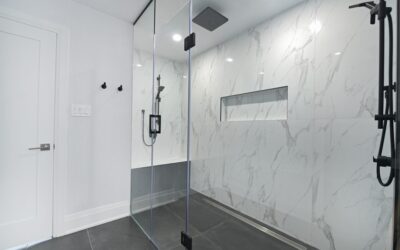
A frameless glass shower door is the single upgrade that makes a bathroom feel like a high-end hotel. Instead of the bulky aluminum frame, plastic tracks, and often frosted glass of a traditional framed enclosure, a frameless door is made of thick, self-supporting tempered glass held by minimal hardware, hinges, clips, and a handle, so the glass appears to float. The result is an open, uninterrupted view that shows off your tile, makes small bathrooms feel larger, and reads as clean and modern. That elegance comes at a higher price and demands precise installation, but for many homeowners it is the finishing touch that justifies an entire shower remodel. This guide walks through how frameless doors work, glass and hardware choices, real costs, cleaning, and the mistakes that cause leaks and heartbreak.
Part of our Bathroom Remodeling & Flooring guide — explore the full guide →
Framed vs. Frameless vs. Semi-Frameless
Understanding the categories clarifies why frameless costs more:
- Framed: Thin (usually 3/16 inch) glass supported by a metal frame around all edges. The frame provides structure and water containment, so the glass can be thin and cheap. Reliable but dated-looking, and the tracks collect grime.
- Semi-frameless: A hybrid with a frame on some edges but frameless on others (often the door itself). A middle-ground look and price.
- Frameless: Thick (3/8 to 1/2 inch) tempered glass that supports its own weight with only hinges and clips. No perimeter frame, giving the clean, open look. More glass, more precision, more money.
Glass Thickness and Type
Because a frameless door has no frame to hold it rigid, the glass itself must be thick enough to be self-supporting. Standard options:
- 3/8 inch (10mm): The common, cost-effective frameless thickness. Sturdy and appropriate for most doors and panels.
- 1/2 inch (12mm): Heavier, more substantial feeling, and often used for larger panels or a more luxurious look. Costs more and needs beefier hinges.
All shower glass must be tempered safety glass, which is heat-treated to be far stronger and to shatter into small, dull cubes rather than dangerous shards if it ever breaks. Beyond thickness, consider:
- Low-iron (ultra-clear) glass: Standard glass has a faint green tint, most visible on thick edges. Low-iron glass looks truly colorless and premium, worth the upcharge on a showpiece shower.
- Protective coatings: Factory-applied coatings (like Diamon-Fusion or ClearShield) fill the microscopic pores in the glass so water and soap sheet off, dramatically reducing spotting and cleaning. Highly recommended.
- Textured or tinted glass for privacy, though it reduces the open look most people want from frameless.
Hardware and Configuration
The hardware is both structural and decorative. Hinges mount the door to the wall or to a fixed glass panel and come in finishes to match your fixtures, chrome, brushed nickel, matte black, brushed gold, and more. Clips secure fixed panels. A handle or towel bar completes the door.
Configurations include a single swinging door, a door plus a fixed return panel, a corner enclosure with two panels, or a door beside a stationary “inline” panel. Frameless doors typically swing outward (and can be set to swing both ways), and they need a small gap around the edges, which is where water management becomes important.
Do Frameless Doors Leak?
This is the top concern, and the honest answer is that frameless doors have small gaps at the hinges and edges that framed doors seal with tracks. Well-designed installations manage this with clear vinyl or silicone sweeps along the bottom and edges, a slight slope of the shower floor toward the drain, and proper positioning of the shower head so it does not spray directly at the door gap. When designed and installed correctly, a minor amount of water at the threshold is normal but leaks are not a real problem. Poor design, spraying water straight at the opening or a dead-flat floor, is what causes puddles.
What a Frameless Glass Shower Door Costs
Frameless is a premium product with premium pricing:
- Single frameless door (stock size): roughly $900 to $1,600 installed.
- Door plus fixed panel: roughly $1,300 to $2,500 installed.
- Custom corner or large enclosure: $2,500 to $5,000+ depending on glass, coatings, and hardware finish.
Cost drivers include glass thickness, low-iron glass, protective coating, hardware finish (matte black and gold cost more than chrome), custom sizing, and whether the opening is out of square. Because frameless glass is heavy and precisely cut, professional templating and installation are strongly recommended over DIY.
Why Professional Installation Matters
A frameless door is heavy, up to 80 to 100 pounds of glass, and it cannot be trimmed after tempering. Installers template the exact opening (which is rarely perfectly square in a real bathroom), the glass is cut and tempered to that template, and the hinges must anchor into blocking behind the tile to carry the weight safely. Get any measurement wrong and you are buying a new panel. This is why frameless doors are ordered and installed by glass specialists, and why DIY is risky unless you are very experienced.
Cleaning and Maintenance
The open glass that makes frameless doors beautiful also shows every water spot, so maintenance habits matter:
- Squeegee after every shower. A quick pass removes the water that dries into mineral spots, the single best habit for keeping glass clear.
- Get a protective coating. Factory coatings make water bead and roll off, cutting spotting dramatically.
- Clean with the right products. Use a glass cleaner or a vinegar-water solution for hard-water film; avoid abrasive pads that scratch.
- Ventilate with a good exhaust fan to reduce mildew on hardware and sweeps.
Pros and Cons
Pros: stunning open look, makes bathrooms feel larger, shows off tile, no metal frame to collect mold and grime, durable thick glass, and it adds resale appeal.
Cons: significantly more expensive, requires professional templating and install, shows water spots without diligent squeegeeing, small edge gaps require thoughtful design, and heavy glass is unforgiving of measurement errors.
Common Mistakes to Avoid
- Aiming the shower head at the door opening, the most common cause of water escaping.
- A dead-flat shower floor with no slope toward the drain, letting water migrate to the door.
- Skipping the protective glass coating, then fighting hard-water spots forever.
- Installing hinges without solid blocking behind the tile, so heavy glass loosens.
- Attempting DIY with mis-measured openings, resulting in a costly wrong-size panel.
- Choosing standard glass over low-iron on a showpiece shower, then noticing the green tint on the edges.
Measuring, Ordering, and Lead Times
Because frameless glass is cut and tempered to exact dimensions and cannot be altered afterward, the ordering process is more involved than picking a stock framed door off a shelf. The typical path starts with a consultation where you choose glass thickness, whether to add low-iron glass and a protective coating, the hardware style and finish, and the door configuration. The installer then returns to template the opening, taking precise measurements and accounting for the fact that walls, curbs, and tile are almost never perfectly plumb or level. That template goes to the glass fabricator, who cuts, polishes the edges, drills the hinge holes, and tempers the panel.
Plan for a lead time of roughly two to four weeks between templating and installation while the custom glass is fabricated, sometimes longer for specialty glass or finishes. This means coordinating with your tile work: the tile and any blocking behind it must be finished before templating, because the glass is measured to the finished surfaces. Rushing this sequence, templating before the tile is set, is a recipe for a door that does not fit.
It also pays to plan the blocking during rough-in. Hinges carry the full weight of heavy glass, so solid wood blocking should be installed behind the tile wherever a hinge or heavy clip will anchor, well before the tile goes up. If you are remodeling, tell your contractor early that a frameless door is coming so this blocking gets built in. Retrofitting solid anchoring after the tile is finished is difficult, so a little coordination during the rough-in stage saves headaches and ensures the door hangs securely for years.
A frameless glass shower door is a splurge, but it is the kind that transforms how a bathroom looks and feels every single day. The keys to loving it long-term are getting the shower design right so water stays put, ordering low-iron glass with a protective coating, matching the hardware finish to your fixtures, and having it professionally templated and installed. Do that, and you get a floating panel of crystal-clear glass that showcases your tile, brightens and enlarges the space, and delivers the spa-like feel that makes the investment worth it.