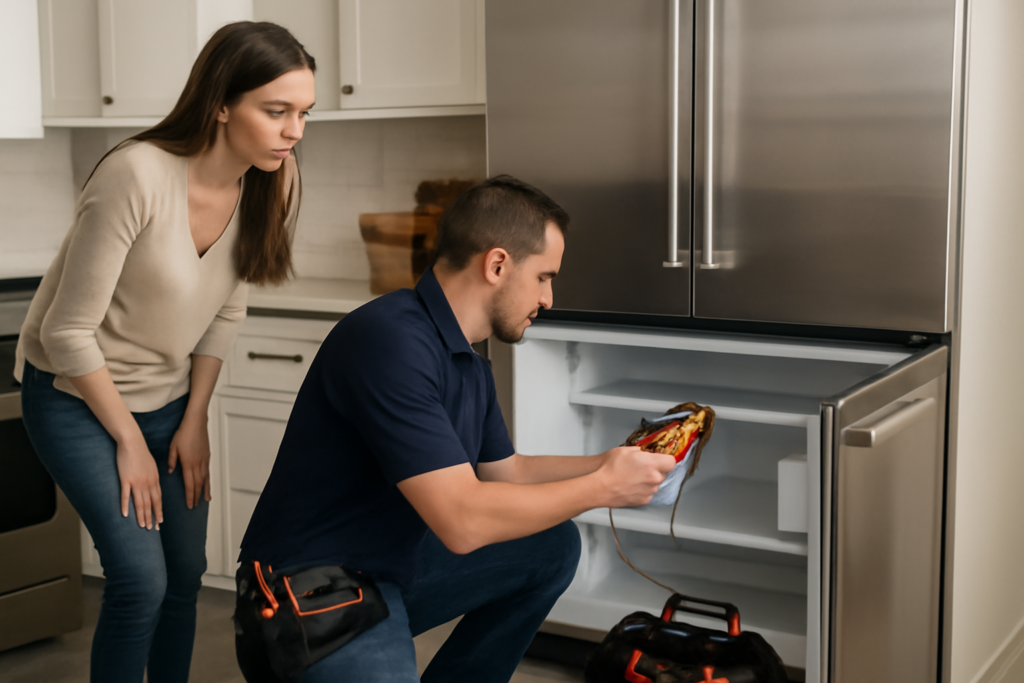
A ge monogram refrigerator repair can feel intimidating because these are premium, often built-in and panel-ready units that cost $8,000 to $12,000 new, and nobody wants to make an expensive mistake. The good news is that many of the most common Monogram problems are the same fixable issues found on any fridge, and you can handle a fair number yourself.
This guide covers the realistic scope of ge monogram refrigerator repair, from ice and water faults to fans, defrost, and error codes, plus the clear line where DIY stops and a certified technician has to take over. I have serviced built-in Monograms, and knowing which failures are cheap and which are not saves you both money and grief.
- Know Your Monogram First
- Problem: Not Cooling Properly
- Problem: Ice Maker and Water Dispenser Faults
- Problem: Frost Buildup or a Warm Freezer
- Understanding Error Codes
- The Hard Line: Sealed-System Work
- Repair Costs and When to DIY
- Problem: Noise, Water Leaks, and Odors
- Warranty and Parts Sourcing
- Tools and a Smart Repair Approach
Know Your Monogram First
Monogram is GE’s luxury line, and repairs vary by type. The most common are:
- Built-in side-by-side and French door: 42- and 48-inch panel-ready units that sit flush and heavy in cabinetry.
- Column refrigerators and freezers: Separate all-fridge and all-freezer towers installed side by side, each with its own sealed system.
- Freestanding pro-style models: Stainless, standalone units that service more like a conventional fridge.
Find your model and serial number on the interior sticker (usually on a side wall or the ceiling of the fresh-food section). You need it for every parts lookup and warranty check. Monogram parts are pricier than mainstream GE parts, so ordering the exact match the first time matters.
Problem: Not Cooling Properly
Start with the cheap, common causes before assuming the worst:
- Dirty condenser coils: Built-in Monograms vent through a top or bottom grille. Dust chokes airflow and the whole system runs warm. Vacuum the coils, this is the single most common cause of poor cooling and it is free.
- Blocked interior vents: Food packed against the air vents stops cold air circulating. Leave clearance around the vents inside.
- Evaporator or condenser fan failure: If a fan is silent or grinding, the fridge cannot move cold air. Fan motors are replaceable parts, typically $60 to $200 plus labor.
- Door gasket leaks: A gasket that no longer seals lets warm air in and makes the compressor run constantly. Test with a dollar bill in the door, if it slides out easily, the gasket needs replacing.
If the coils are clean, fans run, gaskets seal, and it still will not cool, the fault may be in the sealed system, which is not a DIY repair (more on that below).
Problem: Ice Maker and Water Dispenser Faults
These are among the most DIY-friendly Monogram repairs:
- No ice: Check the freezer holds 0 to 5 degrees F, confirm the feeler arm or control is on, and verify water is reaching the maker. A frozen fill tube thaws with a hair dryer on low.
- No water at the dispenser: Usually a clogged water filter or a shut supply valve. Change the GE filter (Monograms use specific RPWF or XWF-style filters, verify yours), and check the 1/4-inch line behind the unit.
- Small or hollow cubes: Low water flow, almost always an overdue filter or a partly failed inlet valve. Replace the filter first.
- Ice maker module dead: A full replacement module runs roughly $100 to $250 for a Monogram and installs with a few screws and a wiring plug.
Change the water filter about every six months regardless of symptoms; a clogged filter is behind a surprising share of both ice and water complaints.
Problem: Frost Buildup or a Warm Freezer
Frost inside the freezer or a compartment that will not stay cold usually points to the defrost system. Monograms use a defrost heater, a defrost thermostat, and a control that cycles the heater periodically to melt frost off the evaporator. When one fails, frost accumulates and blocks airflow.
Testable defrost parts, the heater and thermostat, are DIY-diagnosable with a multimeter and replaceable, typically $40 to $150 in parts. If the fridge collects frost, the evaporator coil ices over, and airflow drops, work the defrost components before anything more drastic. A door left ajar or a failing gasket can also dump humidity that shows up as frost, so rule those out too.
Understanding Error Codes
Modern Monograms display fault codes that narrow the diagnosis. Codes commonly point to a specific sensor or component, a temperature sensor (thermistor) reading out of range, a fan fault, a communication error between control boards, or a dispenser issue. A thermistor is a cheap, replaceable part; a main control board is pricier but still a defined replacement.
Because Monogram’s code definitions vary by model year and platform, look up your exact model’s service chart rather than guessing. A quick power cycle, unplug for 5 minutes and restore, clears transient faults and is always worth trying before ordering parts. If a code returns immediately after a reset, that component genuinely needs attention.
The Hard Line: Sealed-System Work
This is the most important part of any GE Monogram refrigerator repair. The sealed refrigeration system, meaning the compressor, refrigerant, condenser, and evaporator coils, is off-limits to DIY, and not as a suggestion. Federal law under the Clean Air Act requires an EPA-608 certified technician to open, evacuate, recharge, or handle refrigerant. There is no legal or safe way for a homeowner to service that side, and attempting it risks refrigerant burns, releasing regulated gas, and destroying an expensive appliance.
Signs the sealed system may be at fault include: the fridge runs constantly but never gets cold, the compressor is hot and clicking on and off, or one column simply stops cooling despite clean coils, working fans, and good gaskets. When you reach that point, stop and call a certified Monogram technician. This is exactly the kind of high-value, complex appliance where paying a qualified pro is the right move, and where the sealed system may still be under GE’s extended warranty.
Repair Costs and When to DIY
Here is a realistic breakdown for budgeting a repair:
- Water filter: $40 to $70, DIY, every six months.
- Ice maker module: $100 to $250, DIY, about 30 minutes.
- Fan motor: $60 to $200 in parts, moderate DIY.
- Defrost heater or thermostat: $40 to $150 in parts, moderate DIY.
- Thermistor / temperature sensor: $15 to $50, DIY.
- Main control board: $150 to $400, DIY if you match the part.
- Sealed-system / compressor: $500 to $1,500-plus, certified tech only.
Given that a new built-in Monogram runs five figures, repairing even a fairly expensive component almost always beats replacement. A certified service call for these units typically starts around $150 to $250 before parts, which is reasonable insurance on a premium fridge.
Problem: Noise, Water Leaks, and Odors
Not every fault is about temperature. A few nuisance problems come up often on Monograms and are firmly DIY territory:
- Water pooling under the fridge or inside: Usually a clogged or frozen defrost drain. The drain line can ice over and back up meltwater into the compartment or onto the floor. Thaw it and flush it with warm water and a turkey baster to clear the blockage.
- Loud humming or buzzing: Often the condenser fan spinning against dust or a compressor mount that has loosened. Clean the fan and confirm the unit sits level and solid in its cabinet before assuming a serious fault.
- Rattling or clicking: Frequently just items vibrating on shelves or the ice maker cycling, but persistent clicking with poor cooling can signal a compressor relay, which points toward professional diagnosis.
- Odors: An old water filter, spoiled food, or a dirty drain pan. Replace the filter, clean the interior with a baking-soda solution, and check the drip pan underneath.
Because Monograms are heavy built-ins, leveling and secure mounting matter more than on a freestanding fridge; a unit that is slightly out of level both leaks and lets doors drift open, which then causes frost and cooling complaints downstream.
Warranty and Parts Sourcing
Before paying for any major repair, check your coverage. GE Monogram units typically carry a limited warranty on parts and labor for the first year, with extended coverage on the sealed system, meaning the compressor and refrigeration components, often running 5 to 10 years or more. That extended sealed-system coverage is exactly the expensive category you cannot DIY anyway, so registering the appliance and keeping proof of purchase can save you four figures if the compressor fails.
For DIY parts, always order by your exact model and serial number through GE Appliance Parts or an authorized dealer. Monogram shares some components with mainstream GE Profile and Café lines, but pieces like door gaskets, control boards, and ice modules are often model-specific, and a close-but-wrong part wastes both money and a weekend. Genuine parts also matter more on a five-figure appliance than on a budget fridge; a cut-rate aftermarket board is a poor gamble here.
Tools and a Smart Repair Approach
For DIY Monogram work you want a nut driver set, Phillips and flat screwdrivers, a multimeter, a hair dryer for thawing, and a shop vacuum for coils. Always unplug the unit before touching wiring, and photograph connections before you disconnect anything so reassembly is foolproof.
Work your diagnosis from cheap and common to expensive and rare, coils, filter, gaskets, fans, defrost, sensors, board, and only then the sealed system. Do that, respect the EPA-608 line on refrigerant, and you will handle the large majority of GE Monogram refrigerator repair jobs yourself while knowing exactly when to hand it to a certified pro.