The GE RPWFE refrigerator water filter is the one that trips people up, because it has a small RFID chip glued to the side that no other GE filter uses. That chip is why your fridge sometimes rejects a perfectly good aftermarket filter, and why the RPWFE costs more than its near-twin, the RPWF.
If you own a GE French-door refrigerator from about 2015 onward, odds are it takes the GE RPWFE refrigerator water filter. Let’s break down what it actually does, the RFID business, and how to install and reset it without a headache.
RPWFE vs. RPWF: What’s the Difference?
These two filters look nearly identical and are the same physical size — they’ll both slot into the same housing. The difference is entirely electronic:
- RPWF has no chip. It’s used in earlier or lower-tier GE fridges that don’t monitor the filter electronically.
- RPWFE has an RFID chip (that’s the “E” — for electronic). The fridge reads this chip to detect a leak, confirm a genuine filter is installed, and track filter life.
Here’s the catch: an RPWFE-equipped fridge expects to see that chip. If you put a plain RPWF (no chip) into an RPWFE fridge, the refrigerator throws an error or a flashing filter light because it can’t read the RFID. The two are not interchangeable in that direction. Always match RPWFE to an RPWFE fridge.
What the RPWFE Filters Out
The RPWFE is certified to NSF/ANSI standards, and the certifications tell you exactly what it’s rated to reduce:
- NSF 42: chlorine taste and odor — the main reason your water tastes better.
- NSF 53: health-related contaminants including lead, cysts (like cryptosporidium and giardia), select pharmaceuticals, and mercury.
- NSF 401: “emerging contaminants” — trace pharmaceuticals, herbicides, and pesticides.
It’s an activated carbon block filter rated to a fine micron level, which is what lets it catch cysts and fine particulate while still flowing enough water for the dispenser and ice maker. It does not soften water or remove dissolved minerals, fluoride, or salts — a carbon filter isn’t designed for that.
Replacement Interval and Cost
GE rates the RPWFE for roughly 6 months or 300 gallons, whichever comes first. In a normal household, six months is the practical trigger. If you have a big family running the dispenser and ice maker hard, you may hit 300 gallons sooner and notice slower flow.
Cost runs about $50–$60 for a genuine GE RPWFE single, less per unit in a multi-pack. Aftermarket versions sell for $15–$30 each. That price gap is exactly why people look at aftermarket, so let’s talk about whether they work.
Genuine vs. Aftermarket: The Chip Problem
Because the fridge reads the RFID chip, aftermarket RPWFE filters have to deal with it somehow. There are three approaches on the market:
- Filters with their own compatible chip: The better aftermarket brands include an RFID tag the fridge can read. These generally work and reset properly.
- Filters that require chip transfer: Many cheaper aftermarket cartridges ship without a chip and instruct you to peel the RFID chip off your old genuine filter and stick it onto the new one. The chip is reusable and just reports filter presence and leak status. This works, but if you lose or damage that original chip, future chipless filters won’t authenticate.
- Chipless filters: These physically fit and filter fine, but the fridge will flash a filter warning because it can’t read a chip. The water still flows.
Genuine GE filters are the no-fuss option and carry the NSF certifications on the actual cartridge you’re installing. Aftermarket can save money, but read the listing carefully — if it says “chip transfer required,” keep your original chip somewhere safe.
The Flashing-Light Bypass Myth
A common piece of internet advice claims a flashing or lit filter light means your water is shut off until you install a chipped filter. That’s not how it works. The RFID chip and the filter light are about monitoring and leak detection, not a hard water cutoff. If you install a chipless aftermarket filter, or even remove the filter and use the bypass plug, water still comes out of the dispenser. The fridge just complains with a light because it can’t verify the filter.
So the “you must have the chip or you get no water” claim is a myth. What the chip actually does: it lets the refrigerator detect an internal leak in the filter housing and confirm a genuine cartridge for the filter-life countdown. Useful, but not a lockout. That said, don’t run indefinitely with no real filtration just to dodge a light — you lose the contaminant reduction you paid for.
How to Install and Reset the RPWFE
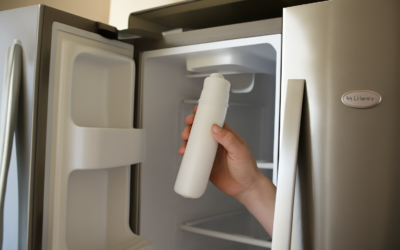
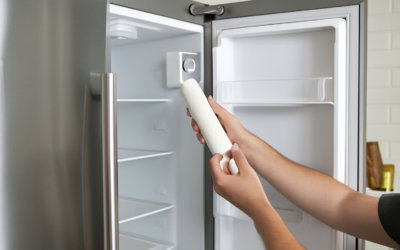
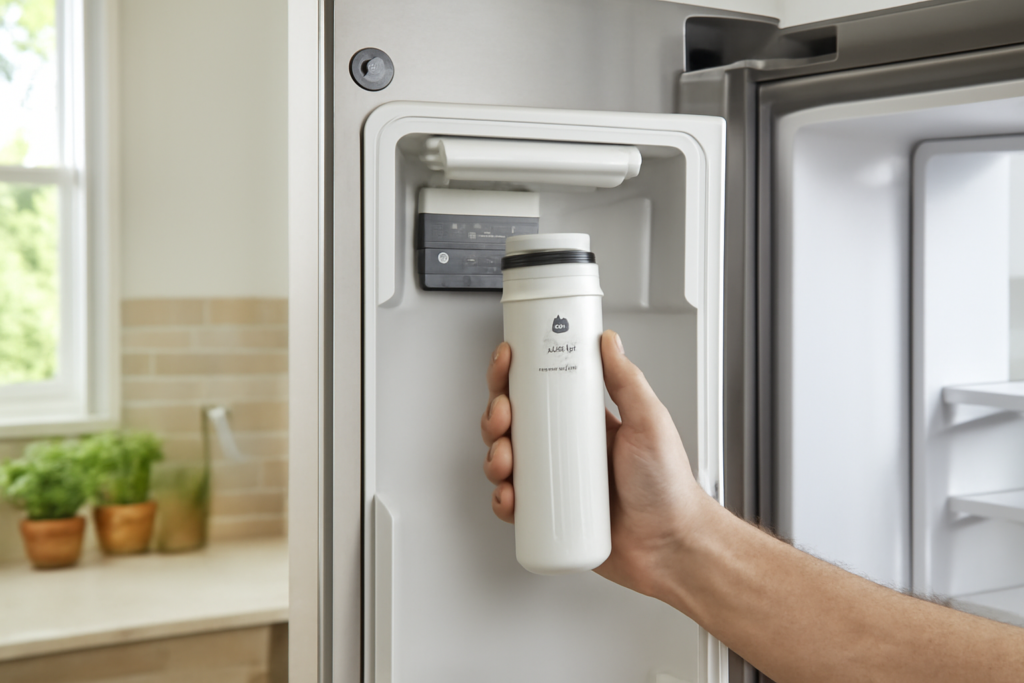
Installation takes about a minute and needs no tools. The filter usually sits inside the fresh-food compartment, top-right or in a flip-down door.
- Locate the filter and open its cover or grille if there is one.
- Remove the old filter by turning it about a quarter turn counterclockwise until it releases, then pull straight out. A little water dripping is normal.
- If your new filter needs the chip: peel the RFID chip off the old cartridge and press it firmly onto the matching spot on the new one before installing.
- Insert the new filter and turn it clockwise until it clicks and locks. Don’t force it — it should seat with light pressure.
- Flush the system: run the dispenser for about 3–5 minutes (roughly 3 gallons) to clear carbon fines and air. The water may sputter and run gray at first — that’s normal.
Resetting the filter indicator: On most GE models, press and hold the Reset Filter or Filter button on the dispenser control panel for about 3 seconds until the light changes from red back to green or turns off. A genuine chipped filter often re-authenticates on its own after you run a few gallons through — give it a couple of minutes if the light doesn’t clear immediately.
Which GE Fridges Take the RPWFE?
The RPWFE shows up in a broad range of GE French-door and side-by-side refrigerators built from about 2015 onward, including many GE Profile and Café models, and the higher-end GE and Monogram lines. The surest way to confirm is to pull your current filter and read the printed part number, or check the sticker inside the fresh-food compartment against GE’s compatibility list.
The part number to buy is simply RPWFE — that’s GE’s genuine designation, and it’s the same cartridge whether you buy a single or a three-pack. Don’t let a listing talk you into an RPWF for an RPWFE fridge to save a few dollars; the missing chip will have your filter light flashing on day one.
Why Not Just Skip the Filter?
Some owners, tired of the cost, pull the filter and drop in the bypass plug that shipped with the fridge. The dispenser and ice maker still work — GE designed the bypass exactly for that. But you lose all NSF 42, 53, and 401 reduction, meaning chlorine taste comes back and lead, cysts, and trace contaminants pass straight through.
If your home is on a treated municipal supply and you only cared about taste, the bypass is a legitimate money-saving choice. If anyone in the house is immunocompromised, or you’re on well water, or your area has known lead service lines, keep a real filter in and change it on schedule. Running a spent, clogged filter for a year is worse than either option — old carbon can channel and even shed captured material back into your water.
Quick Troubleshooting
- Filter light stays red after install: Run more water through, then hold the reset button. If it persists on an aftermarket filter, the chip isn’t being read — check chip placement.
- Slow water flow: Filter is overdue or clogged, or there’s trapped air. Replace and flush.
- Leak warning on the display: The RFID leak detection tripped — reseat the filter and make sure it’s a genuine or properly chipped cartridge.
- Cloudy water after changing: Trapped air, not a defect. It clears after a few glasses.
Bottom line: know that your fridge takes the RPWFE and not the RPWF, replace it every 6 months, keep the RFID chip if you go aftermarket, and don’t fall for the no-chip-no-water myth. Handle those four things and the GE RPWFE refrigerator water filter is a two-minute job twice a year.