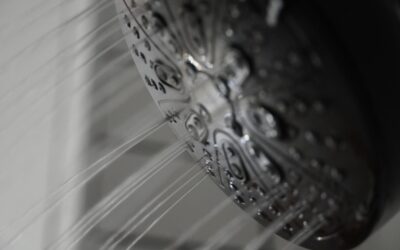
Walk down the shower aisle at any big-box store and you’ll find a wall of chrome heads promising spa water at home. An ion shower head sits near the top of that pile, marketed with photos of glowing skin and shinier hair, and the pitch usually credits a chamber of colored mineral beads packed behind the faceplate. As a remodeler who has installed a few hundred fixtures, I can tell you the ion shower head is one of the most oversold and most misunderstood products in the bathroom. It isn’t a scam, but it isn’t a water softener either. Here’s the straight version.
Part of our Bathroom Remodeling & Flooring guide — explore the full guide →
- What an Ion Shower Head Actually Is
- The Claims, Sorted Into Real and Wishful
- Flow Rate and Pressure: Read the GPM Before You Buy
- What You’ll Pay
- Installation: A Five-Minute Job
- Cleaning and Keeping It Working
- Ion Head vs. a Real Inline Shower Filter
- Common Mistakes Buyers Make
- Who Should Buy One, and Who Shouldn’t
What an Ion Shower Head Actually Is
Pop the head open and you’ll usually find three or four layers of small spheres in a clear or perforated cartridge. Manufacturers label these as tourmaline, germanium, mineralized ceramic, maybe some activated carbon or KDF (a copper-zinc media). Water passes through the bead bed on its way to the nozzles, and the marketing claims this “ionizes” the stream, raises negative ions, and micro-filters impurities.
The mechanical reality is more modest. Those beads create turbulence and slightly restrict flow, which is part of why the spray feels stronger. Some media, especially KDF and carbon, do genuinely reduce free chlorine through a chemical reaction as water contacts the metal. Tourmaline and germanium beads are marketed for “negative ion” and “far-infrared” effects that are hard to measure in a shower running at a few seconds of contact time. Treat the mineral-energy claims as ambiance, and judge the head on the parts you can actually verify: pressure feel, chlorine reduction, and durability.
The Claims, Sorted Into Real and Wishful
Homeowners buy these heads hoping for four things. Let me rate each one from the field.
- Higher pressure: Real, in a limited way. The beads plus tighter nozzle geometry concentrate the stream, so a weak 45 PSI supply can feel noticeably firmer. It’s a flow trick, not new water pressure.
- Chlorine reduction: Partly real, media-dependent. A head with actual KDF-55 or carbon can knock down free chlorine, which is what many people mean by “harsh” municipal water. Pure tourmaline beads do very little here.
- Softer water: Mostly wishful. These heads do not remove calcium and magnesium hardness. If you have hard water and spotting glass doors, an ion head will not fix it. Only ion-exchange or a whole-house softener does that.
- Better skin and hair: Indirect at best. If chlorine is the irritant in your water, cutting it can help dryness and itch. The “ionized water hydrates skin” line is where I’d keep expectations low.
Flow Rate and Pressure: Read the GPM Before You Buy
Federal law caps shower heads at 2.5 gallons per minute (GPM) at 80 PSI, and many states, California and Colorado among them, cap it lower at 1.8 GPM. Most ion heads land between 1.8 and 2.5 GPM. That number matters more than any mineral claim.
A well-designed 2.0 GPM ion head can feel every bit as strong as an old 2.5 GPM head because the bead chamber and nozzle count are tuned for velocity. If your home already suffers from low pressure, look for a model rated around 2.0 to 2.5 GPM with removable nozzle nubs you can rub clean. Avoid the cheapest heads that hit their “high pressure” number by simply shrinking the holes, because those clog fast and turn spitty within a year, especially on hard water.
What You’ll Pay
Price runs a wide range, and higher cost does not reliably mean better filtration.
- $12 to $25: Basic single-function fixed or handheld with a token bead layer. Fine as a pressure-feel upgrade; expect little real filtration.
- $25 to $45: The sweet spot. Multi-layer media, replaceable cartridges, decent nozzle design, and a handheld hose in many kits.
- $45 to $80: Premium finishes, larger media beds, sometimes third-party chlorine testing. Worth it if verified chlorine reduction is your goal.
Watch the replacement cartridge cost too. A $20 head that needs a $15 cartridge every two to three months is more expensive over a year than a $45 head with a six-month cartridge.
Installation: A Five-Minute Job
This is the one area where the product fully delivers, because swapping a shower head is one of the easiest plumbing tasks in the house. No plumber, no tools beyond your hands and maybe a wrench.
- Unscrew the old head counterclockwise from the shower arm. If it’s stuck, grip the arm with a rag-wrapped wrench so you don’t crack the wall pipe, and turn the head with pliers.
- Clean the old thread tape off the arm’s 1/2-inch NPT threads.
- Wrap the threads clockwise with three or four turns of fresh PTFE plumber’s tape.
- Hand-thread the new ion head on, then snug it a quarter turn past hand-tight with a wrench. Do not gorilla it.
- Run the shower for 30 seconds and check the base for drips. Add a wrap of tape if it seeps.
Most units include a fresh rubber washer and a section of media that ships dry. Run the water a minute or two before the first shower to flush loose carbon dust, which can tint the first flow gray.
Cleaning and Keeping It Working
Mineral beads and hard water do not mix gracefully, so maintenance decides whether you love or resent this head. Mineral scale builds on the faceplate and inside the chamber, choking flow over months.
For the nozzles, rub the rubber nubs with your thumb weekly to break off scale. Every four to six weeks, unscrew the head, drop the faceplate or the whole unit into a bowl of warm white vinegar for 30 to 60 minutes, then rinse and reassemble. Do not soak the bead cartridge in vinegar for hours, because acid can degrade some media; a quick rinse is enough. Replace the mineral or carbon cartridge on the maker’s schedule, typically every three to six months, since spent carbon stops reducing chlorine and just adds resistance.
Ion Head vs. a Real Inline Shower Filter
People shopping for an ion head are often really shopping for cleaner water, so it’s worth comparing the two products side by side. An inline shower filter is a separate canister that threads between the shower arm and any head you like, and it’s built around certified media in real volume.
- Media quantity: An inline filter holds far more KDF and carbon than the thin bead layer in an ion head, so it actually reduces chlorine for months rather than weeks.
- Certification: Better inline filters carry NSF/ANSI testing for chlorine reduction. Most ion heads carry none, only marketing claims.
- Flexibility: With an inline filter you keep whatever head you love, ion or rain or handheld.
- Cost: Inline filters run $25 to $50 with $15 to $30 cartridges every four to six months.
If verified water quality is the goal, an inline filter plus a plain quality head beats an ion head almost every time. If you just want a firmer spray with a mild filtration bonus and one simple part, the ion head wins on convenience. Knowing which problem you’re actually solving is the whole decision.
Common Mistakes Buyers Make
A few missteps come up again and again with these heads. Steer clear of them and you’ll be happier with the purchase.
- Expecting a water softener. The beads do not remove hardness. If your glass doors spot and your skin feels filmy from minerals, this is not your fix.
- Ignoring the cartridge schedule. Spent media stops working and starts restricting flow. Mark a calendar reminder every three to six months.
- Buying purely on nozzle count. A hundred tiny holes clog fast on hard water. Rubberized, cleanable nubs matter more than a big number.
- Overtightening at install. Cranking the plastic collar cracks it. Hand-tight plus a quarter turn is plenty.
Who Should Buy One, and Who Shouldn’t
An ion head is a smart, cheap upgrade if your main complaints are a weak-feeling spray or a faint chlorine smell from city water, and you want a five-minute fix under $50. It’s a genuine quality-of-life bump for the money.
It is the wrong tool if you have truly hard water with heavy scale and spotting, sensitive skin driven by hardness rather than chlorine, or if you want lab-grade filtration. In those cases spend on a dedicated inline shower filter with certified KDF and carbon, or better yet a whole-house system, and pair it with any head you like. Set your expectations at “nicer shower, slightly cleaner water,” not “spa transformation,” and the ion shower head is an easy recommendation. Chase the glowing-skin marketing and you’ll feel let down. Buy it for firmer spray and modest chlorine cutting, keep the cartridge fresh, and you’ll get exactly what you paid for.