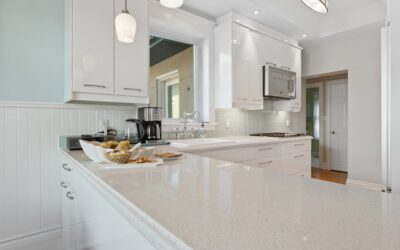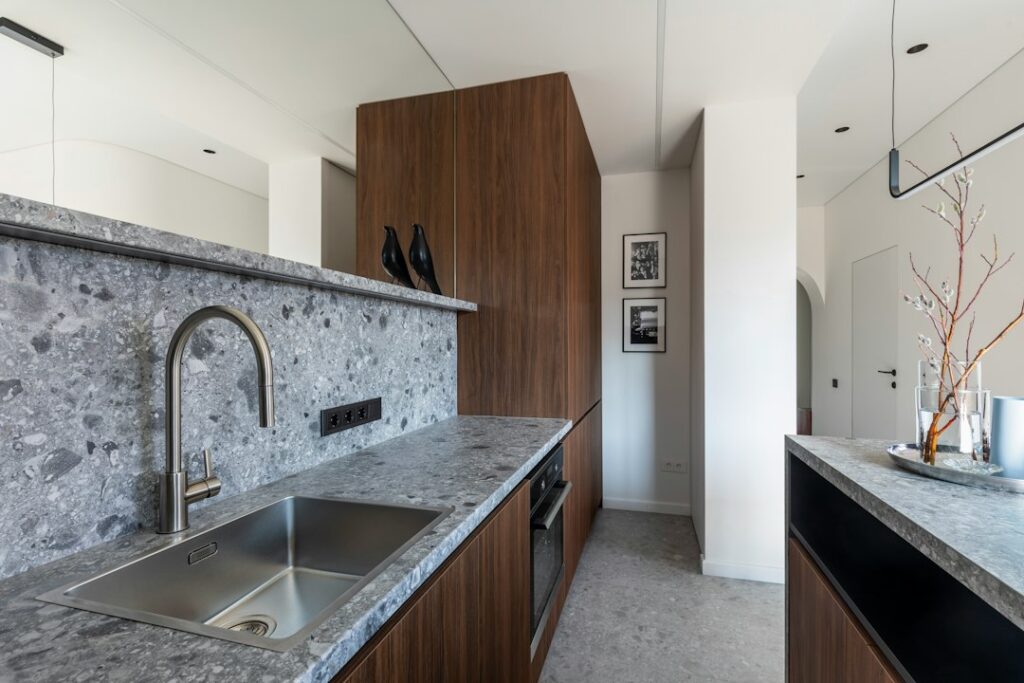
Showrooms light their granite slabs from the side with halogen spots, which makes everything look more dramatic than it does in your actual kitchen at 6 p.m. on a Tuesday. Choosing among kitchen granite countertop colours means matching the slab to your cabinet color, the wall paint, and the light the kitchen actually gets — not the gallery shot in a magazine. After specifying granite on more than two hundred kitchen jobs, I have a reliable short list of colors that pair well with common cabinet finishes and a few that look stunning in the showroom and date the kitchen within five years.
Part of our Countertops guide — explore the full guide →
- Why Granite Still Holds Its Ground
- Classic Black Granites
- White and Light Granites
- Warm Browns and Beiges
- Blue and Green Granites: Bold but Risky
- Gray Granites: The Modern Sweet Spot
- Movement and Veining: Picking the Right Drama Level
- How Light Changes Color Perception
- Sealing, Maintenance, and Long-Term Care
Why Granite Still Holds Its Ground
Quartz countertops outsell granite in new installations, but granite has not disappeared — it is still the right choice for homeowners who want unique movement, hot-pan tolerance, and a material with proven 30 to 50-year durability. Granite is a natural stone, so every slab is different. The trade-off versus quartz is that you commit to one specific slab pattern and you must seal it every one to three years.
Pricing varies by exotic factor. Common colors run $40 to $70 per square foot installed. Mid-tier colors with more movement run $70 to $100. True exotics with rare patterning can hit $150 to $250 per square foot. The slab you pick determines budget more than the brand or installer.
Classic Black Granites
Black granites read formal and timeless. They show fingerprints and water spots more than lighter colors, but the look anchors a kitchen with white or off-white cabinets beautifully. Top picks include:
- Absolute Black — True black with no veining or speckling. Honed or polished. Pairs with everything
- Black Pearl — Black with silver and gold mica flecks that catch light. Warmer than Absolute Black
- Cosmic Black — Dark base with white and gray veining. Provides more visual movement
- Steel Gray — Charcoal base with very fine sparkle. Reads as a neutral dark gray
Black granite is best with light cabinetry — white, off-white, or pale gray shaker. With dark cabinets the kitchen reads heavy unless you balance with bright wall paint and abundant lighting.
White and Light Granites
White granite is a smaller category than people realize because pure white slabs are rare. Most “white granite” is actually a quartzite or a marble-granite blend. The closest true-granite whites include:
- White Ice — Cream base with gray and black veining
- Colonial White — Soft white with subtle burgundy and gray patterns
- Andino White — Pale base with consistent black and gray flecks
- Bianco Antico — Off-white with significant brown and burgundy veining
If you specifically want a bright white look, consider quartzite (a harder natural stone) or a quartz product like Caesarstone Statuario Maximus. True white granite is rare and pricey when you find it.
Warm Browns and Beiges
Brown granites pair beautifully with traditional cabinetry and warm-tone kitchens. They have dominated the 2010-to-2020 era and remain a strong pick for transitional design.
- New Venetian Gold — Cream base with gold and burgundy flecks. The most popular brown-cream granite ever sold
- Santa Cecilia — Cream with gold and brown medium-grain pattern. Slightly more saturated than New Venetian Gold
- Baltic Brown — Dark brown with round black inclusions. A 1990s favorite that reads dated today
- Giallo Ornamental — Cream with gentle brown veining and gold flecks
Warm browns pair best with cherry, oak, or warm maple cabinetry. They look unintentional with crisp white cabinets, which read too cold against the warm tone of the stone.
Blue and Green Granites: Bold but Risky
Blue and green granites are real and stunning. Blue Bahia, Azul Macauba, and Verde Marinace turn heads in any kitchen. The risk is that bold colors lock you into a paint scheme — you cannot easily change wall color without fighting the countertop, and any future remodel partner must work around the stone.
If you fall in love with a blue or green slab, plan to keep it for 20-plus years. Pair with neutral cabinets — white, gray, or stained wood without competing color. Expect to pay $130 to $250 per square foot for these exotics.
Gray Granites: The Modern Sweet Spot
Gray has dominated kitchen design for the better part of a decade. Granites in the gray family work with both modern and transitional cabinetry. Reliable picks include:
- Caledonia — Medium gray base with consistent black and white speckling
- Bianco Romano — Light gray-white with brown undertones
- Luna Pearl — Pale gray with subtle white and black flecks
- Silver Cloud — Gray base with significant white veining
Gray granites pair effortlessly with both white and dark cabinetry. They are the safest choice if you may sell the home in the next 5 to 10 years and want a finish that appeals to broad buyer preferences.
Movement and Veining: Picking the Right Drama Level
Granites range from extremely uniform (Absolute Black, Steel Gray) to highly dramatic (Blue Bahia, Verde Marinace). Uniform stones read as classic and quiet — they let the cabinets do the talking. Dramatic stones become the visual centerpiece of the kitchen.
In smaller kitchens, choose calmer stones to keep the space from feeling busy. In larger kitchens with islands, a dramatic stone on the island with a calmer perimeter material balances the room. Mixing two countertop materials this way is becoming standard in high-end design.
How Light Changes Color Perception
North-facing kitchens get cool, blue-tinted light most of the day. Warm-tone granites (browns, beiges) compensate well; cool grays can read flat. South-facing kitchens with warm sunlight handle gray and blue granites comfortably and make warm browns look orange in afternoon light.
Always view a slab sample in your actual kitchen at multiple times of day before signing off. Bring a full-size sample home if the stone yard allows. The slab that wowed you under fluorescent showroom light may read entirely different next to your cabinets and paint.
Sealing, Maintenance, and Long-Term Care
All granite needs sealing. Lighter, more porous granites need annual resealing; dense black granites can go three years between treatments. Test by dripping water on the surface — if it beads, the seal is good. If it darkens the stone, reseal that week.
Use a stone-safe cleaner like Method Daily Granite or simple soap and water. Avoid vinegar, lemon, and abrasive cleansers. Re-polish or hone every 10 to 15 years if the surface starts to dull. With basic care, a granite countertop outlasts the cabinets it sits on.