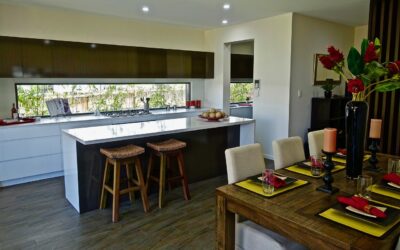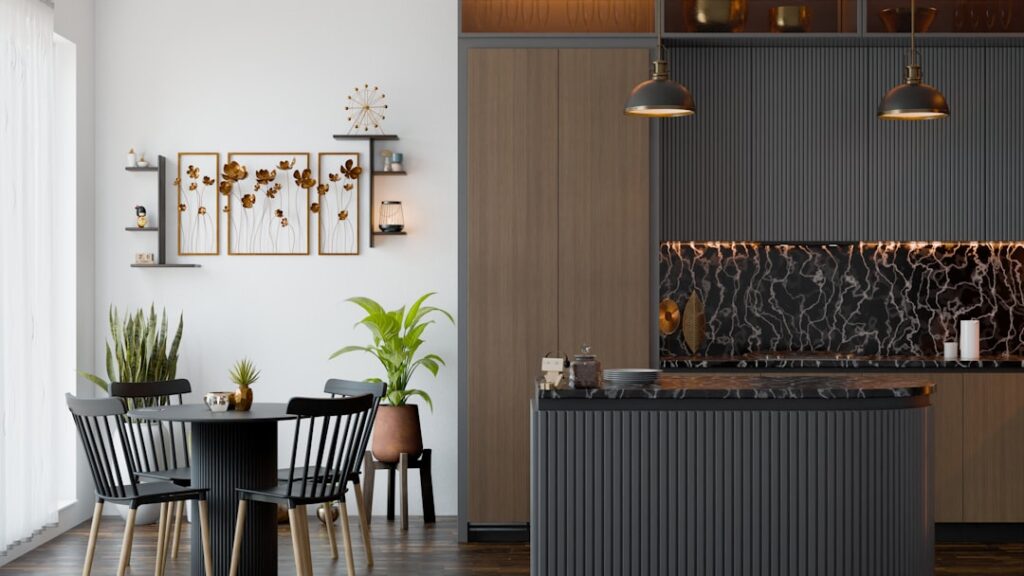
If your family actually sits and eats at the island, kitchen island stools with backs beat backless stools every time. That back support turns a quick perch into a place people linger for a full meal or an hour of homework. But the wrong height, spacing, or weight rating leads to cramped knees, wobble, and buyer’s remorse. Here’s how to get it right the first time.
Part of our Kitchen Remodeling guide — explore the full guide →
This guide covers the two critical heights, what makes a back comfortable, materials that hold up in a kitchen, weight capacity, swivel versus fixed, and how to space and price kitchen island stools with backs for your space.
Counter Height vs. Bar Height
Getting the height wrong is the single most common mistake, and it’s not fixable after you buy. Measure the underside of your countertop to the floor, then match the stool:
- Counter-height stools (24″ to 26″ seat): For a standard 36″-tall island. This is what most kitchen islands need. It leaves the ideal 10″ to 12″ between the seat and the counter for legroom.
- Bar-height stools (28″ to 32″ seat): For a raised bar section or an island with a 42″ bar ledge, common in older homes with a two-tier island.
- Extra-tall (33″ to 36″ seat): Rare, for pub-height 45″+ counters.
The rule of thumb: subtract 10 to 12 inches from your counter height to find the correct seat height. A 36″ island wants a 24″ to 26″ seat, period. Don’t eyeball it in a showroom where the display counter may be a different height than yours.
Why the Back Matters
A back is not just a style choice. It changes how long people can sit comfortably. When you compare options, look at:
- Back height: A full back that rises 12″ to 16″ above the seat supports the shoulders. A low “bucket” back only catches the lower spine, fine for quick meals, less so for lingering.
- Lumbar contour: A slight curve at the lower back makes a huge difference over a 30-minute dinner.
- Overall height under the counter: Make sure the back is low enough to slide the stool fully under the overhang when not in use. Measure your counter overhang, which should be 12″ to 15″ for comfortable seating.
If you have kids or plan long sit-down meals at the island, spend the extra $20 to $40 per stool for a taller, contoured back. It pays off every single day.
Materials That Survive a Kitchen
Island stools take abuse: spills, scuffs, sliding on floors, kids climbing. Match the material to your household:
- Metal (steel/iron): The toughest and most affordable. Powder-coated finishes shrug off scratches. Runs $60 to $150 each.
- Solid wood: Warm and classic, but nicks show. Oak and acacia hold up best. $90 to $250 each.
- Upholstered seat and back: Most comfortable, but fabric stains. Choose performance fabric or faux leather that wipes clean. $120 to $350 each.
- Wood-and-metal combo: A metal frame with a wood or cushioned seat gives you durability plus comfort. The current best-seller category.
For a busy family kitchen, the best bet is a metal frame with a wipe-clean faux-leather seat. It’s the sweet spot for durability, cleanup, and price.
Weight Capacity and Build Quality
Cheap stools fail at the joints. Before you buy, check the rated weight capacity and how the legs attach:
- Look for a 250 lb to 300 lb weight rating minimum. Quality models list it; if the listing hides it, that’s a red flag.
- Welded metal joints beat bolted ones for long-term stability. Bolts loosen and cause the dreaded wobble.
- Four-point floor contact: Confirm the legs have levelers or non-marring feet so the stool doesn’t rock on tile or hardwood.
- A footrest rail rated to take weight matters too, since people push off it constantly.
Give any stool the shake test in the store, or read reviews specifically for the word “wobble” before ordering online.
Swivel vs. Fixed
Both have a place. The choice comes down to how people get in and out:
- Swivel stools: Rotate 180 or 360 degrees so you can turn to talk or step out without scraping the stool back. Easier for older adults and kids. Look for a smooth 360-degree mechanism rated for the stool’s weight limit.
- Fixed stools: More stable and usually cheaper. Better if small children will stand on them, since they won’t spin unexpectedly.
- Adjustable-height (gas lift): A swivel variant with a hydraulic post. Flexible, but the industrial look doesn’t suit every kitchen and cheap cylinders sag over time.
For most families, the best choice is a swivel with a return mechanism that gently rotates the seat back to facing the island when you stand up.
Spacing: How Many Fit
Cramming too many stools in ruins the comfort you paid for. Plan the count off your island length:
- Allow 24″ of counter width per stool from center to center. Slimmer stools can go to 20″, but 24″ is comfortable.
- Leave at least 6″ to 12″ of open counter at each end so nobody’s elbow hangs over the edge.
- A 48″ island seats two; a 6-foot (72″) island seats three; an 8-foot island seats four.
Confirm your overhang before ordering. You need 12″ to 15″ of counter cantilever so knees tuck under, or the stools simply won’t slide in.
Seat Depth, Width, and Comfort Details
Height gets all the attention, but the seat itself decides whether people actually stay put. When you’re comparing models, check the dimensions that don’t show up in a thumbnail photo:
- Seat depth: Aim for 15″ to 18″ front to back. Too shallow and you perch on the edge; too deep and the back stops supporting you.
- Seat width: 17″ to 20″ is comfortable for most adults. Bucket seats feel snug; flat pads feel roomy.
- Cushioning: A 1″ to 2″ foam pad is the sweet spot. Thin pads over metal go numb fast; overstuffed ones flatten within a year.
- Footrest position: A rail 7″ to 9″ below the seat lets feet rest naturally instead of dangling.
These small numbers are the difference between a stool people fight over and one that stays empty. If you can, sit in the model for a few minutes before buying, since comfort at 30 seconds and comfort at 30 minutes are very different things.
Matching Stools to Your Kitchen Style
Stools are furniture, and they set the tone at the busiest spot in the house. A few pairings that consistently work:
- Farmhouse or transitional: Wood-and-metal frames with a cushioned or woven seat.
- Modern: Low-profile metal or molded frames with a slim contoured back.
- Traditional: Full-back wood stools with turned legs and an upholstered seat.
- Industrial: Powder-coated steel with a distressed wood seat and exposed hardware.
Whatever the style, keep the finish consistent across all stools and coordinate it with your cabinet hardware or lighting. Matching the metal tones across a room is a cheap trick that makes a kitchen look pulled together.
Cleaning and Long-Term Care
Island stools live in the messiest zone of the house, so plan for upkeep before you buy. A few habits keep them looking new for years:
- Wipe seats weekly: Faux leather and metal wipe clean with a damp cloth. Real leather needs a conditioner two or three times a year.
- Retighten fasteners: Even welded stools have a seat plate or footrest bolt. Snug them every few months to head off wobble.
- Protect the floor: Add felt pads or rubber glides to the feet so sliding stools don’t scratch hardwood or tile.
- Rotate the seats: If some stools get more use than others, swap their positions occasionally so wear evens out across the set.
Spending five minutes a month on this is what keeps a set from looking tired at the two-year mark. Fabric seats are the exception, so if your household is hard on furniture, lean toward wipe-clean surfaces from the start.
What You’ll Spend
Prices span a wide range depending on material and features:
- Budget metal or wood, fixed: $50 to $90 each.
- Mid-range swivel with cushioned back: $100 to $200 each.
- Upholstered designer or solid-wood swivel: $220 to $400 each.
Buy stools in a set for the best per-seat price, and always order one more than you think you need if the model risks being discontinued. Get the height, back support, and spacing right, and kitchen island stools with backs become the most-used seats in the whole house.