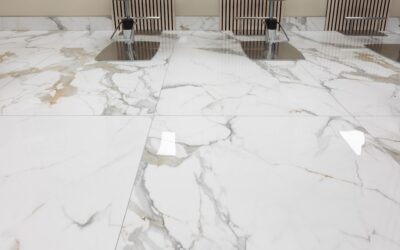
Everyone loves the veined elegance of Carrara or Calacatta marble until they price out real slabs and learn how easily marble etches and stains. Marble look porcelain tile solves that dilemma — it captures the look of high-end natural stone with almost none of the maintenance headaches, at a fraction of the cost. After specifying it on countless kitchen and bathroom projects, I can say the best of today’s porcelain is genuinely convincing, even up close. Here is how to choose it and where it makes the most sense.
Part of our Countertops guide — explore the full guide →
Why Choose Porcelain Over Real Marble
Natural marble is beautiful but demanding. It is porous, so it stains from wine, coffee, and oils; it etches when acids like lemon juice or vinegar touch it; and it needs regular sealing. Porcelain flips every one of those weaknesses into a strength.
- Nonporous and stain-resistant: spills wipe away, no sealing required
- Etch-proof: acids don’t dull the surface like they do on stone
- Harder and more durable: resists chips and scratches better than soft marble
- Consistent pricing and supply: no quarry variation to hunt down
You give up the fact that it is not genuine stone, and a purist may notice. For the vast majority of homeowners, the trade is a clear win.
How Realistic Is It Really?
Print technology has come a long way. High-end porcelain uses advanced inkjet printing to reproduce the veining, depth, and subtle color shifts of real marble, and premium lines vary the pattern across dozens of unique tile faces so the floor doesn’t look repetitive.
The tell of a cheap tile is repetition — if the same vein pattern shows up every few tiles, the eye catches it. Better tiles also carry the veining through the body of the tile or add a slight surface texture that follows the veins. When you shop, ask how many face variations a line has; more is better.
Finishes to Choose From
The finish sets the mood and affects practicality.
Polished
Glossy and reflective, mimicking honed-and-polished marble. It looks luxurious and bounces light around a room, but it shows footprints and water spots and can be slippery when wet — think twice for a shower floor.
Matte / Honed
A soft, non-reflective surface that reads like honed marble. It hides smudges and offers better slip resistance, making it the default choice for floors and wet areas.
Textured / Structured
A subtle grip texture for shower pans and outdoor use where slip resistance is critical. Look for a tile with an appropriate slip rating for wet zones.
What It Costs
Price tracks quality closely. Realistic 2026 material ranges:
- Entry-level: $2 to $4 per sq ft — fine for budget projects, but expect more pattern repetition
- Mid-range: $4 to $8 per sq ft — the sweet spot for most homes, good vein variation
- Premium large-format: $8 to $15-plus per sq ft — highly realistic, big slabs, minimal repetition
Installation adds $8 to $20 per sq ft, more for large-format slabs that demand a perfectly flat substrate. Compare that to real marble at $15 to $40-plus per sq ft in material alone, plus ongoing sealing, and the value is obvious.
Large-Format and the Seamless Look
One of the biggest trends is large-format porcelain — tiles running 24×48 inches or even full slab panels. Bigger tiles mean fewer grout lines, which reinforces the illusion of a continuous marble surface. Paired with a grout color matched closely to the tile background, a large-format floor can look almost seamless.
The catch is installation difficulty. Large-format tiles show every low spot in a subfloor as lippage, so they require a dead-flat substrate, a leveling clip system, and an experienced installer. Do not hand a first-timer 24×48 slabs.
Where to Use It
Marble-look porcelain works virtually anywhere in the home, which is part of its appeal. Common applications:
- Bathroom floors and shower walls: the number-one use — the marble look without water and etch worries
- Kitchen floors and backsplashes: stain-proof where real marble would suffer
- Living areas and entryways: durable enough for heavy traffic
- Fireplace surrounds and accent walls: heat-safe and dramatic
Because it is porcelain, it handles moisture, traffic, and temperature swings that would trouble natural stone, indoors throughout the house.
Buying and Installation Tips
Order 10 to 15 percent extra for cuts and future repairs, and pull tiles from multiple boxes as you set them to blend the veining naturally. Choose a grout color that disappears into the tile background for the most seamless result. For polished floors in wet areas, add a slip-resistant mat or choose a honed finish instead.
Bottom line, marble look porcelain tile gives you the timeless elegance of veined stone with waterproof, stain-proof, no-seal practicality. Buy a line with plenty of face variations, match the finish to the room, and hire an experienced installer for large formats. You will get the luxury look you want and a floor that still looks flawless a decade later.
Why It Often Beats Real Marble
Marble-look porcelain gives you the elegant veined appearance of natural stone while sidestepping marble’s biggest headaches. Real marble is soft, porous, and acid-sensitive, so a splash of lemon juice or wine can etch a dull mark, and it needs regular sealing. Porcelain is fired clay that is dense, non-porous, and highly stain- and scratch-resistant, and it never needs sealing. In a busy kitchen or bathroom, that durability difference is enormous.
Today’s inkjet printing technology reproduces marble’s veining so convincingly that many installations are hard to distinguish from the real thing at a glance, especially in polished finishes.
Choosing and Installing It Well
To get the most realistic result, buy tile with high pattern variation, meaning several different face designs in the run, so the veining does not obviously repeat across the floor. Rectified tiles with crisp, precisely cut edges allow tight grout joints that mimic slabs of stone. Choose a grout color that blends with the tile background rather than contrasting, since a matching grout makes the surface read as continuous marble instead of a grid of tiles. For finish, a polished tile maximizes the luxurious marble shine but shows footprints and can be slick when wet, while a matte or honed finish offers better slip resistance for floors and a softer, contemporary look. Either way, you get marble’s beauty with porcelain’s easy care.
Prefer to explore on your own?
See how new flooring looks in your actual room in seconds — free, no signup.
Try the free Floor Studio →