Most homes that feel cluttered do not have too much furniture. They have too many small things competing for the same few surfaces. Minimalist home decor fixes that by giving every room a short list of well-chosen pieces, a restrained color palette and enough closed storage that daily clutter disappears at the end of the day. The result is a house that feels larger, cleans faster and lets a few good objects actually get noticed.
You do not need white walls and an empty floor to get there. A minimalist house interior can be warm, textured and full of wood, linen and plants. What makes it minimalist is editing: fewer items, each one doing a job, arranged with plenty of negative space around it. Start with the palette and the storage plan, then add statement pieces last.
- What Minimalist Home Decor Really Means
- Tools and Materials for a Minimalist Refresh
- Building a Calm Color Palette
- Step-by-Step: Decluttering and Styling the Whole Home
- Storage That Keeps Clutter Out of Sight
- Room-by-Room Minimalist Ideas
- Choosing Statement Pieces and Materials
- Troubleshooting Common Minimalist Mistakes
- Typical Cost Ranges
- When to Call a Professional
- Frequently Asked Questions
Most homeowners can complete a whole-home refresh in stages over a few months, spending far less than a full remodel. The biggest investments are usually storage furniture and one or two quality anchor pieces, not decor accessories.
What Minimalist Home Decor Really Means
Minimalism in decorating is not the same as owning nothing. It is a design approach built on three ideas: function first, visual quiet and quality over quantity. A minimalist room design keeps sightlines clear, limits the number of colors and patterns, and treats empty wall and floor space as part of the design rather than something to fill.
Modern minimalist house design often borrows from Scandinavian and Japanese interiors. Both rely on natural materials, soft daylight and simple shapes. The difference between a calm room and a cold one usually comes down to texture. Matte plaster, oak flooring, wool throws and woven baskets add depth without adding visual noise.
A useful test for any object is simple: does it serve a daily purpose, or does it carry real meaning for you? If the answer is neither, it is a candidate for donation, storage or a different room.
Tools and Materials for a Minimalist Refresh
Most of the work is sorting and rearranging, but a few supplies make the process smoother:
- Sturdy bins or boxes labeled keep, donate, relocate and recycle
- Painter’s tape and a tape measure for planning furniture placement
- Closed storage: lidded baskets, drawer units, cabinets with solid doors
- Drawer dividers and shelf risers for kitchens and bathrooms
- Paint samples in two or three neutral shades plus one accent
- Felt pads and cord clips to tidy furniture and electronics
- Picture-hanging kit with a level for any art you keep
If you plan to repaint, add a quality roller, angled brush, drop cloths and patching compound. Painting is the cheapest way to make a room read as calm, because it removes the patchwork of old colors and scuffs that the eye picks up as clutter.
Building a Calm Color Palette
Pick one base color for the whole house and use it on most walls. Warm whites, soft greige and pale stone tones work in nearly every light. A single continuous wall color lets rooms flow into each other, which is the heart of minimalist home design.
Next, choose two supporting tones. One should be darker for grounding, such as charcoal, deep olive or walnut brown, and used on a few furniture pieces, door hardware or a single accent wall. The other is a natural material tone like oak, rattan or linen that shows up in flooring, textiles and baskets.
Limit pattern to one or two places per room. A striped rug or a textured throw is plenty. Busy prints on pillows, curtains and art at the same time quickly undo the quiet look.
Palette Ideas That Work
- Warm minimal: creamy white walls, oak floors, camel leather, black metal accents
- Cool minimal: soft gray walls, pale ash wood, white linen, brushed steel
- Earthy minimal: greige walls, terracotta pottery, olive textiles, raw wood
Step-by-Step: Decluttering and Styling the Whole Home
- Work one room at a time. Start with the room you use most, usually the living room or kitchen, so you feel the benefit quickly.
- Empty the surfaces. Clear every tabletop, counter and shelf completely. Sort items into the four labeled bins.
- Assign storage before buying any. Decide where each kept item will live. Only then measure for new cabinets, baskets or drawer units.
- Edit furniture. Remove any piece that blocks a walkway or exists only to hold clutter. Leave at least 30 to 36 inches for main traffic paths.
- Repaint if needed. Patch holes, then apply your base color. Two thin coats look better than one heavy one.
- Return items selectively. Put back only what you use weekly or genuinely love. Group small objects in threes or on a tray so they read as one unit.
- Add one statement piece. Choose a single focal point per room, such as a large artwork, a sculptural lamp or a solid wood dining table.
- Live with it for two weeks. Notice what you reach for and what you miss. Adjust before buying anything else.
Storage That Keeps Clutter Out of Sight
Closed storage is what makes a minimalist look sustainable. Open shelving looks beautiful in photos but collects dust and visual noise. In a working home, aim for roughly 80 percent closed storage and 20 percent open display.
Low credenzas and media cabinets with solid doors hide electronics, games and paperwork in living areas. Under-bed drawers and tall wardrobes handle bedrooms. In entryways, a slim bench with baskets and a row of hooks catches shoes, bags and keys before they spread through the house.
Built-ins are the gold standard because they blend into walls. If custom cabinetry is beyond the budget, flat-front stock cabinets painted the same color as the wall give a similar effect for a fraction of the cost.
Room-by-Room Minimalist Ideas
Living Room
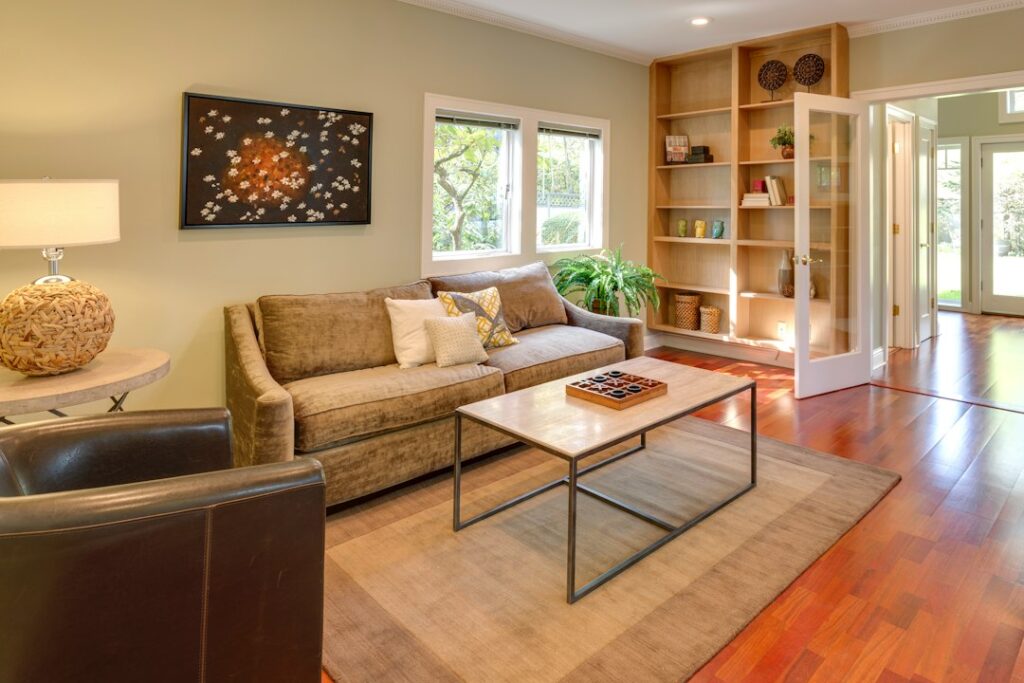
Anchor the space with one comfortable sofa, a rug large enough for the front legs of all seating, and a single coffee table. Keep the media wall simple and hide cables. Two or three plants and one large art piece are usually enough decoration.
Kitchen
Clear counters except for the appliances you use daily. Store small appliances in a pantry or lower cabinet. Matching glass jars for dry goods look tidy, but only if you actually refill them. Simple flat-panel cabinet fronts and a solid backsplash support the calm look.
Bedroom
A low bed frame, matching nightstands with drawers and plain bedding in one or two colors set the tone. Keep the dresser top nearly bare. Blackout curtains in a neutral linen add softness and better sleep.
Bathroom
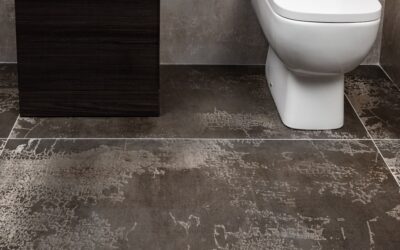
Move toiletries into drawers or a mirrored cabinet. Use one set of matching towels and a single soap dispenser. Large-format tiles with fewer grout lines make small bathrooms look bigger.
Home Office and Entry
Choose a desk with a drawer and route cords through a grommet. In the entry, one mirror, one bench and one hook rail beat a pile of mismatched organizers.
Choosing Statement Pieces and Materials
Statement pieces are where minimalist home decor shows personality. Because minimalist rooms contain fewer items, each one is more visible. Spend where you touch and see most: the sofa, dining table, bed and flooring. Solid wood, real linen and wool age gracefully and look better over time than cheap laminates and synthetics.
Flooring matters more than most people expect. Wide-plank hardwood, light luxury vinyl plank or polished concrete with few transitions between rooms creates a continuous base. Running one floor material through the main living areas is one of the most effective minimalist upgrades you can make.
Lighting is the other high-value area. Layer an overhead fixture, one or two floor or table lamps and warm bulbs around 2700K. Hidden LED strips under cabinets or behind a headboard add glow without extra fixtures.
Good minimalist home decor also accounts for seasons. Rotate a few textiles and accessories in spring and fall rather than adding more, and store the off-season set in one labeled bin.
Troubleshooting Common Minimalist Mistakes
- The room feels cold or sterile. Add texture: a chunky knit throw, a wool rug, linen curtains or a large plant. Swap cool white bulbs for warm ones.
- Clutter keeps coming back. You likely lack closed storage near where items get used. Add a drop zone by the door and a basket in each living space for daily reset.
- Walls look bare and echoey. Use one large artwork instead of several small frames. Soft furnishings and a rug also reduce echo.
- Everything is beige and flat. Introduce contrast with one dark element per room, such as black frames, a walnut table or a deep green chair.
- Family members resist. Give everyone a personal drawer or shelf where minimalist rules do not apply. Shared spaces stay calm while personal zones stay personal.
Typical Cost Ranges
A declutter-and-rearrange approach can cost almost nothing beyond bins and donation trips. Repainting a typical room yourself generally runs in the low hundreds of dollars for paint and supplies, while hiring a painter for a whole house can reach several thousand. Quality storage furniture ranges from a few hundred dollars for a solid credenza to several thousand for custom built-ins. Statement pieces vary widely, so budget for them one at a time rather than all at once.
When to Call a Professional
Most minimalist decorating is DIY friendly. Consider hiring help for custom built-in cabinetry, whole-house painting with high ceilings, new flooring installation or added lighting that requires new wiring. Any new light fixtures, recessed lights or outlets should be handled by a licensed electrician. An interior designer can also be worth a consultation fee if you feel stuck choosing a palette or layout for an open-plan home.
Frequently Asked Questions
How do I make minimalist decor feel warm instead of empty?
Lean on texture and natural materials. Wood furniture, wool and linen textiles, plants and warm 2700K lighting add comfort without adding clutter. A rug in every main room also softens sound and makes spaces feel lived in.
How many decor items should be in a minimalist room?
There is no strict number, but most minimalist rooms work well with one focal piece, a few functional accessories and a plant or two. If a surface looks busy from the doorway, remove items until it reads calm.
Can I do minimalist home design with kids and pets?
Yes. Rely heavily on closed storage, washable slipcovers and durable flooring. Give toys a dedicated cabinet or bins that can be cleared in minutes each evening.
What colors work best for a minimalist house interior?
Warm whites, soft grays and greige make good base colors. Pair them with one darker grounding tone and natural wood or woven textures. Keep strong colors to a few accents per room.
Is minimalist decor expensive?
It can be very affordable because you buy less. Most of the cost goes into storage and a few quality anchor pieces, which tend to last longer than trend-driven accessories.