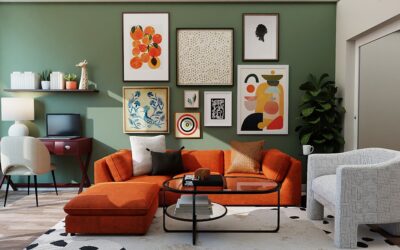
Most rooms that feel cold are not missing furniture. They are missing texture. Organic modern interior design fixes that by keeping the clean lines and open floor space of modern design while swapping glossy, hard-edged finishes for wood, stone, linen, wool and hand-troweled plaster. The result is a room that looks edited and quiet but still feels soft enough to curl up in.
Think of it as warm minimalism. You keep clutter low and silhouettes simple, then let natural materials carry the visual interest. Instead of a bright accent wall, the “accent” is a grain pattern in white oak, the veining in a honed marble, or the slubby weave of a linen curtain. Colors come from the earth: warm whites, sand, clay, mushroom, olive and charcoal.
- What Organic Modern Interior Design Actually Means
- The Core Material Palette
- Color Palette by Room
- How to Create Organic Modern Rooms Step by Step
- Room-by-Room Ideas
- Common Mistakes and How to Fix Them
- Budget Ranges for an Organic Modern Refresh
- When to Bring in a Professional
- Frequently Asked Questions
If you have been collecting photos of rooms with pale wood floors, rounded sofas, limewash walls and a single sculptural branch in a ceramic vase, you are already looking at modern organic decor. The work is translating that look into decisions about flooring, paint, furniture and lighting that hold up in a real house with kids, pets and muddy boots.
What Organic Modern Interior Design Actually Means
The style sits between two familiar camps. From modern design it borrows restraint: low-profile furniture, uncluttered surfaces, large windows left mostly bare, and a limited palette. From organic and natural design it borrows warmth: materials that show their origin, irregular handmade objects, and shapes inspired by nature, such as curved sofa arms, round dining tables and pebble-shaped side tables.
Three principles define a successful organic modern room:
- Material honesty. Wood should look like wood, stone like stone. Matte and honed finishes win over high gloss. A little visible grain, knot or variation is welcome.
- Layered texture over pattern. Instead of bold prints, you build interest with boucle, nubby wool, raw linen, jute, rattan and plaster. A room might contain eight textures and almost no printed pattern.
- Soft geometry. Rectilinear architecture is balanced with rounded furniture, arched mirrors and organic-shaped lighting so the room never feels rigid.
Where organic modern style differs from Scandinavian design is mostly in temperature and weight. Scandinavian rooms tend toward cool whites, lighter furniture and more contrast. Organic modern rooms run warmer, use heavier natural materials such as travertine and walnut, and lean on tone-on-tone layering rather than black-and-white contrast.
The Core Material Palette
Before you shop for a single pillow, settle the big surfaces. Floors, walls and large casework take up most of what you see, and getting them right does more for the look than any accessory.
Flooring
Wide-plank white oak in a natural, matte or “raw” finish is the signature floor. Planks of 7 to 9 inches wide read calmer than narrow strips because there are fewer seams. A wire-brushed surface adds texture and hides scratches better than a smooth one. If solid hardwood is outside your budget or the room is a basement, engineered oak gives the same face appearance with better dimensional stability. Waterproof luxury vinyl plank with a realistic oak visual and low-sheen wear layer works well in kitchens, baths and basements; look for long, wide planks and embossed-in-register texture so the grain feels believable.
Stone and stone-look tile belong here too. Honed limestone, travertine and porcelain that mimics them suit entries, bathrooms and kitchens. Large formats of 24 by 24 inches or bigger, laid with narrow grout lines in a color matched to the tile, keep the floor quiet.
Walls
Flat white drywall can feel sterile in this style. Plaster finishes, limewash and mineral paints add soft movement that changes through the day. If real plaster is not practical, a plaster-look wall paint applied with a brush or trowel in crisscross strokes gives a similar cloudy, matte texture for a fraction of the labor. Use it on one key room, such as the living room or primary bedroom, rather than everywhere, and keep the color within one or two shades of your trim.
Wood and Casework
Mix two wood tones at most in one room: typically a light oak for floors and a medium or darker wood, such as walnut, for one piece of furniture or a cabinet run. Rift-sawn or quarter-sawn oak cabinet doors in a slab or slim shaker profile work well in kitchens. Keep hardware minimal in brushed brass, bronze or matte black.
Textiles
Linen curtains hung high and wide, wool or jute rugs, boucle or textured performance fabrics on seating, and stonewashed linen bedding complete the palette. Natural fiber rugs can be scratchy underfoot, so in living areas many people layer a soft wool rug over a larger jute one.
Color Palette by Room
The palette is warm and low contrast. Pure bright white often looks gray or blue against oak and stone, so lean toward whites with a touch of yellow or red in the undertone.
| Room | Wall color direction | Accent tones |
|---|---|---|
| Living room | Warm white or pale greige plaster look | Clay, cognac leather, olive |
| Kitchen | Creamy white | Natural oak, honed stone, brushed brass |
| Bedroom | Mushroom or soft taupe | Oatmeal linen, walnut, muted sage |
| Bathroom | Limewash beige or warm gray | Travertine, terracotta, matte black |
| Home office | Deeper earthy tone such as olive or clay | Walnut, wool, aged bronze |
Sample colors on large boards, at least 12 by 12 inches, and look at them next to your actual flooring at morning, noon and evening. North-facing rooms push colors cooler, so a slightly warmer white usually reads more neutral there.
How to Create Organic Modern Rooms Step by Step
You do not need a full renovation. Most homes can shift toward the look in stages.
- Edit first. Remove a third of the decorative objects in each room. Organic modern relies on negative space, and texture cannot show if every surface is covered.
- Neutralize the walls. Repaint in a warm white or earthy neutral. Swap bright accent walls for a single textured plaster-look wall in the main gathering space.
- Address the floor. If you have orange-toned oak, glossy tile or busy patterned carpet, plan a replacement or refinish. Refinishing existing oak with a clear water-based matte finish or a natural-look sealer can remove amber tones on many floors.
- Introduce one curve per room. A round coffee table, an arched mirror, a curved-back chair or a globe pendant softens straight walls.
- Layer textiles. Add linen window treatments, a textured throw, a wool rug and two or three pillows in different weaves of the same color family.
- Add living elements. Large-leaf plants, dried branches or a bowl of stones bring nature in. Pick one or two larger statements rather than many small pots.
- Warm the lighting. Use 2700K bulbs, dimmers and at least three light sources per room: overhead, a lamp and an accent such as a wall sconce or picture light.
Room-by-Room Ideas
Living Room
Anchor the room with a low, deep sofa in an oatmeal or ivory performance fabric. Pair it with a solid wood or stone coffee table in a rounded shape. A large wool rug that lets all front sofa legs sit on it keeps the grouping together. Limit open shelving décor to a few ceramics, books stacked horizontally and one plant.
Kitchen
Light oak or painted cabinets in a soft white, honed quartz or stone counters with subtle veining, and a zellige-style or handmade-look backsplash give the kitchen depth without color. Open shelves in matching wood, holding everyday pottery, keep it personal. Wood or stone-look floors run continuously from the living area to connect the spaces.
Bedroom
Choose an upholstered or solid wood bed with a low profile, layered linen bedding and nightstands with rounded edges. Wall-mounted reading lights free up nightstand space. A textured wall or a large woven wall hanging behind the bed can replace a headboard focal point.
Bathroom
Stone or stone-look floor and wall tile, a floating wood vanity, a round or arched mirror and plaster-look walls create a spa feel. Choose a matte finish on fixtures. Bathrooms need moisture-resistant finishes: use a paint labeled for high-humidity rooms or a properly sealed lime plaster, and keep an exhaust fan running for 20 to 30 minutes after showers.
Common Mistakes and How to Fix Them
Too beige. A room built entirely from one sand color can look flat. Fix it with a dark accent: a charcoal lamp base, walnut side table or black picture frames. A small amount of contrast makes the neutrals look intentional.
Too many wood tones. Mixing orange pine, gray-washed laminate and red cherry in one view is the fastest way to lose the calm look. Keep to two wood tones and repeat each at least twice in the room.
Faux materials that read fake. Plastic rattan, shiny printed wood and flat vinyl with repeating knots break the illusion. Spend on the surfaces people touch most: floors, counters and seating. Save on accessories.
Ignoring durability. Ivory boucle and raw wood look great until the first spill. Choose performance fabrics, washable slipcovers, and a hardwax oil or water-based polyurethane on wood surfaces that see daily use. For floors, a commercial-grade wear layer on vinyl or a scratch-resistant finish on hardwood keeps the look from aging badly in busy homes.
Cold lighting. Daylight bulbs of 5000K make natural materials look gray and clinical. Stick with 2700K to 3000K in living spaces.
Budget Ranges for an Organic Modern Refresh
Costs vary widely by region and finish level, but general ranges help with planning:
- Paint refresh: a few hundred dollars per room DIY; professional interior painting often runs roughly $2 to $6 per square foot of wall area.
- Plaster or limewash finish: DIY plaster-look paint costs similar to premium paint plus tools; professional Venetian or lime plaster can cost several times standard painting.
- Flooring: luxury vinyl plank installed often lands in the mid single digits per square foot; engineered or solid white oak installed commonly runs higher, from the high single digits into the teens per square foot.
- Refinishing existing hardwood: often a fraction of replacement cost, typically a few dollars per square foot.
- Textiles and décor: rugs, linen curtains and pillows can be phased in over months to spread cost.
When to Bring in a Professional
A designer is worth hiring when you are coordinating several finishes at once, such as flooring, cabinetry and counters in an open plan, because mistakes there are expensive to undo. Hire flooring installers for wide-plank hardwood, which needs proper acclimation, moisture testing of the subfloor and correct expansion gaps. Lime and Venetian plaster also reward experience; a skilled plasterer gets the soft, cloudy finish that DIY attempts sometimes miss. If you plan to sand old floors, trim or walls in a home built before 1978, test the paint and finishes for lead first and follow lead-safe work practices.
Organic modern interior design rewards patience. Start with the floor and walls, keep the palette warm and quiet, add one curve and one natural element per room, and let texture do the decorating.
Frequently Asked Questions
What is the difference between organic modern and modern farmhouse?
Modern farmhouse leans on shiplap, barn-style details, black-and-white contrast and rustic accents. Organic modern is simpler and more refined: smooth or plastered walls, minimal trim details, rounded furniture and a warm, low-contrast palette built around natural wood and stone.
What flooring works best for organic modern style?
Wide-plank white oak with a natural matte finish is the classic choice. Engineered oak, realistic oak-look luxury vinyl plank and honed stone or stone-look porcelain tile also suit the style, especially in kitchens, bathrooms and basements.
Can organic modern rooms include color?
Yes, as long as the colors come from nature. Olive, sage, terracotta, rust, ochre and deep clay work well as accents or even as a full wall color in a smaller room such as an office or powder room.
Is organic modern decor expensive to achieve?
It does not have to be. Editing clutter, repainting in warm neutrals, switching to warm bulbs and adding linen and wool textiles cost far less than renovation. Save larger spending for flooring and seating, which have the most visual impact.
How do I keep an organic modern room from feeling bland?
Vary texture and scale. Combine smooth plaster with nubby wool, rough jute with polished stone, and include one dark accent and one sculptural piece, such as a large branch or an oversized ceramic vessel, to give the eye a place to land.