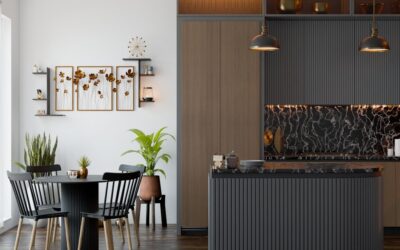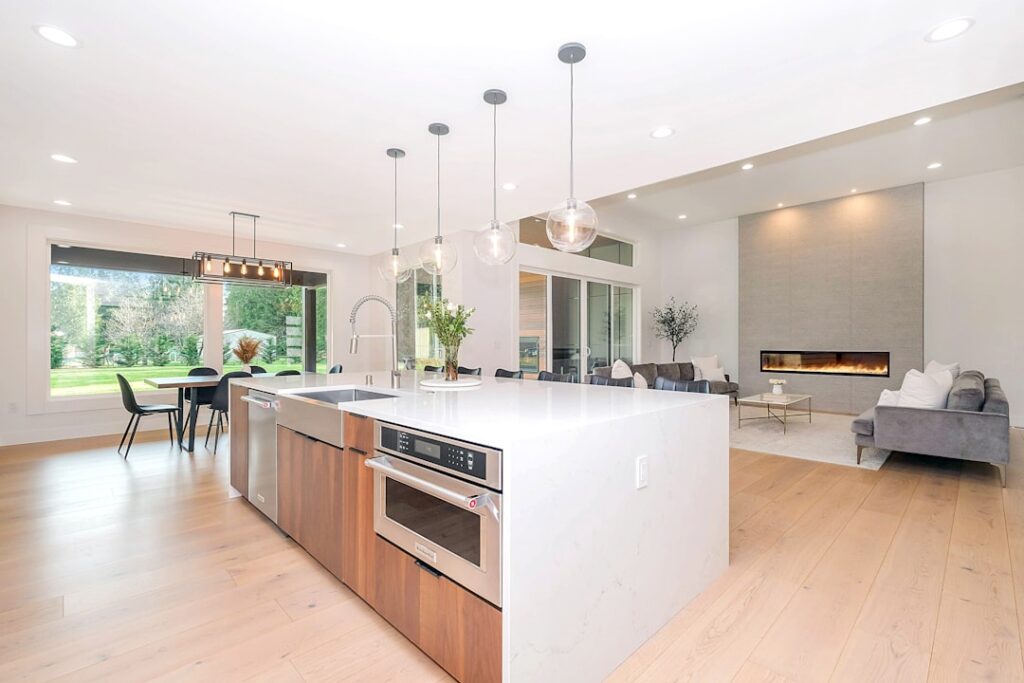
The modern kitchen is often confused with the contemporary one, but true modern style has its own disciplined roots in mid-century design, form follows function, ornamentation is stripped away, and every element earns its place. A modern style kitchen is defined by clean geometric lines, flat surfaces, an uncluttered minimalist aesthetic, and a tight, deliberate material palette. It is a look that rewards editing: the fewer competing elements, the more successful the room.
Part of our Kitchen Remodeling guide — explore the full guide →
Building a modern kitchen well means understanding its principles rather than just copying finishes. This guide breaks down the cabinetry, layout, materials, and color decisions that create an authentically modern space, along with what it costs and where to invest.
The Principle of Minimalism
At its core, modern design is about subtraction. Where other styles add detail, modern kitchens remove it, no ornate moldings, no raised panels, no decorative corbels or fussy hardware. Surfaces are smooth and flat, lines are straight and horizontal, and clutter is banished. This minimalism is not about emptiness; it is about intentionality, where every visible element is chosen and everything else is hidden.
That philosophy shapes practical decisions throughout the kitchen. Countertops stay clear because storage is engineered to absorb the small appliances and daily clutter. Cabinet fronts are plain because the beauty comes from proportion and material, not decoration. Understanding this principle keeps you from undermining a modern kitchen with the accumulation of accessories and detail that the style is specifically designed to avoid. When in doubt, take something away.
Cabinets and Storage
Modern cabinetry is flat-panel and frameless, slab doors with no visible detailing, often in high-gloss lacquer, matte laminate, or clean wood veneer. Frameless, or European-style, construction gives fuller access and a tighter, more seamless look than traditional face-frame cabinets. Handleless designs dominate, using integrated finger pulls or push-to-open hardware so the facade stays unbroken.
Storage is engineered rather than decorative. Deep pot drawers with heavy-duty soft-close glides, pull-out pantry towers, corner carousels, and appliance garages keep everything out of sight. Cabinets frequently run full height to the ceiling, maximizing storage and eliminating the dated gap that collects grease and dust above standard uppers. This intense focus on concealed, efficient storage is what allows the countertops to stay clear, which is essential to the minimalist look modern kitchens depend on.
Layout and the Island
Modern kitchens favor open, efficient layouts that flow into adjacent living spaces. The island is usually the anchor, a clean rectangular block that provides prep space, casual seating, and often houses the sink or cooktop. Keep at least 42 to 48 inches of clearance around the island so traffic moves freely and appliance and cabinet doors open without collision.
The traditional work triangle, sink, cooktop, and refrigerator arranged for efficient movement, still guides most modern layouts, though larger kitchens increasingly use a zoned approach with dedicated prep, cook, and cleanup areas. A waterfall island, where the counter material cascades vertically down the sides to the floor, is a hallmark modern detail that turns the island into a sculptural centerpiece. Whatever the configuration, the priority is unobstructed flow and generous clear counter space, the functional backbone of the style.
Materials and Surfaces
Modern kitchens rely on a curated mix of sleek materials. Quartz is the countertop favorite for its smooth, consistent, low-maintenance surface, though concrete, stainless steel, and large-format porcelain also suit the industrial edge of the style. High-gloss and matte laminate cabinet fronts, glass, and polished metal accents reinforce the clean, engineered feel.
Backsplashes stay simple, a slab of the counter material carried up the wall, or large-format tile with minimal grout lines, rather than busy mosaics. Flooring is typically large-format porcelain, polished concrete, or wide-plank wood-look surfaces in neutral tones. The rule throughout is restraint and repetition: a few high-quality materials used consistently create the cohesive, deliberate look, while a jumble of competing finishes reads as the opposite of modern. Texture and sheen provide the interest that ornamentation provides in other styles.
Color Palettes
Modern kitchens embrace bold simplicity in color, most often monochrome or high-contrast neutral schemes. All-white kitchens feel bright and gallery-like; all-black or charcoal kitchens read dramatic and sophisticated; and black-and-white combinations deliver crisp, graphic contrast. These restrained palettes let the clean lines and material textures take center stage.
When color enters a modern kitchen, it does so decisively rather than timidly, a single bold red accent, a vivid backsplash, or a striking island against an otherwise neutral field. Natural wood tones are frequently used to warm up the palette and keep the space from feeling cold, a wood-grain island or open wood shelving against white or gray. The key is commitment: modern kitchens look best with a confident, edited palette rather than a cautious mix of many colors.
Modern Versus Contemporary and Warming the Look
It helps to understand how modern differs from the contemporary style it is often confused with, because the distinction guides your choices. Modern design is a specific historical movement rooted in mid-century principles, function over ornament, honest materials, and timeless geometric forms, so a truly modern kitchen has a consistent, disciplined vocabulary that does not change with fashion. Contemporary, by contrast, simply means whatever is current, borrowing freely from many styles and shifting over time. In practice, a modern kitchen is more rigorous and restrained, while a contemporary one is more flexible and trend-aware. Knowing which you are actually after keeps your decisions coherent rather than pulling the room in two directions.
The chief risk of a strictly modern kitchen is coldness, and the antidote is deliberate warmth. Because the palette is often stark and the surfaces hard and glossy, introduce natural texture to make the space inviting: a wood-grain island or open wood shelving, a stone or concrete counter with visible movement, woven bar stools, or a few carefully chosen plants. Warm lighting on dimmers softens the edges in the evening, and a single organic element, a live-edge wood counter, a handmade ceramic pendant, prevents the room from feeling like an appliance showroom. The best modern kitchens balance their crisp geometry with just enough natural warmth to feel like a place you want to cook and gather, not merely admire.
Backsplash and Flooring Choices
The backsplash and floor are large supporting surfaces that should reinforce the modern kitchen’s discipline rather than compete with it. For the backsplash, a full slab of the counter material carried up the wall delivers the seamless, monolithic look modern design favors, while large-format tile with tight, color-matched grout achieves a similar effect for less. If you want subtle texture, a stacked-bond arrangement, tiles aligned in straight vertical or horizontal columns rather than the traditional offset, reads distinctly modern; busy mosaics and ornate patterns fight the aesthetic. Flooring follows the same logic: large-format porcelain, polished concrete, or wide-plank wood-look surfaces in neutral tones keep the floor calm beneath the cabinetry. Polished concrete in particular suits the industrial edge of many modern kitchens, offering a seamless, durable, low-maintenance surface. The unifying rule across both surfaces is restraint, choose materials that recede into clean fields so the cabinetry, counters, and deliberate focal points carry the design.
Appliances, Lighting, and Budget
Appliances in a modern kitchen are either boldly stainless steel or completely hidden behind panel-ready cabinet fronts for a seamless built-in effect. Integrated refrigerators and dishwashers that vanish into the cabinetry reinforce the uninterrupted lines, while a dramatic range or a sleek matte-black hood can serve as a deliberate focal point. Lighting is layered and often sculptural: recessed cans for ambient light, under-cabinet LEDs for task lighting, and geometric pendants over the island as design statements.
Budget-wise, a modern kitchen remodel typically runs $25,000 to $60,000, with cabinetry taking the largest share. Because the style depends on coherence rather than expensive individual pieces, the smart strategy is to invest in the defining, daily-use elements, quality flat-panel cabinets, a good quartz counter, and layered lighting, while economizing on accessories. Done thoughtfully, a modern style kitchen delivers a timeless, functional, and genuinely striking space where every element has been chosen with purpose.