If a fully modern kitchen feels cold to you but a traditional one feels fussy, you are exactly who transitional design was made for. A modern transitional kitchen sits in the comfortable middle, borrowing the clean lines and uncluttered look of contemporary design while keeping the warmth, texture, and approachability of classic style. The result is a space that looks current without chasing trends that will date in five years. Done right, it reads as timeless rather than transitional, which is part of why this approach has stayed popular with both designers and resale-minded homeowners.
What Makes a Kitchen Transitional
Transitional style is defined by balance, not by a single signature look. You take an element with traditional roots and pair it with something distinctly modern, so neither side dominates. Think Shaker cabinets, a profile with traditional bones, finished in a flat matte paint and topped with a waterfall quartz island. The contrast is what creates interest.
The guiding rule is restraint. Where a traditional kitchen might layer crown molding, corbels, glazed finishes, and ornate hardware, a transitional space keeps one or two of those details and lets the rest stay simple. You are editing, not adding.
Cabinets: The Foundation of the Look
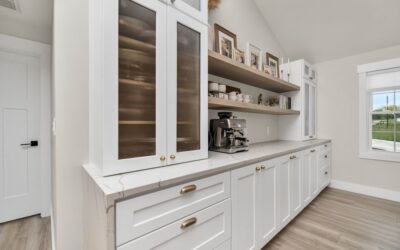
Cabinetry sets the tone, and Shaker-style doors are the workhorse of transitional kitchens. Their recessed center panel and flat rails carry a hint of tradition while staying clean enough to feel modern. For an even more contemporary lean, a slim Shaker profile with a narrower frame splits the difference nicely.
Color matters as much as the door style. Warm whites, soft greige, sage green, and deep navy all suit the style. A popular and durable move is a two-tone layout: lighter perimeter cabinets with a contrasting island in a deeper tone. To push modern, skip ornate knobs in favor of long matte-black or brushed-brass bar pulls, sized around 5 to 8 inches for drawers and full-length pulls on tall pantry doors.
Countertops and Surfaces
Quartz is the most common countertop choice here because it offers the veined, marble-inspired look people want with far less maintenance than natural stone. A soft white quartz with gentle gray veining reads elegant without going dramatic. If you want more character, honed granite or a quartzite with subtle movement works well.
Surface thickness and edges send a style signal too. A standard 3 cm slab with a simple eased or square edge feels modern, while a mitered edge that builds the counter up to 2 or 3 inches of apparent thickness adds a contemporary, substantial look. Reserve heavily beveled or ogee edges for more traditional rooms.
Backsplash and Wall Treatments
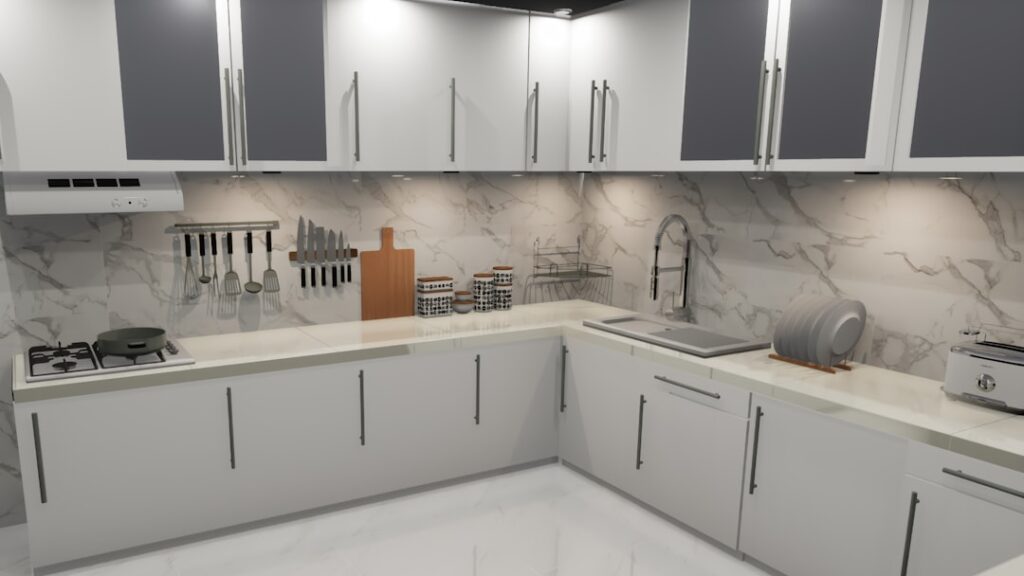
Backsplash is where you can lean either direction. A classic white subway tile in a 3-by-6 or 3-by-12 format is a transitional staple, especially when you swap basic white grout for a soft gray to add definition. For a more modern feel, run a single slab of the countertop material up the wall behind the range, or choose a large-format tile with minimal grout lines.
Whatever you pick, keep the palette calm. Transitional kitchens rely on texture and material contrast rather than bold pattern, so a busy mosaic usually fights the look.
Flooring Choices That Work
Flooring should ground the room without stealing attention. Wide-plank engineered hardwood in a medium to light oak tone is a perfect fit, bringing natural warmth that balances cooler surfaces like quartz and stainless steel. Luxury vinyl plank in a realistic wood look is a budget-friendly, waterproof alternative that performs well in busy households.
If you prefer tile, large-format porcelain in a soft concrete or natural-stone visual keeps the floor quiet and modern. Aim for planks or tiles in larger formats, since oversized pieces with fewer seams read more contemporary than small, busy tile.
Color Palette and Materials Mix
Successful transitional kitchens usually stay within a controlled palette of three to four colors, then build interest through materials. A common formula pairs a warm neutral base with one accent color and two metal finishes used consistently. For example: greige cabinets, a navy island, brushed brass hardware, and matte-black faucet and lighting.
Mixing metals is allowed and even encouraged, but limit it to two finishes and use each in more than one place so the choice looks intentional. Natural materials such as wood open shelving, a butcher-block accent, or woven counter stools add the tactile warmth that keeps the space from feeling sterile.
Lighting and Hardware Details
Lighting is a small budget line with an outsized impact. Two or three pendants over the island are nearly standard, and their shape is your chance to set the mood: clear glass globes feel airy and modern, while metal dome shades lean classic. Under-cabinet LED strips improve task lighting and give the whole kitchen a finished, layered look at night.
Plumbing fixtures should match the hardware story you have already established. A bridge faucet feels traditional, a tall gooseneck pull-down feels modern, and either works as long as the finish ties back to your cabinet pulls and lighting.
Appliances and Fixtures
Appliance finishes contribute to the warm-but-clean balance. Stainless steel remains the default and works well, but panel-ready appliances that disappear behind cabinet fronts give the most seamless modern look. Matte black and warmer stainless variants are popular alternatives that read softer than bright chrome. A farmhouse or apron-front sink in fireclay nods to tradition, while an undermount stainless or composite sink keeps things streamlined; either suits the style depending on how traditional you want to lean.
The range is often the workhorse and the visual anchor. A professional-style range in stainless steel or a panel-front built-in oven both fit. Keep the hood simple, a clean stainless or plaster-look chimney hood, rather than an ornate wood mantel surround, to stay on the modern side of the line.
Common Mistakes to Avoid
- Over-decorating: Piling on crown molding, glazing, and ornate hardware tips the room into pure traditional and clutters the clean look.
- Too many finishes: Limit metals to two and colors to three or four, or the space loses its cohesive, edited feel.
- Cool-only palettes: All-gray-and-white schemes can read cold; warm them with wood or a warm neutral.
- Mismatched scale: Tiny mosaic backsplash with oversized slab counters fights itself; keep proportions consistent.
- Trend chasing: The strength of transitional design is timelessness, so avoid finishes destined to date quickly.
Putting It All Together
The easiest way to keep a transitional kitchen cohesive is to choose one neutral foundation, add a single point of contrast, and repeat your metals. Start with the cabinet color and door style, lock in the countertop, then let the backsplash, flooring, and fixtures fall in line with that palette. When every element supports the same calm, balanced story, the kitchen reads as effortless rather than overworked.
That balance is the whole point. A well-executed modern transitional kitchen gives you the warmth of a home you actually want to cook in and the clean, current look that holds its value for years. Edit carefully, repeat your finishes, and let quality materials do the talking.