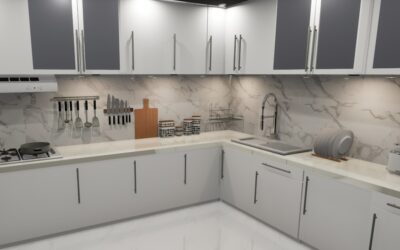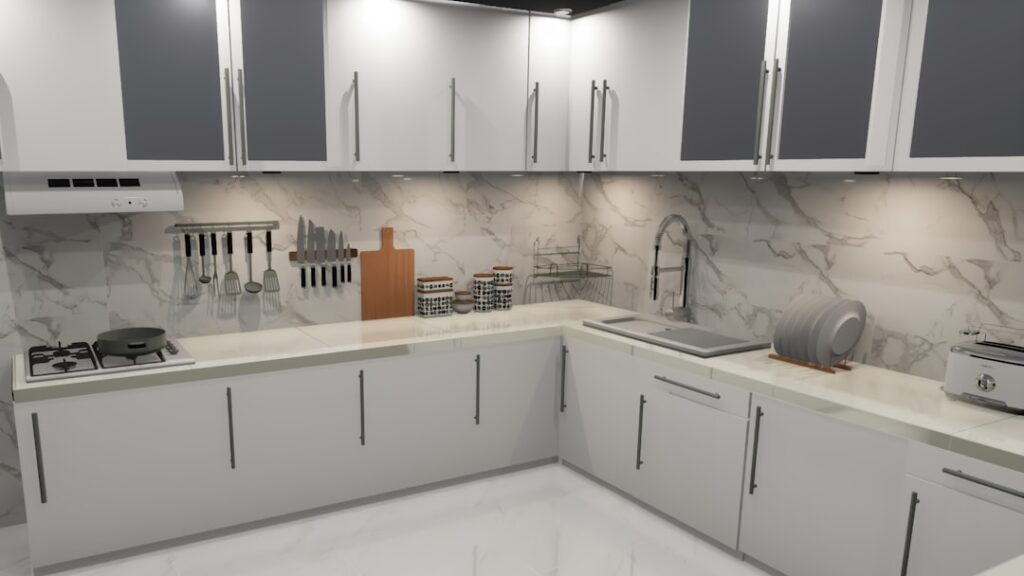
The most-photographed kitchens in real estate listings over the last decade share one design choice. They use transitional kitchen cabinets, a style that pulls the best details from traditional craftsmanship and contemporary minimalism without committing fully to either camp. The result is a kitchen that looks timeless rather than trendy, appeals to nearly every buyer at resale, and accommodates a wide range of countertop, backsplash, and flooring choices. This guide breaks down the door styles that define the look, the finishes that dominate current builds, the hardware that ties it together, and the realistic costs of bringing a transitional kitchen to life in your home.
Part of our Kitchen Remodeling guide — explore the full guide →
What Makes a Cabinet Transitional
Transitional cabinets sit between two extremes. Traditional cabinetry uses raised panels, ornate moldings, glazed finishes, and carved appliques. Modern cabinetry strips everything down to flat slab fronts, hidden hinges, and integrated pulls. Transitional borrows the clean lines of modern but keeps just enough detail from traditional to read as warm rather than cold.
The signature element is the simple shaker door with a flat center panel and minimal frame profile. No raised panel, no beading, no decorative cutouts. Combined with painted finishes in soft neutrals or natural wood tones in mid-range warm species, this combination defines the look.
Door Styles That Define the Style
Three door designs dominate transitional kitchen cabinetry, with subtle variations that personalize each kitchen.
- Classic shaker: 2.25 to 2.5 inch frame width, flat center panel, beveled inner edge
- Slim shaker: 1.5 to 2 inch frame, tighter look, more contemporary feel
- Flat slab with light grain: usually rift-cut white oak or walnut veneer, modern but warm
- Beaded inset: traditional cabinetmaker construction with shaker fronts, premium custom
Standard shaker is the safe default and works in 90 percent of homes. Slim shaker reads more current and pairs especially well with very plain quartz counters. Flat slab in natural wood pulls the style toward Scandinavian and works in newer or contemporary architecture.
Color Palettes That Photograph Well
Color choice on the cabinets is more important than door style for setting the overall mood. Warm whites and soft grays dominate, with a strong recent shift toward natural wood for islands and accent runs.
Benjamin Moore White Dove, Simply White, and Chantilly Lace lead the painted white category. For soft grays, Sherwin-Williams Repose Gray and Benjamin Moore Classic Gray are reliable picks. Two-tone kitchens with painted perimeter cabinets and a contrasting wood or deep navy island have become the signature transitional move. Hale Navy and Sherwin-Williams Naval anchor the navy trend, while rift-cut white oak in a natural matte finish handles the warm wood role beautifully.
Hardware Choices That Tie It Together
Hardware finalizes the transitional read. Knobs alone feel too traditional. Long pulls alone feel too modern. The current best practice mixes both. Use cabinet knobs about 1.25 inches in diameter for upper cabinets and drawers under 12 inches, and bar or cup pulls 4 to 6 inches long for larger drawers and base cabinets.
Finish choices that consistently work include matte black, brushed brass, polished nickel, and unlacquered brass. Avoid mixing more than two finishes in a single kitchen. Matte black with brushed brass accents on the faucet and pendants is the current top combination for transitional design.
Construction Quality Matters
The visible style sells the kitchen, but the construction determines whether it lasts 15 years or 35. Inspect three details on any sample before committing to a cabinet line.
First, full extension soft-close drawers with all-metal undermount slides should be standard. Wood-on-wood slides date the kitchen instantly. Second, dovetailed solid wood drawer boxes outperform stapled MDF boxes by decades. Third, plywood box construction with 1/2 to 3/4 inch sides beats particleboard for moisture resistance, screw holding power, and longevity.
Layout and Storage Features
Transitional kitchens lean toward functional storage. Common upgrades that pay off daily include pull-out trash and recycling bins, a tray divider above the wall oven, drawer organizers for utensils, and a tall pantry cabinet with roll-out shelves.
Open shelving in moderation works for transitional design. One section of the kitchen, often above a coffee zone or beside a window, with two 24 to 36 inch white oak or walnut floating shelves at $80 to $200 per shelf adds warmth without committing to fully open uppers. Skip the floor-to-ceiling open shelving treatment unless you commit to daily dish styling.
Countertop and Backsplash Pairings
Transitional cabinets give you maximum flexibility on counters and backsplashes. Quartz in marble-look patterns leads the current market. Caesarstone Calacatta Nuvo, Cambria Brittanicca, and MSI Calacatta Laza all pair beautifully with white or gray painted shaker cabinets at $50 to $90 per square foot installed.
For backsplash, 3 by 6 inch ceramic subway tile in soft white with bone or gray grout remains the dominant choice. Slightly more elevated picks include 2 by 8 inch handmade-look tile around $12 to $18 per square foot, or full-height quartz extending up to the upper cabinets for a seamless modern look.
Realistic Cost Ranges
Transitional kitchen cabinet pricing splits clearly by source and construction quality. Use these ranges for a typical 200 square foot kitchen with 30 linear feet of cabinetry.
- Stock cabinets from Home Depot or Lowes: $4,500 to $8,500
- Semi-custom from KraftMaid, Schrock, or Diamond: $9,000 to $18,000
- Custom from local cabinetmaker: $20,000 to $40,000
- Fully custom with premium finishes and inset doors: $40,000 to $80,000
Installation typically adds $4,000 to $10,000 depending on layout complexity. Countertops, backsplash, hardware, flooring, and appliances all add separately, so a complete transitional kitchen remodel in 2026 commonly runs $50,000 to $150,000.
Resale and Longevity
Transitional kitchen cabinets sit at the top of every Realtor preference list because they appeal to buyers across demographics and price points. A well-executed transitional kitchen returns 65 to 75 percent of its cost at resale, higher than any other style in the National Association of Realtors annual data.
The bigger story is staying power. Traditional kitchens from 2008 read as dated today. Modern flat-slab kitchens from 2014 already feel like a specific era. Transitional kitchens from the same vintages still photograph well, sell quickly, and look intentional. If you are renovating now and planning to live in the home for the next decade or beyond, the style choice is the safest bet on the menu.