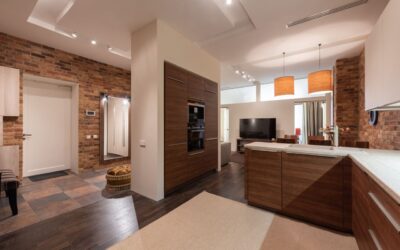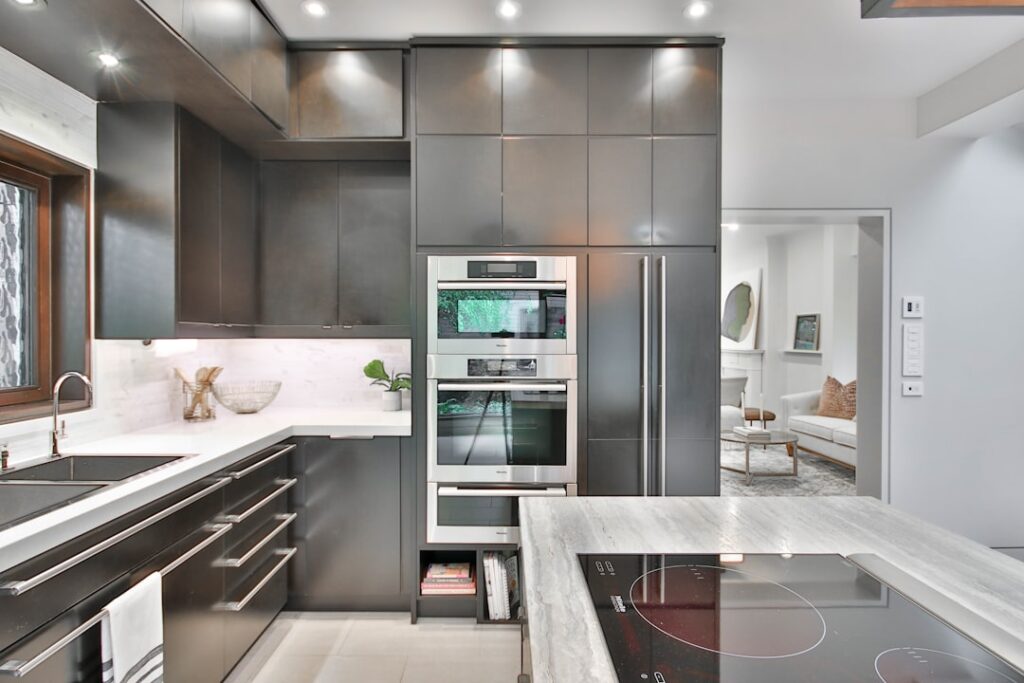
Metal kitchen cabinets have swung from mid-century staple to demolition-yard relic and back to sought-after design statement. Today they show up in two very different kitchens: sleek modern remodels chasing a commercial-grade look, and restored vintage homes bringing back the enameled steel cabinets of the 1940s and ’50s. Either way, metal offers durability that wood simply can’t touch.
Part of our Kitchen Remodeling guide — explore the full guide →
Here’s an honest look at the materials, costs, finishes, and trade-offs so you can decide whether metal belongs in your kitchen.
- The Main Types of Metal Cabinets
- Why People Choose Metal
- The Downsides to Weigh
- What Metal Cabinets Cost
- Finishes and Color Options
- Design Styles That Suit Metal
- Care and Maintenance
- Construction: What to Check Before Buying
- Restoring Vintage Steel Cabinets
- Are Metal Cabinets Right for You
- Countertops and Backsplashes That Pair Well
- Installation Considerations
- Frequently Asked Questions
The Main Types of Metal Cabinets
Not all metal cabinets are the same alloy or build:
- Stainless steel: the premium, restaurant-kitchen choice. Rust-resistant, heat-proof, and hygienic. Comes in brushed, satin, or polished finishes.
- Powder-coated or enameled steel: carbon steel sealed under a baked-on color coat. This is the classic retro look, available in dozens of colors.
- Aluminum: lightweight and fully rust-proof, often used for frames and modern flat fronts.
- Vintage salvaged steel: original mid-century units (St. Charles, Youngstown, GE) that owners restore and repaint.
Most new metal kitchen cabinets sold today are either stainless steel or powder-coated steel over a steel or ply core.
Why People Choose Metal
The appeal goes well beyond looks. Metal cabinets deliver practical advantages wood can’t:
- Waterproof: they won’t swell, warp, or rot from steam, spills, or a leaking dishwasher.
- Fireproof: steel doesn’t burn, a real safety edge near the range.
- Pest-proof: no wood for termites or roaches to nest in.
- Hygienic: non-porous surfaces wipe clean and don’t harbor bacteria, which is why commercial kitchens use them.
- Long-lived: a well-built steel cabinet can last 40 to 60 years or more.
- Recyclable: steel and aluminum are fully recyclable at end of life.
The Downsides to Weigh
Metal isn’t perfect, and you should go in clear-eyed:
- Dents and scratches show. A dropped pot can leave a permanent ding, and stainless shows fingerprints and smudges constantly.
- Noise. Doors and drawers can clang; quality soft-close hardware and rubber bumpers are essential.
- Cold, hard feel. Some people find all-metal kitchens sterile or industrial.
- Rust risk on carbon steel. If the coating chips through to bare steel in a wet spot, it can corrode. Stainless and aluminum avoid this.
- Cost. Quality stainless runs at the top of the cabinet market.
What Metal Cabinets Cost
Pricing spreads widely by material and build:
- Powder-coated steel (stock/semi-custom): $300–$700 per linear foot.
- Stainless steel (semi-custom): $600–$1,200 per linear foot.
- Full custom stainless: $1,200–$2,500-plus per linear foot.
- Restored vintage steel: $150–$500 per cabinet for salvaged units, plus refinishing.
For a 25-linear-foot kitchen, budget roughly $7,500–$17,500 for powder-coated steel and $15,000–$30,000-plus for quality stainless. Restoring salvaged vintage cabinets is the budget path if you can source them and are willing to sand, prime, and repaint.
Finishes and Color Options
Stainless comes in a few surface treatments that change the look and how much they show marks:
- Brushed/satin: the most forgiving on fingerprints, the standard commercial finish.
- Polished/mirror: dramatic but shows every smudge; rare in home kitchens.
- Textured or embossed: hides scratches and prints best of all.
Powder-coated steel is where color lives. You can get soft mint green, buttery yellow, cherry red, navy, and dozens of other baked-on colors that never need repainting. This is how people get the cheerful retro look without hunting down original vintage units.
Design Styles That Suit Metal
Metal cabinets anchor two very different aesthetics. For a modern or industrial kitchen, pair brushed stainless fronts with concrete or butcher-block counters, exposed shelving, and matte black fixtures. For a retro or mid-century kitchen, lean into a bold powder-coat color, chrome hardware, and a checkerboard floor.
To soften metal’s hard edge, many designers mix it: stainless lowers with wood or painted uppers, or a stainless island against warm oak perimeter cabinets. A butcher-block or warm-toned countertop also takes the chill off an all-steel room. Wood or vinyl plank flooring underfoot adds warmth that ties the whole space together.
Care and Maintenance
Cleaning is genuinely easy. Wipe stainless with a soft cloth, warm water, and a drop of dish soap, always going with the grain of the brushing. For fingerprints, a dedicated stainless cleaner or a little white vinegar cuts smudges fast. Skip steel wool and abrasive pads, which scratch the surface and can leave particles that rust.
On powder-coated cabinets, mild soap and water is all you need; touch up any chips promptly with matching enamel to keep bare steel from corroding. Dry any standing water, and your metal cabinets will look sharp for decades.
Construction: What to Check Before Buying
Not all metal cabinets are built to the same gauge, and gauge is where quality lives. Lower gauge numbers mean thicker steel — an 18-gauge steel body (about 0.048 inch) resists dents far better than the 22-gauge (0.030 inch) used in budget units. Ask the maker for the gauge before you commit. Also check whether the doors and drawer boxes are double-walled; a double-wall door feels solid, dampens noise, and won’t oil-can (flex and pop) the way a thin single panel does.
Drawer glides matter more on metal than on wood because the added weight punishes cheap hardware. Look for full-extension, ball-bearing soft-close glides rated for at least 75 to 100 pounds. On stainless, confirm the grade: 304 stainless (also called 18/8) resists corrosion and staining far better than the cheaper 430 grade, which can spot near salt and moisture.
Restoring Vintage Steel Cabinets
Salvaged mid-century steel cabinets are a budget-friendly path to the retro look, and restoring them is genuinely doable. The process runs: strip old paint or sand to bare metal, treat any rust with a converter, prime with a rust-inhibiting metal primer, then spray several thin coats of automotive-grade enamel or have them professionally powder-coated. Powder coating costs more — often $75 to $150 per cabinet at a shop — but the baked-on finish is tougher than anything you can spray at home and won’t chip as easily.
Before you buy salvaged units, check the drawers slide, the doors close square, and there’s no deep pitting that sandblasting won’t fix. Surface rust is cosmetic and easy; rot-through at the base from years on a damp floor is not worth saving. Original hardware from makers like St. Charles or Youngstown is collectible and worth preserving.
Are Metal Cabinets Right for You
Choose metal kitchen cabinets if you want maximum durability, a truly hygienic surface, and either a crisp modern or a bold retro look — and you can live with the occasional dent and fingerprint. They’re a strong fit for busy households, allergy-conscious owners, and anyone restoring a mid-century home. If you want a warmer, softer kitchen, use metal as an accent on the island or lowers rather than wall to wall.
Countertops and Backsplashes That Pair Well
Metal cabinets set a strong tone, so the surfaces around them either amplify the industrial edge or soften it. To lean modern and cohesive, pair stainless fronts with a concrete, quartz, or stainless countertop and a simple subway-tile or large-format porcelain backsplash. To warm the room up, top steel lowers with thick butcher block or a warm-veined quartz — the contrast of wood against metal is one of the most reliable looks in contemporary kitchens.
For a retro powder-coated kitchen, chrome-edged laminate counters and a checkerboard or penny-tile backsplash play straight into the mid-century theme. Whatever you choose, avoid matching everything in the same cool tone; a kitchen of all stainless and all gray stone can feel like a commercial galley rather than a home.
Installation Considerations
Metal cabinets are heavier than their wood equivalents, especially stainless, so wall-mounted uppers need to be secured into studs with lag screws rated well above the loaded weight — never rely on drywall anchors alone. Because steel doesn’t flex to hide an uneven wall, installers spend more time shimming and leveling than they would with wood cabinets. Cutting for a sink, cooktop, or outlet also requires metal-specific tools and clean deburring, so this is a job most people hand to a professional. Factor that labor into your budget; metal installs often run higher than comparable wood cabinet installs.
Frequently Asked Questions
Are stainless steel cabinets good for outdoor kitchens?
Yes, stainless steel is one of the best materials for outdoor kitchen cabinets, provided it is 304 grade. Grade 304 resists rain, humidity, and temperature swings, while cheaper 430 stainless can show rust spots outdoors, especially near salt air. In coastal areas, 316 marine-grade stainless offers even more corrosion resistance. Choose welded construction and sealed door seams to keep pests and water out.
Can you paint metal kitchen cabinets?
Yes, metal kitchen cabinets can be painted if the surface is prepared well. Clean off grease, scuff-sand the finish, treat any rust spots, then apply a rust-inhibiting metal primer and two or more thin coats of enamel paint. Spraying gives the smoothest result on steel doors. For the most durable finish, professional powder coating outlasts brushed or sprayed paint.
Where can you find vintage 1950s metal kitchen cabinets?
Vintage steel kitchen cabinets turn up at architectural salvage yards, estate sales, house demolitions, and online classified and auction listings. Search by maker names such as Youngstown, St. Charles, or GE to narrow results. Inspect the bases closely before buying, since rot-through from years on a damp floor is the most common deal-breaker, while surface rust is cosmetic.
Are metal kitchen cabinets magnetic?
It depends on the metal. Powder-coated and enameled carbon steel cabinets are magnetic, and so is 430 grade stainless. Grade 304 stainless is mostly non-magnetic, although bends and welds can pick up a slight pull. Aluminum is not magnetic at all. A fridge magnet is a quick way to check what a cabinet is made of before buying.
Can you get metal cabinet doors with glass or mesh inserts?
Yes, many metal cabinet lines offer glass-front doors and wire mesh inserts, and custom fabricators can add them to almost any frame. Glass inserts lighten a run of steel uppers and show off dishes, while mesh suits industrial and farmhouse styles. Tempered glass is the safer choice for kitchen doors, since it breaks into small pieces rather than sharp shards.