If you have shopped natural stone flooring lately, you have probably run across Montauk tile, a well-known line of natural slate sold in colors like Montauk Black, Montauk Blue, and Montauk Green. Homeowners gravitate to Montauk tile because it delivers the rugged, earthy character of real quarried slate at a price that competes with mid-range porcelain.
Part of our Tile & Grout guide — explore the full guide →
Slate is one of the oldest flooring materials in the world, and I have laid plenty of it in entryways, kitchens, and patios. Here is what you need to know before you fall for that gorgeous stone in the showroom.
What Montauk Tile Is
Montauk is a slate product, meaning each tile is cut from natural metamorphic rock rather than manufactured from clay or composite. Because it is real stone, no two tiles are identical. You get natural clefting, subtle color shifts, and a texture that varies across the surface. That variation is the whole appeal, but it also means what you see in a single sample may not represent the full range in your order.
The line comes in several color families. Montauk Black tends to read as deep charcoal to true black with occasional lighter streaking. Montauk Blue leans blue-gray with rust and gold undertones. Montauk Green carries soft sage and gray tones. The color is a property of the natural stone, so lot-to-lot variation is normal and expected.
The Look and Feel
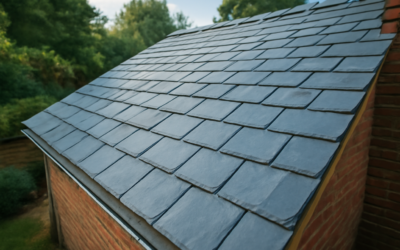
Slate has a naturally cleft face, meaning the surface splits along its layers to reveal a textured, slightly uneven top. This gives Montauk tile a matte, organic look with real depth, very different from the flat uniformity of printed porcelain. Under different lighting the stone can shift from muted gray to almost iridescent, especially the blue and green varieties.
That texture is not just aesthetic. The cleft surface adds slip resistance, which is part of why slate has long been popular for entryways, mudrooms, and covered patios where floors get wet. If you prefer a smoother feel, some slate is available with a honed or gauged back and a more even face, but the classic natural cleft is what most people are after.
Common Sizes and Uses
Montauk slate typically comes in standard tile formats such as 12×12, 16×16, and 12×24, along with mosaic sheets for accent walls and shower niches. Thickness varies with the natural stone, so gauged tiles that are calibrated to a consistent thickness are easier to install flat.
- Entryways and foyers — the texture hides dirt and handles wet boots.
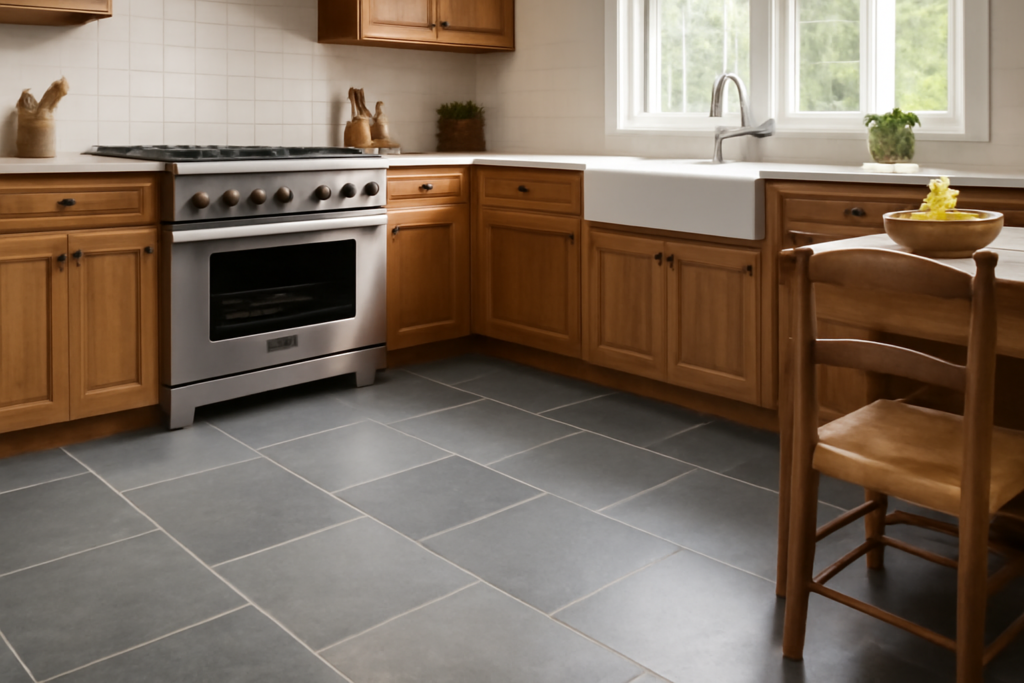
- Kitchens — durable underfoot and forgiving of drops, though it can feel hard.
- Bathrooms and showers — slip-resistant when properly sealed.
- Fireplaces and accent walls — the color depth shines vertically.
- Covered patios — a natural fit for indoor-outdoor transitions in mild climates.
Be cautious using slate in fully exposed freeze-thaw climates. Some slate can flake or spall when repeatedly saturated and frozen, so confirm the specific stone is rated for exterior use in your region before putting it on an open deck.
Installation Notes
Slate is heavier and less forgiving than ceramic, so the subfloor has to be rock solid. For floors, that usually means a proper cement backer board over a stiff, deflection-free subfloor, set in a quality thinset mortar rated for natural stone. Because slate can have irregular backs, back-buttering each tile helps guarantee full coverage and prevents hollow spots that crack later.
Grout joints are typically kept modest, around 1/8 to 3/16 inch, and I recommend sealing the tile before grouting. The cleft, porous surface will otherwise soak up grout haze and be a nightmare to clean. This pre-seal step is one that DIYers skip and regret.
Sealing Is Not Optional
Because slate is porous natural stone, sealing is the single most important thing you will do to protect it. Plan on a penetrating (impregnating) sealer that soaks in and repels water and oil without changing the look. Many installers apply one coat before grouting and a second coat after the grout cures.
How often you reseal depends on traffic and whether the area gets wet. A simple test: drop a few beads of water on the surface. If they bead up, the seal is intact; if they soak in and darken the stone, it is time to reseal. In a busy kitchen or entry that might be every year or two.
Enhancing Sealers
If you love the wet, saturated look that slate takes on when damp, an enhancing sealer deepens the colors permanently, making blacks blacker and bringing out the golds and blues. This is a personal preference, so test it on a spare tile first, because you cannot easily undo it.
Cleaning and Everyday Care
Day to day, sweep or vacuum with a soft brush attachment to keep grit off the surface, then damp mop with a stone-safe, pH-neutral cleaner. Never use vinegar, lemon, or general-purpose acidic cleaners, which can etch and dull natural stone over time. Skip harsh abrasive pads as well.
Wipe spills promptly, especially oils, wine, and anything acidic, since unsealed or under-sealed slate stains readily. Felt pads under furniture and walk-off mats at doors reduce scratching from tracked-in sand. With reasonable care, a slate floor easily lasts decades.
Is Montauk Tile Right for You?
Choose it if you want genuine natural stone with rich, variable color and a textured, non-slip surface, and you are willing to seal and maintain it. Think twice if you want a perfectly uniform look, a soft floor underfoot, or a truly maintenance-free surface, because those are better served by porcelain that imitates stone.
For the right project, Montauk tile brings warmth and authenticity that manufactured products struggle to match. Order enough to cover waste and color variation, dry-lay your tiles first to blend the shades, seal it properly, and you will have a floor with real character that ages beautifully. Handled with care, Montauk tile rewards the extra effort every single day.
How Much to Order
Natural stone demands a bigger overage than porcelain. Where you might buy 10 percent extra for a manufactured tile, plan on 15 to 20 percent extra with slate. Some tiles arrive chipped or with clefting too aggressive to use, and you want spares from the same lot for future repairs, since a replacement bought two years later will almost never match the color.
Whenever possible, buy all your slate from a single dye lot or quarry batch at once. Because the color comes from the stone itself, restocking later can bring in noticeably different tones. Before you set a single tile, spread out several boxes and dry-lay the whole floor, deliberately mixing lighter and darker pieces so the variation looks intentional rather than blotchy.
Montauk Tile vs. Slate-Look Porcelain
Manufacturers now print porcelain that mimics slate convincingly, and it is worth weighing the two honestly. Porcelain wins on consistency, requires no sealing, resists stains completely, and works in freeze-thaw climates without worry. Real slate wins on authenticity, that genuine cleft texture, and the depth of color that printing can only approximate.
If your heart is set on true stone and you accept the maintenance, natural Montauk slate is the real deal. If you love the look but want a set-it-and-forget-it floor, a quality slate-look porcelain gives you 90 percent of the appearance with none of the sealing. Neither answer is wrong; it comes down to how much you value authenticity versus convenience.
Prefer to explore on your own?
See how new flooring looks in your actual room in seconds — free, no signup.
Try the free Floor Studio →