The island is the hardest-working surface in most kitchens — it takes the brunt of homework, meal prep, spilled coffee, and holiday buffets. That is exactly why a quartz island countertop has become the default choice for renovators who want good looks without babysitting the stone. Engineered from roughly 90 percent ground quartz bound with resin, it delivers the appearance of natural stone with better stain resistance and zero sealing. If you are weighing quartz for your island, here is what actually matters when you plan, price, and buy.
Part of our Countertops guide — explore the full guide →
Why Quartz Wins for Islands
Islands see concentrated use, and quartz answers that with a non-porous surface that shrugs off wine, lemon juice, and oil. Unlike granite or marble, it never needs annual sealing because there are no natural pores for liquids to seep into. The color runs consistently through the slab thanks to engineering, so what you see on the sample is what you get across a large island top. For a surface where the whole family gathers, that predictability and low maintenance are hard to beat.
What a Quartz Island Costs
Budgeting starts with square footage. Installed quartz typically runs $60 to $120 per square foot, including fabrication and setup. A standard island of 40 by 80 inches is about 22 square feet, putting most islands in the $1,300 to $2,600 range. Several factors push the number up or down:
- Slab tier: Basic solid colors sit at the low end; premium marble-look patterns from top brands cost more.
- Thickness: The common 3 cm (1.25-inch) slab costs more than 2 cm but skips the need for a plywood backer.
- Edge profile: A simple eased edge is included; mitered or bullnose edges add labor.
- Cutouts: A prep sink or cooktop in the island adds fabrication charges.
Choosing the Right Overhang
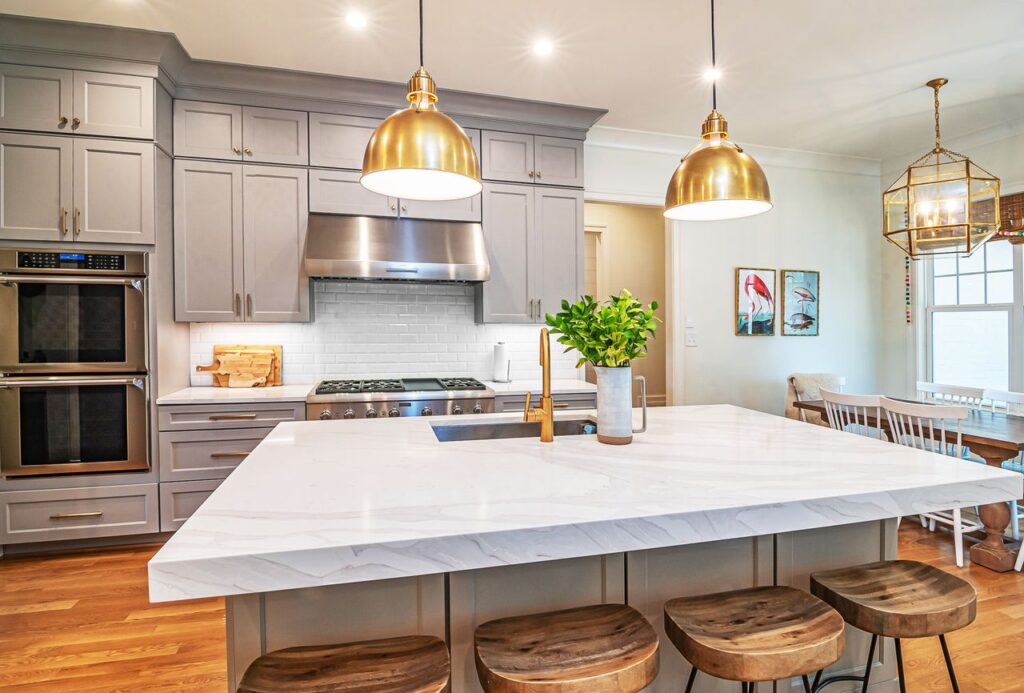
Many islands double as casual seating, which means planning an overhang for stools. Quartz can cantilever about 10 inches unsupported at 3 cm thickness. Push beyond that — for a 12- or 15-inch seating overhang — and you need steel brackets or corbels hidden beneath to prevent cracking. Standard counter-height islands sit at 36 inches; bar-height seating areas rise to 42 inches. Decide on seating early, because it changes the base cabinet layout and the support hardware you will need.
Handling Seams on Large Islands
Quartz slabs from most manufacturers max out around 120 by 55 inches. Islands longer than roughly 10 feet, or those with an unusual shape, may require a seam where two pieces meet. A skilled fabricator places seams thoughtfully — often near a sink cutout where the eye is drawn elsewhere — and color-matches the epoxy so the joint nearly disappears. When you interview fabricators, ask to see photos of their seam work. A clean, tight seam is a hallmark of a quality shop.
Color and Pattern Options
Because quartz is engineered, the palette is enormous. Popular directions for islands include:
- White with subtle veining — mimics Carrara marble and brightens the room, a top seller for contrast against dark cabinets.
- Bold marble-look veins — dramatic movement that makes the island a centerpiece.
- Solid concrete-gray or greige — clean and modern, hides crumbs and fingerprints.
- Warm creams and beiges — soften transitional and farmhouse kitchens.
A common design move is to pair a bold, veined quartz on the island with a quieter solid color on the perimeter counters, letting the island stand out.
Installation: What to Expect
After you sign off on a slab, the fabricator templates your cabinets — either with laser tools or physical patterns — to capture exact dimensions. Fabrication takes one to three weeks. On install day, a crew sets the slab on the leveled base cabinets, secures it with adhesive, joins any seams, and installs your sink or cooktop cutouts. The whole visit usually takes two to four hours. Make sure the base cabinets are dead level beforehand, because quartz will not flex to hide a high spot and can crack under stress.
Caring for Your Quartz
Daily care could not be simpler: wipe with mild soap and water or a gentle spray cleaner. Skip abrasive pads and harsh chemicals like bleach or oven cleaner, which can dull the resin. The one real weakness is heat — quartz resin can scorch or discolor above roughly 300°F, so always set hot pots on a trivet rather than directly on the surface. With that single habit, a quartz island stays looking new for 15 to 20 years or more.
Quartz vs. Other Island Surfaces
It helps to see where quartz lands against the alternatives homeowners weigh for an island. Granite offers one-of-a-kind natural movement and handles hot pans better, but it needs annual sealing and can harbor stains in its pores if a spill sits too long. Marble delivers unmatched elegance yet etches from lemon juice and vinegar, making it a risky pick for a hardworking island. Butcher block brings warmth and a lower price around $40 to $70 per square foot installed, but it demands regular oiling and shows knife marks. Solid-surface materials like acrylic resist stains and repair easily, though they scratch and scorch more readily than quartz. Against this field, quartz wins on the balance most families care about: it never needs sealing, resists stains and scratches, comes in a huge color range, and asks only that you use a trivet for hot cookware. For an island that anchors daily life, that trade-off is hard to beat.
Is a Quartz Island Worth It?
For most homeowners, yes. A quartz island countertop balances durability, low maintenance, and a huge design range at a price that sits comfortably between laminate and high-end natural stone. It resists the stains and scratches an island endures daily, never needs sealing, and adds real resale appeal to a kitchen. Plan your overhang and seams up front, choose a reputable fabricator, and your island will anchor the kitchen beautifully for years to come.