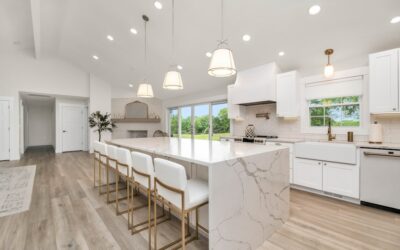
Most homeowners walk into a slab yard thinking quartzite and quartz are the same thing. They are not, and that single piece of confusion costs people thousands of dollars in mismatched expectations. Understanding the real quartzite countertops pros and cons matters because this is a natural stone with quirks that engineered surfaces simply do not have. I have installed both materials in dozens of kitchens, and the honest tradeoffs surprise nearly every buyer.
Part of our Countertops guide — explore the full guide →
What Quartzite Actually Is
Quartzite starts as sandstone. Heat and pressure deep in the earth fuse the sand grains into one of the hardest natural stones on the market, ranking 7 on the Mohs scale. That is harder than granite, harder than marble, and right alongside topaz. The slabs you see at your local stone yard often originate from Brazil, with white Macaubas, Taj Mahal, and Fusion among the most common imports.
Real quartzite scratches glass. Sellers sometimes mislabel soft dolomitic stone as quartzite, so always ask for a glass scratch test before signing the contract. A piece of broken bottle glass and 30 seconds is all it takes to verify.
The Major Pros
The hardness shows up every day. Knife slips, dropped pots, and dragged appliances do not leave the kind of marks you see on softer marbles. Quartzite also handles heat better than quartz, which is engineered with resin that softens around 300 degrees F. You can set a 400 degree F cast iron pan on quartzite without the immediate damage you would cause on a Cambria or Caesarstone slab. I still recommend a trivet for long-term care, but the margin for error is wider.
Visually, quartzite reads like high-end marble without marble’s softness. The veining in slabs like Calacatta Macaubas or Sea Pearl rivals anything coming out of Carrara. Buyers who want the marble look but cannot live with marble’s etching usually land here. Resale value is also strong because home shoppers recognize natural stone as a premium finish.
The Cons Nobody Tells You About
Quartzite is porous. Not as porous as marble, but more than granite in some cases. That means it absolutely needs sealing, typically once a year with a quality penetrating sealer like Tenax Hydrex or Dry Treat Stain Proof at $35 to $80 per bottle. Skip the sealing and red wine, olive oil, and citrus juice will leave shadows.
The fabrication cost is another factor people underestimate. Because the stone is so hard, fabricators burn through diamond blades faster, charge more for sink cutouts, and quote longer lead times. Expect $80 to $200 per square foot installed, with exotic slabs from named quarries running $250 or more. Compare that to quartz at $60 to $120 per square foot installed.
Color matching across slabs is harder than with engineered surfaces. If your kitchen needs three slabs to cover the layout, the veining will not align perfectly, and you will see seams. A good fabricator can hide them, but they exist.
Quartzite vs Quartz: The Real Difference
- Origin: Quartzite is mined natural stone. Quartz is 90 to 95 percent ground quartz bound with resin and pigment.
- Heat: Quartzite handles direct heat. Quartz can burn or yellow above 300 degrees F.
- Sealing: Quartzite needs sealing. Quartz does not.
- Pattern: Quartzite has unique natural veining. Quartz patterns repeat across slabs.
- UV stability: Quartzite holds color outdoors. Most quartz fades and is not warrantied for exterior use.
Etching, Staining, and Daily Reality
True quartzite does not etch from acids the way marble does. If your stone etches when you leave a lemon slice on it for 20 minutes, you bought dolomite, not quartzite. This is the single most important field test. That said, even genuine quartzite can stain if oils sit overnight on an unsealed slab. Wipe spills within a few hours, reseal annually, and you will not have problems.
Daily maintenance is simple. Use a pH-neutral cleaner like Method Daily Granite or plain warm water with a microfiber cloth. Skip Windex, vinegar, bleach, and any abrasive scrub. Acidic cleaners eventually break down sealers and can dull the polish over years.
Cost Breakdown for a Standard Kitchen
For a 40 square foot kitchen with one undermount sink and a basic eased edge, plan for these numbers in 2026:
- Material: $3,200 to $8,000 depending on rarity
- Fabrication and installation: $1,200 to $2,400
- Templating and removal of old tops: $300 to $600
- Initial sealing: included by most fabricators
Total project: roughly $4,700 to $11,000. Exotic slabs like Patagonia or Cristallo Quartzite can push that figure past $20,000.
When Quartzite Makes Sense
Choose quartzite if you cook with heat regularly, want a one-of-a-kind natural pattern, plan to stay in the home long enough to enjoy it, and accept yearly sealing as part of ownership. Skip quartzite if you want zero maintenance, a perfectly uniform color across a large kitchen, or a strict budget under $5,000 for a typical layout.
Edge Profiles and Their Cost Impact
Edge work adds personality and price. An eased edge (the simplest, lightly rounded) is often included in the base price. A bullnose, bevel, or ogee adds $10 to $25 per linear foot. Mitered waterfall edges that wrap down the side of an island can add $80 to $150 per linear foot because the fabricator has to cut, miter, and book-match the slab. Choose edge work that reads with your kitchen style. Modern kitchens lean toward eased or mitered. Traditional kitchens benefit from ogee or full bullnose.
Final Verdict
The honest answer on quartzite countertops pros and cons is that this stone rewards homeowners who want natural beauty and tolerate a small amount of upkeep. It outperforms marble on durability, beats quartz on heat resistance, and brings character that engineered surfaces cannot copy. The price tag and the sealing routine are real, but for the right kitchen, quartzite is one of the smartest long-term investments you can make in a renovation budget.