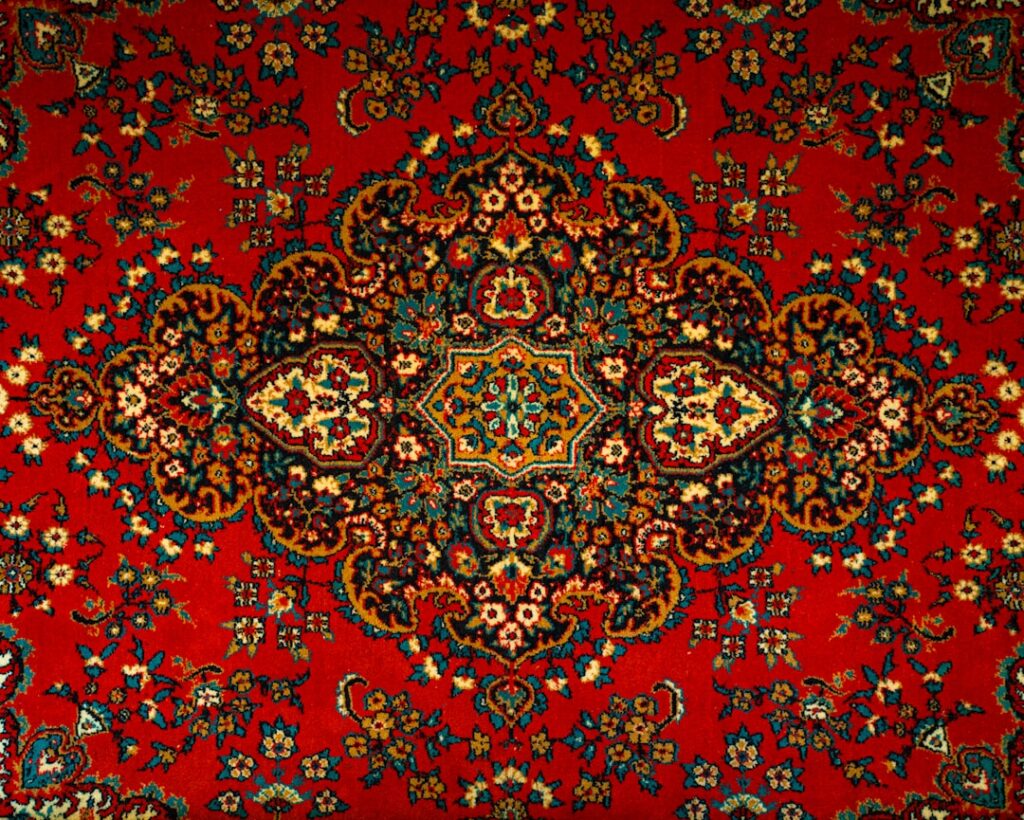
A circular rug breaks up the boxy lines of a room and draws the eye in a way rectangles cannot. A round Persian rug pairs that softening shape with centuries of weaving tradition, bringing intricate patterns, rich color, and craftsmanship to your floor. For homeowners who want a statement piece with real heritage, it is a beautiful choice.
This guide covers what makes a Persian rug authentic, the styles and materials to know, how to size and place a round rug, and how to care for it so it lasts generations.
What Makes a Rug Persian
Persian rugs are hand-knotted rugs traditionally woven in Iran, historically known as Persia, using techniques passed down for centuries. Authentic pieces are made by tying individual knots onto a foundation, with knot density often a marker of quality and detail. A genuine Persian rug is distinguished by its hand-knotted construction, natural fibers, and regionally specific patterns.
The round format is less common than rectangular, which makes a circular Persian rug feel special. The curved shape requires the weaver to adapt the traditional medallion-and-border layout into a radial design, often with a central medallion that the surrounding pattern circles outward from. The result is a piece that feels balanced and harmonious from every angle.
Authentic vs Persian-Style Rugs
The market includes both genuine hand-knotted rugs and machine-made pieces inspired by Persian designs. Knowing the difference helps you spend appropriately.
- Authentic hand-knotted Persian rugs are crafted by artisans, use natural fibers, and can take months or years to complete. They carry the highest value and longevity.
- Persian-style or “oriental design” rugs are often machine-made with synthetic or blended fibers. They capture the look at a far lower price but lack the craftsmanship and lasting value.
Neither is wrong; it depends on your budget and goals. For an heirloom investment, seek a reputable dealer and ask about origin and construction. For everyday decor on a budget, a quality Persian-style rug delivers the aesthetic without the premium price.
Materials and Construction
Fiber drives both feel and durability. The most common materials are:
- Wool, the traditional choice, prized for resilience, softness, and the way it holds dye for deep, lasting color.
- Silk, used in the finest, most detailed rugs for a luminous sheen, though it is delicate and best in low-traffic spots.
- Cotton, often used in the foundation, and sometimes blended into the pile.
- Synthetic fibers in Persian-style reproductions, valued for stain resistance and affordability.
Natural dyes and high knot counts signal a higher-quality piece. When you fold an authentic hand-knotted rug, you can see the individual knots on the back, and the pattern is visible from the underside, unlike a printed machine rug.
Choosing the Right Size
Round rugs come in diameters typically ranging from about 3 feet up to 8 feet or more. The right size depends on where it will go. A small 3-to-4-foot round suits an entryway or a reading chair. A 6-to-8-foot round anchors a seating group or sits beneath a round dining table.
For a dining room, the rug should be large enough that chairs stay on it even when pulled out, usually two feet of clearance beyond the table edge on all sides. In a living room, center the round rug under a coffee table or let it define a conversation area. Measure your space and tape out the diameter on the floor before buying to be sure of the scale.
Where to Place a Round Persian Rug
The circular shape works hardest where it can counterbalance straight lines and create a focal point. Effective spots include:
- Entryways and foyers, where a round rug welcomes guests and softens a hard floor.
- Under a round dining or breakfast table to echo its shape.
- In a reading nook or beneath a seating cluster to define the zone.
- At the center of a bedroom or under the foot of a bed for a touch of luxury.
- In a room with strong rectangular furniture, where the curve adds welcome contrast.
Let the rug breathe with some bare floor around it rather than crowding it wall to wall.
Care and Maintenance
A quality Persian rug can last for generations with proper care. Build a simple routine:
- Vacuum regularly without a harsh beater bar, going with the pile, and avoid vacuuming the fringe, which can snag.
- Rotate the rug every six months to a year so foot traffic and sunlight wear it evenly.
- Blot spills immediately with a clean cloth, never rub, and test any cleaning solution on a hidden spot first for colorfastness.
- Use a rug pad underneath to prevent slipping and reduce wear on the foundation.
- Keep it out of prolonged direct sunlight to protect the natural dyes from fading.
For deep cleaning of a valuable hand-knotted rug, use a professional who specializes in oriental and Persian rugs rather than a standard carpet machine, which can damage natural fibers and dyes.
Reading the Patterns and Colors
Part of the appeal of a Persian rug is the meaning woven into its design. Traditional rugs feature recurring motifs, a central medallion, floral and garden patterns, and intricate borders, that vary by the region and village where they were made. Colors traditionally came from natural dyes: madder root for reds, indigo for blues, and various plants for yellows and greens, which age into rich, mellow tones over decades.
For a round rug, the design is usually arranged radially, with the central medallion as the anchor and the pattern radiating outward in concentric harmony. When choosing one, look at how the dominant colors will work with your room. A rug with a deep red or navy field brings warmth and acts as a focal point, while softer ivory and pastel grounds feel lighter and more open. Understanding that each rug carries regional character helps you appreciate the piece as art, not just floor covering, and makes the selection feel more personal.
Is a Round Persian Rug Right for You?
If you want a floor covering that combines artistry, warmth, and the soft visual relief of a curved shape, a round Persian rug is a standout choice. Decide first whether you want a genuine hand-knotted heirloom or an affordable Persian-style reproduction, then size it carefully to its room and protect it with a rug pad and gentle care. Chosen well and looked after, it becomes one of the most enduring and admired pieces in your home.