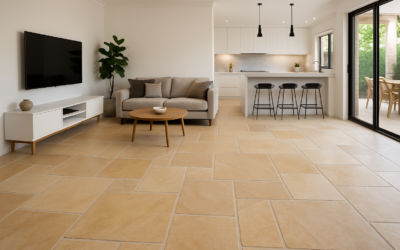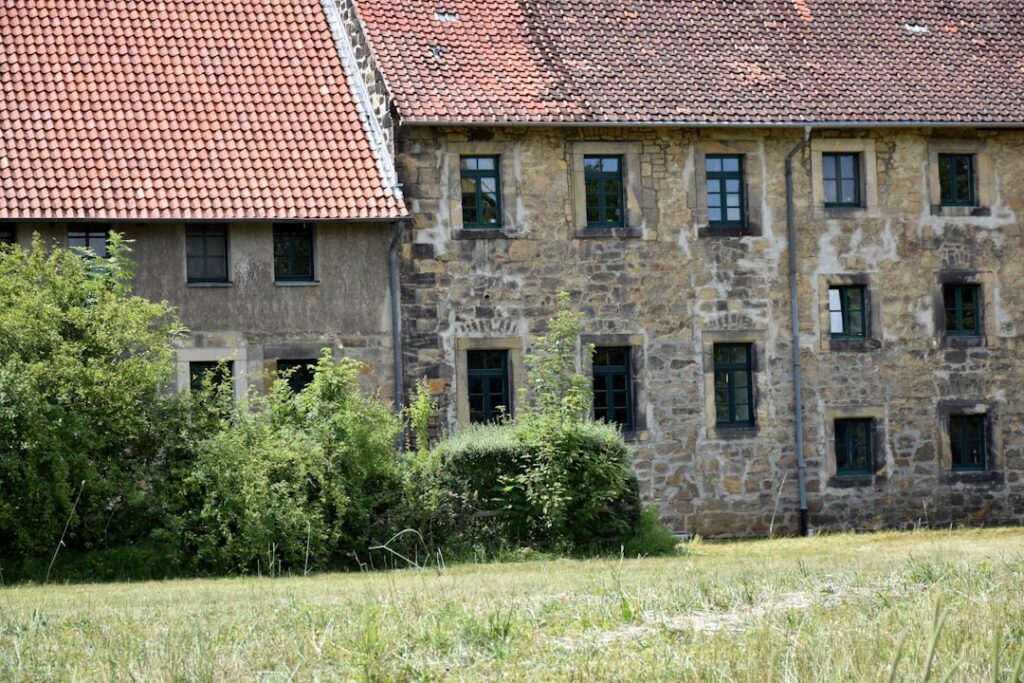
Sandstone tile brings an earthy, natural warmth that manufactured materials struggle to imitate. Formed over millennia from compressed layers of sand and minerals, each tile carries subtle bands of color and a tactile surface that feels organic underfoot. From rustic patios to warm interior floors and feature walls, sandstone adds character that grows more inviting with time.
Part of our Tile & Grout guide — explore the full guide →
Like all natural stone, it has specific strengths and care requirements. Understanding its porosity, durability, and sealing needs helps you decide where it belongs and how to keep it looking its best.
What Sandstone Tile Is
Sandstone is a sedimentary rock made primarily of sand-sized mineral grains, mostly quartz and feldspar, bonded together naturally over time. Quarried and cut into tiles and pavers, it offers a softer, warmer look than harder stones like granite. The natural layering gives each piece unique markings, so a sandstone floor has depth and variation no two of which match.
Because it is a softer, more porous stone, sandstone behaves differently than dense porcelain or granite, which shapes both where you use it and how you maintain it.
Colors and Natural Variation
One of sandstone’s biggest draws is its warm, earthy palette. The colors come from natural mineral content and vary widely from quarry to quarry.
- Golden and honey tones that feel sunny and welcoming
- Warm reds, rusts, and terracotta shades
- Buff, beige, and cream neutrals that suit almost any decor
- Gray and brown blends with banded, multicolor patterns
Expect noticeable variation between tiles, which is part of the charm. When planning a project, dry-lay tiles from several boxes and mix them so the color blends naturally across the floor rather than clustering.
Where Sandstone Works Best
Sandstone is a favorite for outdoor spaces such as patios, pool surrounds, walkways, and garden paths, where its natural grip and weathered look fit right in. Indoors, it brings warmth to entryways, living areas, kitchens, and feature walls. A textured or riven finish provides good slip resistance, which makes it practical around pools and on outdoor steps.
Because it is softer and more porous, sandstone is less ideal for high-acid environments and very heavy commercial traffic without proper sealing. In freeze-prone climates, choose a dense, low-absorption variety rated for exterior use so it does not crack as absorbed water freezes.
Durability and Limitations
Sandstone is durable enough for everyday use when properly sealed and maintained, and it ages gracefully, developing a lived-in patina many homeowners love. That said, it is softer than granite and porcelain, so it can scratch and wear in very high-traffic spots and is more prone to absorbing stains if left unsealed.
It is also sensitive to acids, so spills like wine, citrus, and acidic cleaners can etch or stain an unsealed surface. Knowing these limits up front lets you place and protect the stone wisely rather than being surprised later.
The Importance of Sealing
Sealing is the most important step in keeping sandstone beautiful. Its porous nature means it readily absorbs water, oil, and stains without protection, so a quality penetrating sealer is essential, especially indoors and in kitchens.
- Seal the tile before grouting in many cases, since porous stone can absorb grout haze.
- Apply a penetrating sealer after installation and let it cure fully.
- Reapply sealer periodically, typically every one to three years depending on traffic and exposure.
- Use the water-bead test to check when resealing is due.
Outdoor sandstone in wet or freezing climates benefits from a breathable sealer that lets trapped moisture escape rather than getting locked in.
Installation Considerations
Sandstone tiles are heavier and often thicker than ceramic, so the substrate must be solid and able to bear the weight. A flat, stable, properly prepared base is critical, and large or thick pavers may call for a thicker mortar bed.
Use a thin-set rated for natural stone and butter the back of larger tiles to ensure full coverage with no voids. Because the tiles vary in thickness and color, expect a slower, more careful installation than with uniform manufactured tile. For large patios, structural applications, or freeze-prone exteriors, an experienced stone mason will get the slope, drainage, and bedding right.
Cost and Long-Term Value
Sandstone sits in the mid-range of natural stone pricing, generally more affordable than marble or granite while costing more than basic ceramic. Price varies by the variety, thickness, finish, and whether the tile is calibrated to a uniform thickness, which makes installation easier but adds to the cost.
Factor in the supporting costs, since natural stone projects involve more than just the tile. Sealer, stone-rated thin-set, and skilled labor all add up, especially for outdoor paving where the base preparation is substantial.
- Material cost lands between budget ceramic and premium granite or marble
- Thicker exterior pavers cost more than thin interior tiles
- Budget for sealer and periodic resealing over the life of the floor
- Skilled installation, especially for patios, is a meaningful part of the total
The long-term value is strong when you account for durability and looks. Properly sealed and maintained sandstone lasts for decades and develops a desirable patina, and natural stone tends to add appeal at resale. Just go in understanding that the lower upfront price than marble comes with the trade-off of more diligent sealing and gentler care.
Cleaning and Long-Term Care
Routine care is simple but specific. Sweep or dust-mop regularly to remove grit that can scratch the surface, and clean with a pH-neutral stone cleaner rather than acidic or harsh products. For outdoor sandstone, occasional gentle washing removes algae and dirt, but keep pressure low to avoid eroding the soft surface.
- Wipe spills promptly, especially acidic ones, before they penetrate
- Avoid vinegar, bleach, and abrasive cleaners that damage the stone
- Reseal on schedule to maintain stain resistance
- Use mats at entries to catch grit before it reaches the floor
For outdoor areas, clearing leaves and standing water promptly prevents staining and slows algae growth in shaded spots. With proper sealing and gentle maintenance, sandstone tile rewards you with a warm, natural surface full of character that only looks better as the years go by.
Prefer to explore on your own?
See how new flooring looks in your actual room in seconds — free, no signup.
Try the free Floor Studio →