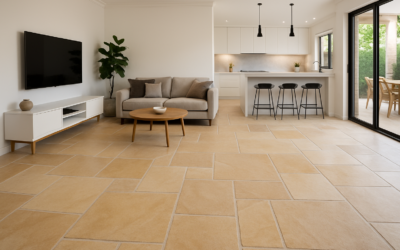
Grout color quietly decides whether a tile job looks intentional or accidental, and sandstone grout is one of the most useful warm neutrals in the palette. This soft tan-beige shade, sold under names like sandstone, haystack, bone, and desert by nearly every grout manufacturer, bridges the gap between stark white and heavy gray. It flatters natural stone, warms up neutral tile, and hides everyday dirt better than any bright grout can.
Part of our Tile & Grout guide — explore the full guide →
If you are weighing sandstone grout for a backsplash, floor, or shower, this guide covers exactly what it pairs with, whether to choose sanded or unsanded, how to seal it against stains, how it ages over time, and how to keep it clean for the long haul.
What Sandstone Grout Looks Like
Sandstone is a warm, light-to-medium tan with subtle beige and sometimes faintly golden undertones, named for the sedimentary rock it resembles. It is darker and warmer than a bright white or “linen,” yet lighter and friendlier than a true taupe or gray. Because it sits in the middle of the neutral range, it reads as soft and organic rather than as a hard grid line.
Manufacturers each mix the shade slightly differently, so one brand’s sandstone may lean more yellow while another leans gray-beige. Grout also dries lighter than it looks wet, and the final color shifts depending on your sealer, your tile, and the room’s lighting. Always test the exact grout on a sample board with your actual tile and let it fully cure before you commit to a color across a whole job.
What Tile Pairs Best with Sandstone Grout
This warm neutral is a natural partner for earthy, organic materials, but it is versatile enough to work well in many settings.
- Natural stone: Travertine, limestone, tumbled marble, and sandstone tile all share warm undertones that sandstone grout complements seamlessly, blending joints into the stone rather than framing them.
- Beige and tan ceramic or porcelain: A tonal match makes tan subway tile and beige floor tile look calm and continuous.
- Wood-look plank tile: Sandstone grout disappears into warm oak and walnut-toned planks for a convincing wood floor effect.
- Terracotta and Saltillo: The warm tan reinforces the rustic, Mediterranean feel of clay tile.
- Cream and off-white tile: Provides gentle definition without the harsh contrast of a dark grout.
Where sandstone grout struggles is against cool-toned tile: pure grays, crisp whites with blue undertones, and cool marbles can make the warm grout look muddy or mismatched. In those cases a gray or bright white grout usually reads cleaner.
Sanded Versus Unsanded in Sandstone
The color is only half the decision. The grout formula matters just as much, and the right choice depends on your joint width and tile type.
Sanded Grout
Sanded grout contains fine aggregate that resists shrinking and cracking in wider joints. Use it for grout lines of about 1/8 inch or wider, which covers most floor tile, subway tile in a standard layout, and natural stone. The sand also gives the cured grout a subtly textured, matte surface that suits the organic look of a sandstone shade.
Unsanded Grout
Unsanded grout is smoother and stickier, made for narrow joints of roughly 1/16 to 1/8 inch. Choose it for tight-set wall tile and, importantly, for polished stone, glass, or metal tile that the sand aggregate could scratch. If you are grouting a polished marble backsplash in sandstone, go unsanded to protect the surface.
Epoxy Grout
Many brands also offer sandstone in an epoxy or high-performance formula. Epoxy resists stains and does not require sealing, which is a strong advantage for a light-colored grout in a kitchen or shower. It costs more and is harder to install, but for a stain-prone tan grout it can be worth it.
Sealing Sandstone Grout to Prevent Stains
A light tan grout shows stains more readily than a dark one, so sealing is not optional for cement-based sandstone grout. Unsealed, its porous surface will drink up coffee, wine, cooking grease, and soap scum, and those stains are stubborn to remove.
After the grout has fully cured, usually 48 to 72 hours, apply a quality penetrating grout sealer. A penetrating sealer soaks in and repels liquids without changing the color, while a membrane-forming sealer sits on top and can slightly alter the sheen. For most homeowners a penetrating sealer is the right call. Reapply annually in wet or high-traffic areas such as showers and kitchen floors, and every couple of years in lighter-use spaces. Test water beading periodically; when water stops beading and starts soaking in, it is time to reseal. If you choose an epoxy sandstone grout, you can skip sealing entirely, which is a real convenience with a light color.
How Sandstone Grout Ages
One reason contractors favor warm mid-tone grouts is how gracefully they age. Bright white grout famously turns dingy and yellow-gray within a year or two of real use, telegraphing every bit of dirt. Sandstone, already a warm tan, hides the gradual accumulation of dust, foot traffic, and minor staining far better, so the floor or wall keeps looking clean for longer between deep cleanings.
That said, no grout is maintenance-free. Over years, unsealed or poorly maintained sandstone grout can darken unevenly, pick up mildew in wet areas, or develop traffic-pattern shadows. Keeping it sealed and cleaning regularly preserves the original color. If the grout does eventually look tired, it can be refreshed with a grout colorant or grout paint that restores or even changes the shade without regrouting.
Cleaning and Maintenance Tips
Routine care keeps sandstone grout looking its best and preserves the sealer.
- Wipe up spills promptly, especially wine, coffee, and oil that stain porous grout.
- Clean regularly with a pH-neutral cleaner. Avoid acidic cleaners like vinegar on cement grout and any adjacent natural stone, since acid etches both.
- Skip harsh bleach on colored grout; it can lighten the tan unevenly over time.
- For built-up grime, use a soft nylon brush and a dedicated grout cleaner rather than aggressive scrubbing that wears the surface.
- Reseal on schedule and test water beading to know when the sealer has worn off.
Matching Sandstone Grout to Natural Stone
When your goal is a seamless, high-end stone look, matching the grout to the stone’s background color makes the whole installation read as a continuous surface. Hold grout samples directly against your travertine, limestone, or sandstone tile and pick the shade closest to the stone’s dominant tone. A near-match minimizes the visual grid and lets the stone’s natural veining and movement take center stage. If you prefer to define each tile, step one shade darker rather than lighter, since a slightly deeper warm grout defines edges without the harshness of contrast, and it hides dirt better than a paler match.
Final Thoughts on Sandstone Grout
For warm, forgiving, and timeless tile joints, sandstone grout is one of the safest and most flattering choices you can make. It complements natural stone and neutral tile, ages far better than bright white, and disguises everyday dirt without going as dark as gray. Match the formula to your joint width by choosing sanded for wider lines and unsanded for narrow or polished tile, seal cement-based grout diligently or opt for epoxy to skip sealing, and keep up a simple pH-neutral cleaning routine. Get those basics right and this humble warm tan will quietly make your tile look intentional, cohesive, and clean for many years to come.
Prefer to explore on your own?
See how new flooring looks in your actual room in seconds — free, no signup.
Try the free Floor Studio →