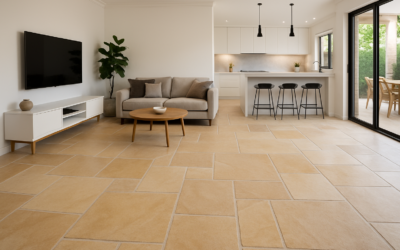
Few natural stones bring the warm, earthy character of sandstone, but that beauty comes with real maintenance commitments most buyers underestimate. Sandstone tile flooring is softer and more porous than granite or porcelain, which means it needs regular sealing and careful handling to stay looking good. If you understand those trade-offs going in, sandstone rewards you with a natural, rustic floor unlike anything manufactured. Here is a straight look at where sandstone shines and where its softness and porosity will demand your attention.
Part of our Tile & Grout guide — explore the full guide →
- What Is Sandstone Tile?
- The Honest Pros of Sandstone Flooring
- The Cons You Must Take Seriously
- Sealing Is Not Optional
- Where Sandstone Works Best
- Choosing the Right Finish
- What Sandstone Tile Costs
- Caring for Sandstone Floors
- Sandstone vs Porcelain and Other Stone
- Installation Considerations
- Is Sandstone Tile Right for You?
What Is Sandstone Tile?
Sandstone is a sedimentary rock formed from compressed sand grains, mostly quartz and feldspar, bound together over millions of years. Quarried and cut into tiles, it offers warm natural tones ranging from buff and tan to gold, red, brown, and gray, often with visible layering and grain. Each tile is unique, and the surface can be finished honed, natural-cleft, or tumbled. That organic variation is exactly what draws people to it for patios, entryways, and rustic interiors.
The Honest Pros of Sandstone Flooring
Sandstone earns its appeal for several genuine reasons.
- Natural beauty: Warm earth tones and unique grain give a floor that printed tile cannot truly replicate.
- Slip resistance when textured: Natural-cleft and tumbled finishes provide good traction, useful for entries and outdoor areas.
- Cool underfoot: Like most stone, it stays comfortable in warm climates and pairs well with radiant heat.
- Timeless, rustic character: It suits Mediterranean, Southwestern, farmhouse, and traditional designs.
- Repairable and refinishable: As natural stone, it can often be honed or refinished to remove surface wear.
The Cons You Must Take Seriously
This is where sandstone separates careful buyers from disappointed ones. Sandstone is soft and porous, which drives nearly all of its drawbacks. Because it is softer than granite or porcelain, it scratches and chips more easily and is not ideal for the highest-traffic commercial settings. Its porosity means it readily absorbs water, oil, wine, and other liquids, leading to staining if it is not sealed and resealed faithfully. It is also susceptible to etching from acidic substances and can be vulnerable to freeze-thaw damage outdoors if water penetrates and freezes inside the stone. These are not reasons to avoid sandstone, but they are reasons to respect it.
Sealing Is Not Optional
If you take one thing from this guide, make it this: sandstone must be sealed. Because the stone is so porous, an unsealed sandstone floor will stain and absorb moisture quickly. Apply a quality penetrating stone sealer after installation, and reseal on a regular schedule, often every one to two years for interior floors and more frequently in wet or high-use areas. A simple water-drop test tells you when it is time: if water soaks in and darkens the stone rather than beading, it is due for resealing. Many installers also recommend sealing the tiles before grouting to prevent grout haze.
Where Sandstone Works Best
Match the stone to the right setting and it thrives. Sandstone is well suited to entryways, patios, courtyards, sunrooms, and low-to-moderate-traffic interior spaces where its rustic warmth shines. Textured finishes make it a strong choice for outdoor and poolside areas in mild climates. It is a poorer fit for busy kitchens prone to acidic and oily spills, heavy commercial traffic, or cold climates where freeze-thaw cycles threaten outdoor installations. Choosing the right room is half the battle with a soft, porous stone.
Choosing the Right Finish
The finish affects both looks and performance. A honed finish is smooth and refined but shows scratches and offers less traction when wet. A natural-cleft finish keeps the stone’s textured, split-face surface, providing grip and hiding wear, ideal for outdoor and high-traffic entries. A tumbled finish gives soft, rounded edges and a weathered, old-world look. For floors, prioritize traction and wear-hiding texture over a polished appearance, since sandstone is too soft to maintain a flawless honed surface under heavy use.
What Sandstone Tile Costs
Sandstone is mid-range among natural stones. Material costs typically run $4 to $10 per square foot, with installed pricing generally landing between $10 and $20 per square foot depending on tile size, finish, and labor. Factor in the ongoing cost and effort of sealing, which is part of owning any porous natural stone. While not the cheapest option, it is often more affordable than premium marble or high-end porcelain that imitates stone.
Caring for Sandstone Floors
Maintenance keeps sandstone beautiful and prevents premature wear. Sweep or dust-mop regularly to remove grit that scratches the soft surface. Clean with a pH-neutral stone cleaner only, never acidic products like vinegar or citrus cleaners that etch the stone. Wipe spills promptly, especially wine, oil, and juice, before they penetrate. Use mats at entries and felt pads under furniture, and keep up with the sealing schedule. With consistent, gentle care, sandstone develops a lovely lived-in patina rather than damage.
Sandstone vs Porcelain and Other Stone
Weighing sandstone against the alternatives sharpens the decision. Compared with porcelain tile, including stone-look porcelain, sandstone offers genuine natural variation and warmth but loses on durability, water resistance, and maintenance, since porcelain is nearly impervious and never needs sealing. Compared with other natural stones, sandstone is softer and more porous than granite and slate, making it less suited to heavy traffic, though it is often warmer in tone and easier on the budget than marble. Against travertine, another popular soft stone, sandstone behaves similarly and shares the same sealing requirement. The honest conclusion is that sandstone is chosen for its look and character, not its toughness; if low maintenance is your priority, stone-look porcelain delivers a similar appearance with far less upkeep.
Installation Considerations
Proper installation extends a sandstone floor’s life and prevents common problems. The substrate must be solid, flat, and crack-free, since natural stone is unforgiving of movement, and many installers use a crack-isolation membrane over concrete. Because sandstone is porous, sealing the tiles before grouting helps prevent grout from staining the stone surface. Use a high-quality thinset rated for natural stone, and choose a grout color that complements the variation in the tiles. For outdoor installations, confirm the specific sandstone is rated for your climate and avoid it in hard-freeze regions where trapped water can fracture the stone. Given the cost of the material and the care required, hiring an installer experienced with natural stone is usually money well spent.
Is Sandstone Tile Right for You?
Sandstone tile flooring is a beautiful, characterful choice if you love natural stone and are willing to seal it faithfully and treat it gently. It is the wrong pick if you want a low-maintenance, scratch-proof floor or you are installing in a high-abuse kitchen or freezing outdoor climate. Be honest about your willingness to maintain it. Choose the right room, the right textured finish, and commit to regular sealing, and sandstone delivers warm natural beauty that synthetic floors simply cannot match.
Prefer to explore on your own?
See how new flooring looks in your actual room in seconds — free, no signup.
Try the free Floor Studio →