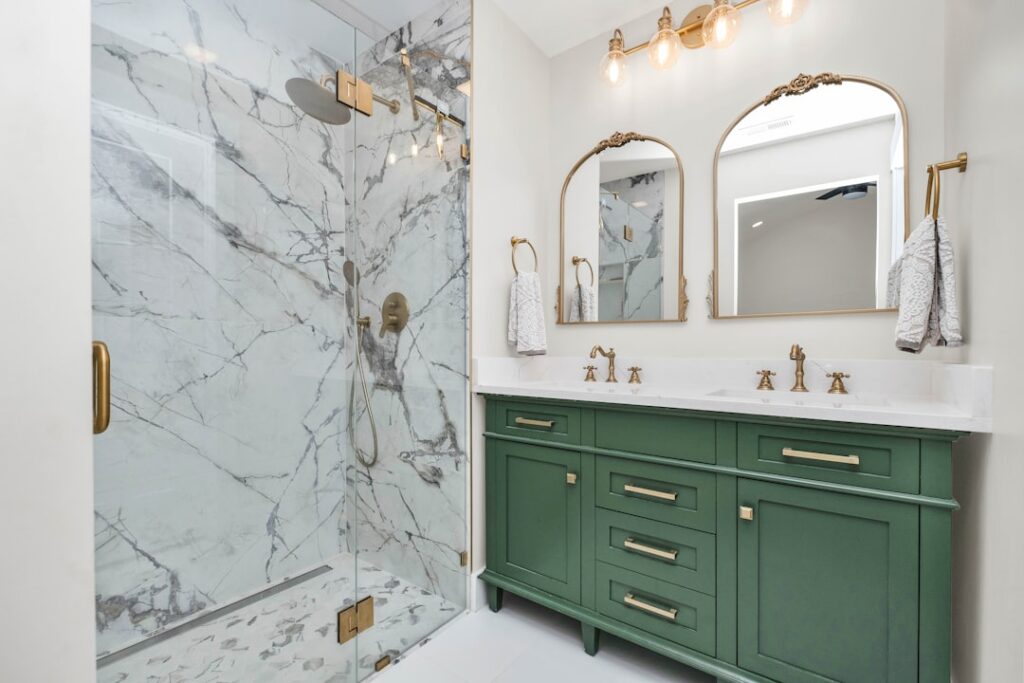
Buying components piece by piece can leave you with mismatched finishes and missing parts, which is why bundled kits are so popular. A shower head set packages a coordinated fixed head, handheld sprayer, hose, and mounting hardware together, giving you a complete, matching upgrade in one box. This guide explains what these sets include and how to choose the right one.
Part of our Bathroom Remodeling & Flooring guide — explore the full guide →
- What Is a Shower Head Set?
- Common Contents of a Set
- Types of Shower Head Sets
- Spray Modes Explained
- Flow Rate and Efficiency
- Choosing a Finish
- How to Install a Shower Head Set
- Water Pressure Considerations
- Cost Expectations
- Understanding the Diverter
- Matching a Set to Your Household
- Slide Bars and Height Adjustment
- Maintenance and Cleaning
- Installation Complexity by Type
- Warranty and Build Quality
- Common Mistakes to Avoid
- Final Thoughts
What Is a Shower Head Set?
A shower head set is a bundled kit that provides everything needed to outfit or upgrade a shower in a single purchase. Rather than buying a head, hose, and bracket separately, you get coordinated pieces designed to work together and match in finish. Sets range from a simple fixed head with a handheld, to elaborate dual systems with multiple spray heads, a diverter, and a slide bar.
Common Contents of a Set
While kits vary, most include some combination of:
- A fixed or overhead shower head, often a large rain-style head.
- A handheld shower head.
- A flexible metal or reinforced hose.
- A wall bracket or magnetic dock for the handheld.
- A diverter to switch between heads or run both at once.
- Plumber’s tape, washers, and mounting hardware.
Some premium sets add a slide bar that lets you adjust the handheld’s height, which is handy for households of different heights.
Types of Shower Head Sets
Understanding the categories helps you match a set to your needs:
- Fixed plus handheld combo — the most popular, offering a stationary head and a detachable sprayer.
- Dual rain shower systems — a large overhead rain head paired with a handheld for a spa feel.
- Panel or tower systems — a wall-mounted panel with body jets, an overhead head, and a handheld.
- Simple replacement sets — a matched head and hose for a straightforward swap.
Choose based on how spa-like you want the experience and how much installation you are willing to take on.
Spray Modes Explained
Most sets offer multiple spray settings, controlled by a rotating collar on the head. Common modes include:
- Rain or full spray — a wide, gentle flow that mimics rainfall.
- Massage or pulse — a concentrated, rhythmic stream for sore muscles.
- Mist — a fine spray that uses less water.
- Jet or power — a focused stream good for rinsing.
More modes add versatility, but the quality of each setting matters more than the sheer number. Read reviews to gauge how satisfying the spray actually feels.
Flow Rate and Efficiency
All shower heads sold in the United States meet federal flow limits of 2.5 gallons per minute (GPM) at 80 psi, and stricter state rules cap some at 1.8 or 2.0 GPM. In a set with a diverter that runs two heads simultaneously, be aware that combined flow can drop your pressure or, in some designs, exceed single-head expectations. Check the individual and combined GPM ratings, and confirm your water pressure can support running both heads at once if that is a feature you want.
Choosing a Finish
Because a set is a coordinated group, the finish ties the whole shower together. Popular options include:
- Chrome — bright, classic, and easy to clean.
- Brushed nickel — warm, matte, and forgiving of water spots.
- Matte black — modern and dramatic against light tile.
- Brushed gold or bronze — a warmer, upscale accent.
Match the set’s finish to your existing faucet and other bathroom hardware for a cohesive look.
How to Install a Shower Head Set
Basic combo sets are DIY-friendly; panel systems are more involved:
- Remove the old shower head from the shower arm by hand or with cloth-wrapped pliers.
- Clean the arm threads and wrap them with fresh plumber’s tape.
- Attach the diverter or mount to the shower arm and hand-tighten.
- Connect the fixed head and the hose to the diverter using the included washers.
- Mount the handheld bracket or slide bar to the wall if required.
- Attach the handheld and turn on the water, checking every joint for leaks.
Simple sets take 15 to 30 minutes. Panel and tower systems may require wall anchoring and, in some cases, a plumber, especially if body jets tap into the supply lines.
Water Pressure Considerations
Multi-head sets demand adequate water pressure to perform well. If your home has low pressure, running an overhead and handheld at once can leave both feeling weak. Before buying an elaborate system, note your household water pressure; anything below about 40 psi may struggle with dual heads. In that case, a single-head set or a pressure-optimized low-flow head is a better match.
Cost Expectations
- Basic fixed-plus-handheld sets: 40 to 100 dollars.
- Mid-range dual rain systems: 100 to 300 dollars.
- Panel and tower systems with body jets: 300 to 800 dollars or more.
Factor in professional installation for complex systems, which can add a few hundred dollars if plumbing changes are needed.
Understanding the Diverter
The diverter is the small valve that controls which head is running, and it is central to how a set functions. In a fixed-plus-handheld set, the diverter lets you switch between the overhead head, the handheld, or in some cases both at once. Diverters come as simple pull tabs, rotating collars, or lever handles integrated into the mount. When both heads run simultaneously, total water flow increases, which can reduce pressure in homes with limited supply. Knowing how your diverter behaves helps you set realistic expectations for a dual-head experience.
Matching a Set to Your Household
Different households benefit from different sets. Consider who uses the shower and how:
- Families with kids — a handheld makes rinsing children and cleaning the tub far easier.
- Pet owners — a detachable head simplifies bathing dogs.
- Accessibility needs — a handheld on a slide bar allows seated showering and adjustable height.
- Spa lovers — a dual rain system delivers a luxurious, enveloping experience.
Identifying your primary use helps you avoid overspending on features you will not use or underbuying and wishing you had a handheld.
Slide Bars and Height Adjustment
A slide bar is a vertical rail that lets you raise or lower the handheld and lock it at any height. This is especially valuable in households where users differ significantly in height, or where someone needs to shower while seated. The handheld clips into a bracket that glides along the bar, so a tall adult and a child can each set a comfortable position. Many premium sets include a slide bar, and it is one of the most practical upgrades for a shared bathroom.
Maintenance and Cleaning
A shower head set stays performing well with a little care. Mineral buildup is the main enemy, clogging nozzles and reducing flow over time. To keep everything clear:
- Wipe the rubber nozzles periodically, as many soft tips release scale with a quick rub.
- Soak the heads in white vinegar for a few hours when flow weakens, then rinse.
- Check hose connections for leaks and re-tape threads if needed.
- Inspect the diverter occasionally to ensure it switches cleanly between modes.
Regular descaling extends the life of the set and preserves the strong, even spray you paid for.
Installation Complexity by Type
Not all sets install the same way, so match the project to your comfort level. A basic fixed-plus-handheld combo simply screws onto the existing shower arm and takes 15 to 30 minutes with no special skills. A dual rain system may require mounting an overhead arm and a separate handheld bracket, adding time and a few wall anchors. Panel and tower systems that tie into the supply lines and add body jets are far more involved, often requiring opening the wall and, in many cases, a professional plumber. Knowing this before you buy prevents a project that outgrows your skills.
Warranty and Build Quality
Because a set has more moving parts than a single head, build quality is worth scrutinizing. Look for solid brass or quality metal connections rather than thin plastic, a reinforced hose that resists kinking, and a smooth-operating diverter. Many reputable brands back their sets with multi-year or even lifetime warranties against defects, which signals confidence in the product. Keep your receipt and documentation, and register the product if the manufacturer offers it, so you can claim replacement parts like a cracked handle or leaky hose down the road.
Common Mistakes to Avoid
- Buying a multi-head set for a home with low water pressure.
- Mixing finishes that clash with existing hardware.
- Skipping plumber’s tape and creating leaks.
- Overtightening plastic fittings until they crack.
- Underestimating the installation complexity of a panel system.
Final Thoughts
A well-chosen shower head set delivers a coordinated, complete upgrade in a single box, from a simple fixed-and-handheld combo to a full spa-style system. Match the type to your desired experience, confirm your water pressure can support multiple heads, coordinate the finish with your bathroom hardware, and install with fresh plumber’s tape for leak-free joints. With the right set, you get a cohesive, versatile shower that suits everyone in the household.