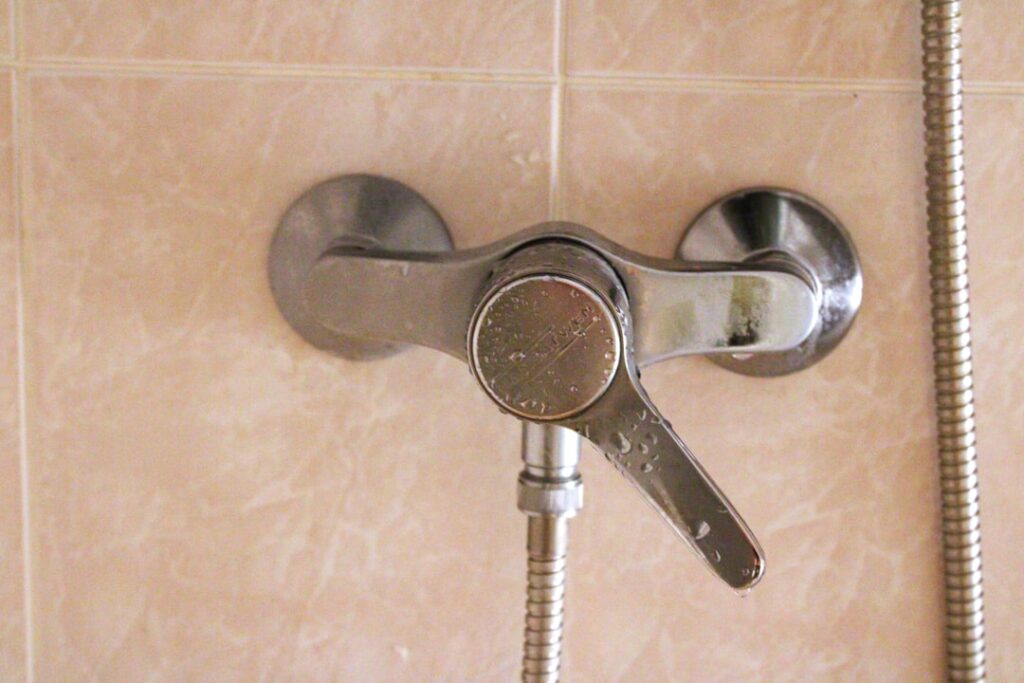
The valve hidden behind your shower wall is the single component that decides whether your shower scalds you when a toilet flushes. Homeowners searching for shower valve types pictures usually want one thing: to look at their own handle setup, match it to a category, and figure out what to buy or repair. This guide walks through each valve type in the order you are most likely to encounter it, describes exactly what it looks like so you can identify yours by sight, and explains where each one belongs. Picture each style as you read — the visual cues are consistent enough that you can name your valve without opening the wall.
- Pressure-Balancing Valves (The Most Common)
- Thermostatic Valves (Set-and-Forget Temperature)
- Diverter Valves (Sending Water Where You Want It)
- Mixing Valves (The Older Two-Handle Style)
- How to Identify Your Valve Without Opening the Wall
- Which Valve Type Should You Choose
- What the Trim Hides: Rough-In vs. Cartridge
- Matching a Valve Type to Your Water Supply
- A Quick Reference for the Store
Pressure-Balancing Valves (The Most Common)
If your shower has a single handle that both turns the water on and adjusts temperature by rotating left and right, you almost certainly have a pressure-balancing valve. Visually, picture one round or lever handle on a single escutcheon plate, no separate temperature dial. Turn it counterclockwise and the water goes from off to cold to hot along one arc of travel.
Inside, a spool or piston balances the ratio of hot to cold pressure. When someone flushes a toilet and cold pressure drops, the spool shifts to reduce hot flow proportionally, keeping your temperature roughly stable and preventing a scald. It does not hold an exact temperature — it holds a ratio — so if your water heater output changes, the shower temperature drifts with it. These valves are inexpensive, code-compliant for anti-scald in most jurisdictions, and account for the majority of American showers built in the last 30 years.
Thermostatic Valves (Set-and-Forget Temperature)
Now picture a wider trim plate with two controls: one handle or dial for temperature and a separate one for volume or flow. That two-control look is the signature of a thermostatic valve. You set the temperature dial to, say, 104°F, and the valve holds that temperature regardless of pressure or incoming water changes, using a wax or bimetallic element that expands and contracts to modulate the mix.
Thermostatic valves cost more — often $200 to $500 for the rough-in and trim versus $50 to $150 for pressure-balancing — but they deliver a genuinely superior shower. Because temperature and volume are independent, you can turn the flow down to a trickle without the water going cold, which pressure-balancing valves cannot do. They are the standard in high-end bathrooms and essential for multi-outlet systems feeding body sprays and rain heads simultaneously.
Diverter Valves (Sending Water Where You Want It)
A diverter is the valve that decides whether water flows to the tub spout, the showerhead, or a handshower. There are three common looks to picture:
- Tub-spout diverter: a small pull-up knob on top of the tub spout itself — lift it and water rises to the showerhead
- Two-valve diverter: a third handle on the trim plate that you turn to switch outlets
- Integrated diverter: built into the main valve, often marked with icons showing a showerhead and a tub
On multi-function systems you will find a transfer valve, which is a diverter that can feed two outlets at once — useful when you want the rain head and the handshower running together. When shopping shower valve types with pictures, the diverter is the easiest to identify because it is always the control tied to switching outlets, not setting temperature.
Mixing Valves (The Older Two-Handle Style)
Picture the classic setup with two separate handles — one marked H, one marked C — flanking the spout, plus sometimes a center diverter. That is a manual mixing valve, the oldest style still in service. You blend hot and cold yourself by adjusting each handle, and there is no automatic pressure or temperature compensation at all.
The downside is obvious the moment a toilet flushes: the cold side drops and the shower turns scalding, because nothing is balancing the mix for you. Many jurisdictions no longer allow new two-handle mixing valves in showers for exactly this reason. If your bathroom still has one, upgrading to a pressure-balancing or thermostatic valve is one of the highest-value safety improvements you can make, though it does require opening the wall.
How to Identify Your Valve Without Opening the Wall
You can classify almost any valve from the trim alone. Count the controls and note their function:
- One handle that does everything = pressure-balancing
- Two controls, one clearly for temperature and one for volume = thermostatic
- Two handles marked hot and cold = manual mixing valve
- An extra handle or spout knob that only switches outlets = diverter or transfer valve
Brand and model help you order the right cartridge or trim. Pull the handle and escutcheon — usually a setscrew and a couple of screws — and look for a stamp on the valve body or cartridge. Moen, Delta, Kohler, and Grohe each use distinct cartridge shapes, and matching the exact cartridge is the difference between a $30 repair and a full valve replacement.
Which Valve Type Should You Choose
For a straightforward single-shower bathroom, a pressure-balancing valve is the sensible, code-compliant, budget-friendly default. For a primary bath, a spa remodel, or any setup feeding multiple heads, spend the extra money on a thermostatic valve — the independent temperature and volume control genuinely changes the daily experience. Add a diverter or transfer valve whenever you run more than one outlet, and retire any two-handle mixing valve you inherit.
Whatever you pick, size the rough-in valve to your outlet count, set the anti-scald limit stop to cap the outlet at 120°F or lower, and pressure-test before you close the wall. Studying shower valve types with pictures pays off the moment you can look at a wall of trim in the store and know exactly which one fits your plumbing — and which one will finally stop the flush-and-scald surprise for good.
What the Trim Hides: Rough-In vs. Cartridge
One thing pictures of trim never show is the split between the valve body buried in the wall and the cartridge inside it. The body — the brass or engineered-polymer housing with your hot, cold, and outlet ports — rarely fails and almost never needs replacing. The cartridge, the moving heart that actually mixes and balances the water, is the wear item. When a shower drips, chatters, or loses its temperature stability, the fix is nearly always a fresh cartridge, not a new valve.
This distinction saves real money. Homeowners often assume a misbehaving shower means opening the wall and replacing the whole assembly, when a $25 to $60 cartridge swap done entirely from the front of the wall solves it. Each brand keys its cartridge to its own bodies, so once you have identified your valve type and manufacturer from the trim, ordering the correct cartridge is straightforward. Shut the water, pull the handle, extract the old cartridge with the brand’s puller tool if needed, and drop in the replacement.
Matching a Valve Type to Your Water Supply
Your home’s plumbing shapes the choice as much as the bathroom does. Homes on a well with variable pressure benefit enormously from either a pressure-balancing or thermostatic valve, because both compensate for the swings a well pump produces. Homes with an undersized or slow-recovery water heater lean toward thermostatic valves, since the ability to reduce flow without losing temperature stretches a limited hot-water supply.
Low overall water pressure argues against feeding multiple outlets from one valve at all — a single showerhead on a pressure-balancing valve will feel far better than a rain head and body sprays starved by weak supply. Walk through your outlet count, your pressure, and your hot-water capacity before you commit, and the right valve type usually becomes obvious. Reviewing shower valve types with pictures gets you to the correct category; matching that category to your actual water supply gets you to the correct purchase.
A Quick Reference for the Store
When you are standing in the plumbing aisle trying to decode a shelf of boxes, keep a short checklist in mind. Note the number of functions the trim controls, because a 1-, 2-, or 3-function label tells you how many outlets the valve can serve. Confirm whether the box contains a rough-in valve, a trim kit, or both, since the two are frequently sold separately and buying only trim leaves you without the body you need. Check the inlet type against your pipes — copper sweat, PEX, or threaded IPS — so the connections match your rough plumbing. And verify the valve carries a pressure-balancing or thermostatic rating if your local code requires anti-scald protection, which virtually every jurisdiction now does for new work. Run through those four points and you will walk out with a valve that fits your plumbing, satisfies inspection, and delivers the shower you pictured.