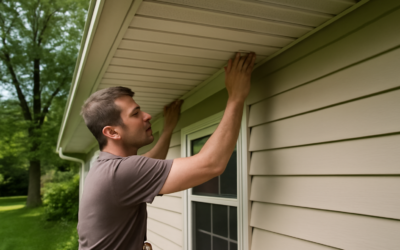
Damaged soffits are more than a cosmetic issue — they expose your attic, rafters, and home interior to moisture, pests, and energy loss. Soffit repair is one of the most cost-effective exterior maintenance projects a homeowner can tackle, typically costing $6–$16 per linear foot for materials and often manageable as a DIY project.
Part of our Roofing guide — explore the full guide →
This guide walks you through identifying soffit damage, choosing the right repair approach, step-by-step DIY instructions, material comparisons, and when to call a professional instead. Whether you’re dealing with a small section of rot or need to replace soffits across an entire roofline, we’ve got you covered.
What Is a Soffit?
A soffit is the horizontal underside of a roof overhang (eave). It spans the gap between the exterior wall and the outer edge of the roof, creating a finished look while serving several critical functions:
- Weather protection: Prevents rain, snow, and wind-driven moisture from entering the attic and wall cavities
- Pest barrier: Blocks birds, squirrels, bats, wasps, and other pests from nesting in the attic
- Attic ventilation: Vented soffits allow air intake that feeds the roof ventilation system, preventing moisture buildup and ice dams
- Aesthetic finish: Covers exposed rafters and roof framing for a clean exterior appearance
Most soffits extend 12–24 inches from the exterior wall, though some architectural styles feature overhangs of 36 inches or more. The soffit material is typically attached to a framework of nailer strips or a plywood substrate mounted to the rafter tails.
Signs of Soffit Damage
Catching soffit damage early prevents expensive repairs to the attic, insulation, and interior ceilings. Watch for these warning signs:
| Sign | Likely Cause | Urgency | Repair Type |
|---|---|---|---|
| Peeling paint or stains | Moisture exposure | Moderate | Scrape, prime, repaint |
| Soft or spongy sections | Wood rot | High | Section replacement |
| Visible holes or cracks | Physical damage or rot | High | Patch or panel replacement |
| Sagging or drooping panels | Failed fasteners or substrate | Moderate | Re-secure or replace |
| Animal activity (nesting, droppings) | Gaps or holes in soffit | High | Seal gaps, replace damaged sections |
| Visible mold or mildew | Poor ventilation, moisture | High | Replace section, improve ventilation |
| Ice dams in winter | Blocked soffit vents | High | Clear vents, add insulation baffles |
If you notice water stains on interior ceilings near exterior walls, the soffit is a prime suspect. Water entering through damaged soffits can travel along rafters and sheathing before dripping onto ceilings far from the actual entry point.
Soffit Repair Cost Breakdown
| Repair Type | DIY Cost | Professional Cost | Time Estimate |
|---|---|---|---|
| Small patch (under 4 sq ft) | $10–$30 | $75–$200 | 1–2 hours DIY |
| Single panel replacement | $15–$50 | $100–$300 | 1–3 hours DIY |
| Full side of house (50–80 linear ft) | $300–$800 | $600–$1,800 | 1–2 days DIY |
| Whole house replacement (200+ linear ft) | $800–$2,500 | $2,000–$6,000 | 2–4 days DIY |
| Rotten substrate repair (per section) | $30–$100 | $150–$400 | 2–4 hours DIY |
Material costs per linear foot in 2026:
- Vinyl soffit: $2–$5/linear ft
- Aluminum soffit: $3–$7/linear ft
- Wood (plywood/cedar): $3–$8/linear ft
- Fiber cement: $5–$10/linear ft
- Composite/engineered: $6–$12/linear ft
DIY Soffit Repair (Step by Step)
Tools & Materials Needed
- Pry bar or flat bar
- Circular saw or tin snips (depending on material)
- Measuring tape
- Drill/driver with screws or nail gun
- Replacement soffit material
- J-channel or F-channel (for vinyl soffit)
- Exterior-grade caulk
- Primer and paint (for wood/fiber cement)
- Safety glasses and work gloves
- Ladder (extension ladder for 2-story homes)
Step 1: Remove Damaged Soffit
Use a flat pry bar to carefully remove the damaged soffit panel. For vinyl, disengage the interlocking edge first using a vinyl siding removal tool (zip tool). For wood or aluminum, remove nails or screws. If the fascia board is in the way, you may need to remove the bottom piece of drip edge or the fascia-mounted J-channel.
Step 2: Inspect the Substrate
With the soffit removed, inspect the nailer strips, plywood substrate, and rafter tails for damage. Poke suspect areas with a screwdriver — if it sinks in easily, the wood is rotted and must be replaced. Cut out rotted sections and sister new lumber alongside damaged rafter tails using construction screws.
Step 3: Measure and Cut Replacement Material
Measure the opening from the wall to the fascia board, subtracting 1/4 inch on each end for expansion (vinyl and aluminum). Cut the new soffit panel to fit. For vinyl, use tin snips or a fine-tooth circular saw blade. For wood, use a circular saw with a plywood blade.
Step 4: Install the New Panel
For vinyl soffit: slide one edge into the J-channel on the wall, then push the outer edge into the F-channel or J-channel on the fascia. Nail through the slotted holes in the nailing flange — don’t drive nails tight (leave 1/32-inch play for expansion).
For wood soffit: nail or screw the panel to the nailer strips using corrosion-resistant fasteners. Pre-drill near edges to prevent splitting. Leave a 1/8-inch gap between panels for expansion.
Step 5: Seal and Finish
Apply exterior-grade caulk at any gaps between the soffit and the wall or fascia. For wood and fiber cement soffits, prime exposed edges and apply two coats of exterior paint. Vinyl and aluminum soffits need no finishing.
Soffit Materials Compared
| Material | Pros | Cons | Lifespan | Maintenance |
|---|---|---|---|---|
| Vinyl | Cheapest, no painting, easy DIY install | Can warp in extreme heat, limited colors | 20–30 years | Occasional cleaning |
| Aluminum | Durable, fire-resistant, paintable | Can dent, higher cost than vinyl | 30–40 years | Occasional cleaning |
| Wood (plywood/cedar) | Classic look, paintable, strong | Prone to rot, requires painting | 15–25 years (maintained) | Paint every 5–7 years |
| Fiber cement | Rot-proof, fire-resistant, paintable | Heavy, harder to install, dust hazard when cutting | 30–50 years | Paint every 10–15 years |
| Composite/engineered | Rot-proof, realistic wood grain, low maintenance | Expensive, limited availability | 30–50 years | Minimal |
For most homeowners, vinyl soffit is the best combination of cost, durability, and ease of installation. It comes in 12-foot panels with vented and solid options, snaps into J-channel for a clean installation, and never needs painting.
Soffit vs. Fascia: What’s the Difference?
The soffit and fascia work together but serve different roles:
- Soffit: The horizontal panel under the roof overhang. It faces downward. Its primary jobs are ventilation, pest protection, and moisture prevention.
- Fascia: The vertical board at the edge of the roof overhang, directly behind the gutter. It faces outward. The fascia supports the gutter system and provides a finished edge to the roofline.
When repairing soffits, always inspect the fascia too. Water damage often affects both simultaneously. If gutters overflow or leak, the fascia takes damage first, which then migrates to the soffit and substrate. Fascia replacement costs $6–$20 per linear foot installed.
Soffit Ventilation Explained
Soffit vents are critical to your roof’s health. They serve as the intake for the roof ventilation system, drawing cool outside air into the attic while hot, moist air exits through ridge vents or roof vents. Without proper soffit ventilation:
- Attic temperatures can exceed 150F in summer, degrading shingles from below and increasing cooling costs by 10–25%
- Moisture from the living space below condenses in the cold attic during winter, causing mold, mildew, and wood rot
- Ice dams form when attic heat melts snow on the roof, which refreezes at the unheated overhang
The general rule for soffit ventilation: provide 1 square foot of net free ventilation area for every 150 square feet of attic floor area. If you have a ridge vent, this ratio improves to 1:300. Vented soffit panels typically provide 9–11 square inches of ventilation per linear foot.
When replacing soffits, always maintain or improve ventilation. Don’t cover existing vented panels with solid material. If your current soffits are solid, consider upgrading to vented panels — it’s the easiest time to make this improvement.
When to Hire a Professional
While many soffit repairs are DIY-friendly, these situations call for professional help:
- Two-story or higher homes: Working on extension ladders above 16 feet significantly increases fall risk
- Extensive rot in rafters or sheathing: Structural repairs require carpentry experience and proper load assessment
- Active pest infestations: Raccoons, bats, or wasps nesting in the soffit area require professional removal before repair
- Ice dam damage: Typically indicates insulation and ventilation problems that need whole-system assessment
- Historic homes: Matching original materials and profiles may require specialized trim carpentry
When hiring a contractor, get 3 quotes and verify licensing, insurance, and references. Soffit repair is typically handled by siding contractors, general contractors, or roofing companies. Expect to pay $40–$80 per hour for labor in most markets.
Prevention & Maintenance Tips
- Inspect soffits twice yearly: Walk the perimeter of your home each spring and fall, looking up at the soffits for damage, stains, or pest activity
- Keep gutters clean: Clogged gutters overflow onto fascia and soffits, causing water damage. Clean gutters at least twice per year
- Maintain paint on wood soffits: Bare wood absorbs moisture and rots within 2–3 years. Repaint every 5–7 years
- Trim overhanging branches: Branches touching the roofline retain moisture against soffits and provide animal access
- Check attic insulation: Ensure insulation isn’t blocking soffit vents. Install foam baffles to maintain airflow channels
- Address window sash leaks nearby: Water from failed window seals can travel along framing and damage adjacent soffits
A well-maintained exterior — from soffits and fascia down to the foundation — protects your home’s structure and value. For interior projects that complement your exterior maintenance, consider updating wall textures or refreshing your bathroom wall decor.
Frequently Asked Questions
How much does soffit repair cost?
Small patches cost $10–$30 DIY or $75–$200 professionally. Full side-of-house replacement runs $300–$800 DIY or $600–$1,800 professional. Whole-house soffit replacement averages $2,000–$6,000 installed. Material choice (vinyl vs. fiber cement) significantly impacts the total.
Can I repair soffits myself?
Yes, for single-story homes with standard vinyl or wood soffits. The work requires basic tools, a stable ladder, and moderate DIY skills. Vinyl soffit is the easiest to work with. Two-story repairs and structural rafter damage are best left to professionals.
What causes soffit damage?
The most common causes are water damage from overflowing or leaking gutters, wood rot from moisture exposure, pest intrusion (woodpeckers, squirrels, wasps), physical damage from storms or falling branches, and age-related deterioration of paint and caulking.
How long do soffits last?
Vinyl soffits last 20–30 years. Aluminum lasts 30–40 years. Well-maintained wood soffits last 15–25 years. Fiber cement and composite soffits can exceed 40 years. Harsh climates, poor ventilation, and deferred gutter maintenance shorten all lifespans.
Should I repair or replace my soffits?
Repair if damage is limited to 1–2 panels and the substrate is sound. Replace if damage spans large sections, the substrate (plywood or nailer strips) is rotted, or the material is outdated and mismatched. If your soffits are old wood and you’re tired of repainting, upgrading to vinyl during repair is a smart long-term move.
Do soffits need to be vented?
Yes — soffit ventilation is essential for attic health. Vented soffits provide the air intake for the roof ventilation system. Without them, attic heat and moisture buildup leads to mold, rotted sheathing, ice dams, and premature shingle failure. If your soffits are currently solid, add vent inserts or upgrade to vented panels.
Last updated: March 2026