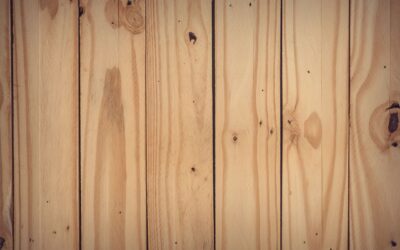
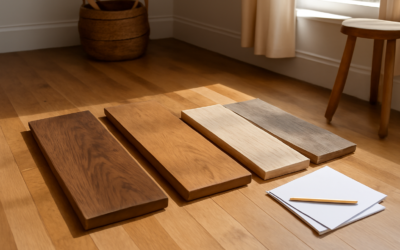
Solid wood flooring is the original premium flooring material and remains one of the most desirable features in any home. Milled from a single piece of timber, typically 3/4 inch thick, solid hardwood delivers unmatched natural beauty, generational durability, and the ability to be refinished multiple times over its lifespan. No other flooring product can match the warmth, character, and long-term value of a genuine solid wood floor.
This guide covers everything you need to know about solid wood flooring, including what it is, how it is made, popular species and grades, width options, prefinished vs. site-finished decisions, installation methods, refinishing potential, how it compares to engineered wood, and what you should budget for a solid hardwood floor. For a broader look at hardwood options, see our hardwood flooring guide.
What Is Solid Wood Flooring?
Solid wood flooring is exactly what the name implies: each plank is milled from a single piece of solid timber with no layers, plywood, or composite core. The standard thickness for residential solid hardwood is 3/4 inch (19mm), though 5/16-inch products are available for specific applications like over radiant heat or where floor height is constrained.
Because the entire plank is solid wood from top to bottom, it can be sanded and refinished multiple times over its life. A standard 3/4-inch solid hardwood floor can typically be refinished 5 to 7 times before the tongue-and-groove profile is compromised, with each refinishing removing approximately 1/32 inch of material. This refinishing potential gives solid wood a practical lifespan of 50 to 100 years or more in a well-maintained home.
Solid wood is a natural, organic material that responds to its environment. It expands when humidity rises and contracts when humidity drops. This dimensional movement is the primary characteristic that distinguishes solid wood from engineered wood and determines where and how it can be installed.
Popular Wood Species
Domestic Species
Red Oak: The most popular solid wood flooring species in North America, red oak has a prominent grain pattern with warm pinkish-brown tones. It has a Janka hardness rating of 1,290, making it a good all-around choice for residential flooring. Red oak takes stain well, which is why it is available in nearly every color from natural to ebony.
White Oak: Increasingly popular and now rivaling red oak in sales, white oak has a tighter, more subtle grain pattern with golden-brown tones. Its Janka rating of 1,360 makes it slightly harder than red oak. White oak’s closed grain structure makes it more water-resistant than red oak, which is why it is the species used in wine barrels and boat building. This natural water resistance makes it the better choice for kitchens and areas with occasional moisture exposure.
Hickory: The hardest commonly available domestic hardwood (Janka 1,820), hickory features dramatic grain variation and color contrast ranging from creamy white to deep brown within the same plank. Hickory is extremely durable and well-suited to active households with pets and children. Its bold character is a design statement that works best in rustic, farmhouse, and lodge-style interiors.
Maple: A light-colored hardwood (Janka 1,450) with a fine, uniform grain. Maple’s clean appearance makes it a popular choice for contemporary and Scandinavian-inspired interiors. However, its tight grain does not accept stain as evenly as oak, which limits color options. Maple is best used in its natural light tones.
Walnut: A premium domestic species with rich chocolate-brown color and flowing grain. Walnut’s Janka rating of 1,010 makes it softer than oak, so it is best suited for lower-traffic areas or homeowners who embrace the natural patina that develops with use. Walnut flooring has a distinctly luxurious appearance and commands premium pricing.
Exotic Species
Brazilian Cherry (Jatoba): Janka 2,350. A strikingly beautiful wood with deep reddish-brown color that darkens dramatically with light exposure. Extremely hard and durable.
Santos Mahogany: Janka 2,200. Rich reddish-brown tones with a fine, interlocking grain. Excellent durability and a refined appearance.
Brazilian Walnut (Ipe): Janka 3,680. One of the hardest commercially available woods. Dark olive-brown color with extreme scratch resistance. Often used in commercial applications.
Exotic species cost 50 to 100 percent more than domestic species and may raise sustainability concerns. Ensure any exotic hardwood you purchase is certified by the Forest Stewardship Council (FSC) or sourced from verifiable sustainable forestry operations.
Grades of Solid Hardwood
Solid hardwood is graded by appearance according to standards set by the National Wood Flooring Association (NWFA) and the National Hardwood Lumber Association (NHLA).
Select and Better (Clear): The highest grade, featuring uniform color, minimal grain variation, and virtually no knots, mineral streaks, or character marks. Select grade creates a clean, refined look suitable for formal and contemporary spaces. It commands the highest price per square foot.
Number 1 Common (#1 Common): Contains more natural character than Select, including some color variation, small knots, and mineral streaks. This is the most popular residential grade, offering a natural look with moderate character at a mid-range price.
Number 2 Common (#2 Common): Also called rustic or cabin grade. Features significant color variation, larger knots, wormholes, mineral deposits, and other natural character marks. This grade has a rugged, rustic appearance that complements country, farmhouse, and industrial interior styles. It is the most affordable grade.
Higher grades are not necessarily better quality in terms of structural performance. All grades are milled from the same timber and are equally durable. The grading system reflects only visual appearance and character level.
Width Options
Solid hardwood planks are available in several standard widths, and the width you choose significantly affects the character of the floor.
Strip (2-1/4 inches): The classic, traditional hardwood width. Strip flooring creates a uniform, refined look with many narrow boards. It is the most dimensionally stable solid wood option because narrow boards are less prone to seasonal expansion and contraction.
Plank (3 to 5 inches): The most popular width range for current installations. Plank flooring has a more contemporary, open feel than strip and showcases the wood grain more prominently. Four-inch and five-inch widths are the most requested.
Wide plank (6 inches and above): Wide plank flooring makes a bold visual statement and has a rustic, hand-crafted character. Wider boards show more of each plank’s individual grain pattern and create a floor with fewer seams. However, wider solid planks are more susceptible to seasonal movement and may develop visible gaps during dry winter months. Proper humidity control (35 to 55 percent relative humidity year-round) is essential with wide-plank solid wood.
Prefinished vs. Site-Finished
Prefinished Solid Hardwood
Prefinished solid hardwood is sanded, stained, and coated with a durable finish (typically aluminum oxide-enhanced polyurethane) at the factory. The finish is applied under controlled conditions and cured with UV light, producing a harder, more consistent coating than site-applied finishes.
Advantages of prefinished include no dust or fumes during installation, immediate use after installation (no curing time), consistent color and finish quality, and a factory warranty that covers the finish for 15 to 50 years. Disadvantages include visible micro-beveled edges between planks (necessary to prevent chipping during installation), less ability to customize color on-site, and slightly higher material cost.
Site-Finished Solid Hardwood
Site-finished (also called unfinished) solid hardwood is installed raw and then sanded, stained (if desired), and coated with polyurethane on-site. This approach creates a perfectly smooth, seamless surface with no beveled edges between planks. The finish flows across plank edges, sealing the entire floor as one continuous surface.
Advantages include complete color customization (any stain color), a seamless flat surface, and the ability to match existing hardwood in other rooms. Disadvantages include significant dust and fumes during the finishing process (you cannot occupy the home for 3 to 5 days), a site-applied finish that is somewhat softer than factory-applied, higher total cost (sanding and finishing add $3-$5 per square foot to the project), and potential inconsistency if the finisher’s skill level is not high.
Installation Methods
The standard installation method for 3/4-inch solid hardwood is nail-down (or staple-down) over a plywood or OSB subfloor.
Nail-Down Installation
A pneumatic flooring nailer drives cleats or staples through the tongue of each plank at a 45-degree angle, securing it to the subfloor. The nail heads are hidden by the groove of the next plank, creating a fastener-free surface. Planks are installed starting from one wall and working across the room, with each row tapped tightly against the previous row.
Nail-down installation requires a wood subfloor (plywood, OSB, or existing hardwood). It cannot be done over concrete. The subfloor must be flat within 3/16 inch over 10 feet and free of squeaks and loose panels.
Where Solid Wood Cannot Be Installed
Solid wood flooring should not be installed below grade (basements), directly over concrete slabs, or in areas with uncontrolled moisture. The dimensional movement of solid wood makes it incompatible with concrete subfloors and high-moisture environments. For these applications, engineered hardwood is the appropriate alternative.
Solid wood is also not recommended over radiant heating systems in most cases. The heat accelerates moisture loss and can cause excessive shrinkage, gaps, and cracking. Thinner solid wood products (5/16 inch) are sometimes approved for radiant heat, but engineered wood is generally the safer choice.
Refinishing Potential
The ability to refinish is the defining advantage of solid hardwood over every other flooring type. When the finish becomes worn, scratched, or dated, the floor can be sanded back to bare wood and refinished with a completely new stain color and protective coating. The result is a floor that looks brand new.
A 3/4-inch solid hardwood floor has approximately 5/16 inch of material above the tongue, allowing 5 to 7 sandings over the floor’s lifetime. With each refinishing lasting 7 to 15 years depending on traffic and maintenance, the total functional lifespan of a solid hardwood floor can exceed 75 to 100 years.
Refinishing costs $3 to $8 per square foot and includes sanding, staining (optional), and applying 2 to 3 coats of polyurethane. The process takes 3 to 5 days including drying time. During refinishing, you can change the floor’s color entirely by choosing a different stain, giving you the flexibility to update the look of your home without replacing the floor.
Solid Wood vs. Engineered Wood
Engineered hardwood consists of a thin real wood veneer (1 to 6mm) bonded to a multi-layer plywood or HDF core. It is more dimensionally stable than solid wood, meaning it expands and contracts less with humidity changes. This stability allows engineered wood to be installed over concrete, below grade, and with radiant heating.
The trade-off is refinishing potential. Engineered floors with thin veneers (1-2mm) can be lightly screened and recoated but not fully sanded. Thicker veneers (4-6mm) can be refinished 2 to 3 times. Solid wood’s 5-7 refinishing cycles give it a significant lifespan advantage.
For above-grade installations over wood subfloors in climate-controlled homes, solid wood is the premium choice. For below-grade, over-concrete, or radiant-heat installations, engineered wood is the practical choice. Both deliver the beauty and value of real hardwood.
Cost of Solid Wood Flooring
Solid hardwood pricing varies considerably based on species, grade, width, and whether the product is prefinished or unfinished.
Domestic species (oak, maple, hickory): $3-$8 per square foot for materials. Select grade is at the top; #2 Common is at the bottom.
Premium domestic (walnut, cherry): $6-$12 per square foot.
Exotic species: $8-$18 per square foot.
Installation labor (nail-down): $3-$6 per square foot.
Site finishing (if unfinished): $3-$5 per square foot for sanding, staining, and 3 coats of polyurethane.
Total installed cost: Prefinished domestic oak: $6-$14 per square foot. Site-finished domestic oak: $9-$19 per square foot. Premium or exotic: $14-$30 per square foot.
For a 500-square-foot installation using prefinished white oak in #1 Common grade, expect a total project cost of $4,000 to $6,500 including materials, labor, and trim.
Maintenance and Care
Solid wood floors are low-maintenance but benefit from a few consistent practices. Sweep or vacuum regularly to remove grit and debris that can scratch the finish. Use a wood floor cleaner (not vinegar, not general-purpose cleaners) for periodic damp mopping. Place felt pads under all furniture legs and use mats at exterior doorways.
Maintain indoor humidity between 35 and 55 percent year-round. A humidifier in winter and dehumidifier or air conditioning in summer prevents the excessive shrinkage and swelling that cause gaps, cupping, and buckling. This humidity management is especially important for wide-plank solid wood.
Address spills immediately by wiping with a dry or slightly damp cloth. Standing water is the enemy of solid wood. Even with a polyurethane finish, prolonged moisture exposure can penetrate seams and damage the wood underneath.
Final Thoughts
Solid wood flooring represents the gold standard of residential flooring for good reason. Its natural beauty, decades-long durability, and unmatched refinishing potential make it a true long-term investment. While it costs more upfront than most alternatives and has environmental limitations (no basements, no concrete, no wet areas), solid wood rewards homeowners with a floor that ages gracefully, adds measurable home value, and can literally last a lifetime with proper care.
Prefer to explore on your own?
See how new flooring looks in your actual room in seconds — free, no signup.
Try the free Floor Studio →