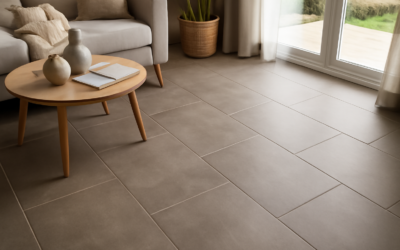
Taupe is the color designers reach for when they want warmth without commitment, and it has quietly become one of the most requested neutrals in flooring. Taupe floor tile sits in the sweet spot between cool gray and warm beige, which is exactly why it works in so many rooms and pairs with almost any wall color, cabinet, or wood tone you already own. It hides dirt better than pure white, feels warmer than gray, and reads as intentional rather than dated. If you want a floor that will still look right in ten years, taupe is one of the safest bets on the showroom wall.
Part of our Tile & Grout guide — explore the full guide →
What Taupe Actually Is
Taupe is a grayish-brown, but the exact character depends on its undertone. Some taupes lean warm, pulling toward beige and tan, while others lean cool, pulling toward gray or even a faint purple. This is the single most important thing to understand before you buy, because a warm taupe next to cool gray walls can look muddy, and a cool taupe against cream cabinets can look dingy.
Always view samples in the actual room at different times of day. North-facing light cools every color down, while afternoon sun warms it up. A taupe that looked perfect under showroom fluorescents can shift noticeably once it is on your floor. Bring home a full-size sample, lay it where it will live, and watch it for two or three days before committing to a full order.
Why Taupe Works So Well Underfoot
Beyond looks, taupe is a practical floor color. Its mid-tone value hides both light debris like dust and dander and darker grime like footprints and pet hair, which pure white and near-black floors both show instantly. That makes it forgiving in high-traffic zones such as kitchens, entryways, and hallways where a spotless floor is a fantasy.
It is also endlessly flexible with decor. Warm taupe complements wood furniture, brass fixtures, and cream or greige walls. Cool taupe pairs with white trim, gray cabinetry, and stainless appliances. Because it bridges two color families, taupe lets you change wall paint and furnishings over the years without the floor ever looking out of step, which protects your investment far better than a trendy color would.
Materials and Finishes to Consider
Taupe shows up across every tile category, so your choice comes down to performance and texture as much as color.
- Porcelain: the workhorse. Dense, water-resistant below 0.5 percent absorption, and available in stone-look, concrete-look, and wood-look taupe finishes.
- Ceramic: a budget-friendly option for lower-traffic rooms, though softer and more porous than porcelain.
- Natural stone: travertine and limestone come in beautiful taupe tones but need sealing and cost more to maintain.
- Matte finish: the most popular for taupe, giving a soft, contemporary look and better slip resistance underfoot.
- Polished finish: reflects light and enlarges a room, but shows footprints and can be slick when wet.
For most homes, matte porcelain in a taupe stone-look or concrete-look is the practical winner. It delivers the color, resists water and stains, and needs no sealing.
Sizes and Layouts That Flatter Taupe
Large-format tile, meaning 12-by-24 inches and up, has become the default for taupe floors because the minimal grout lines let the color read as a continuous, calm surface. A 24-by-24 or 24-by-48 tile in a warm taupe can make a modest room feel expansive and high-end. If you prefer a wood-look, taupe-toned planks in a 6-by-36 or 8-by-48 format installed in a staggered or herringbone pattern add subtle interest.
Smaller mosaics have their place too, especially as a shower floor or a decorative border, where the added grout gives grip and pattern. But for open living areas, keep the format large and the layout simple. Taupe is a quiet color, and busy layouts fight its calming appeal rather than showcase it.
Getting the Grout Right
Grout color makes or breaks a taupe floor, and it is the detail homeowners most often get wrong. A grout that matches the tile closely creates a seamless, expansive look and lets the taupe dominate. A contrasting grout, whether darker or lighter, turns every tile into a defined grid, which can look intentional in a patterned floor but busy in a large open room.
For most taupe installations, choose a grout one shade off the tile in the same undertone family. Avoid bright white grout, which yellows and stains in traffic and clashes with taupe’s soft warmth, and avoid stark charcoal unless you specifically want a graphic grid. Whatever you pick, seal cementitious grout after install or choose an epoxy grout to keep the lines from discoloring and throwing off the whole color scheme.
What Taupe Floor Tile Costs
Taupe porcelain typically runs $3 to $8 per square foot, with large-format and premium wood-look lines pushing toward $10. Ceramic sits lower at $1 to $4, while natural stone in taupe tones ranges from $5 to $15 depending on the material and grade. These are material-only prices.
Installation adds $6 to $12 per square foot for labor, thinset, and grout, and complex layouts like herringbone or diagonal raise that figure because of extra cuts and time. Order 10 to 15 percent more tile than your square footage to cover cuts, breakage, and future repairs, and try to buy it all in one dye lot so the taupe stays consistent across the whole floor. Color can drift subtly between production batches, and mixing lots is a common cause of a floor that looks patchy in raking light.
Installation and Maintenance Notes
Taupe tile installs like any quality porcelain or ceramic. Set it over a flat, clean substrate with a modified thinset, back-butter large-format pieces for full coverage, and use tile leveling clips on big tiles to prevent lippage, the uneven edges that catch toes and shadows. An uncoupling membrane over concrete guards against cracks migrating up into the floor.
Maintenance is refreshingly light. Matte porcelain needs only a damp mop with a neutral pH cleaner; skip oily soaps that dull the finish and leave streaks. Taupe’s mid-tone forgiveness means you will mop less often than owners of darker or lighter floors. If you chose natural stone instead, plan on sealing once or twice a year and using only stone-safe cleaners to avoid etching the surface.
One detail worth planning for is repairs. Even the most durable floor can lose a tile to a dropped cast-iron pan or a settling crack, so set aside a full box of your taupe tile from the original dye lot after installation. Trying to match a discontinued taupe years later is frustrating, and a replacement from a different lot will almost always read slightly off in color. A few spare tiles tucked in the garage turn a potential eyesore into a fifteen-minute fix.
Consider underfloor heating too. Tile feels cool underfoot, and taupe’s warm visual tone can be undercut by a genuinely cold floor on a winter morning. Electric radiant mats installed under the tile add noticeable comfort for a modest upfront cost, roughly $8 to $15 per square foot including the mat and thermostat, and they pair naturally with the cozy, warm impression taupe already creates in a room.
Is Taupe Floor Tile the Right Choice?
If you want a floor that flatters nearly any room, hides everyday mess, and refuses to go out of style, taupe is hard to beat. The key is nailing the undertone: decide whether your space wants warm or cool taupe, then test a full-size sample in your own light before buying. Pair it with matte porcelain for low maintenance, a large-format tile for a calm modern look, and a close-matched grout to let the color shine. Get those decisions right and taupe floor tile gives you a warm, versatile, forgiving surface that will still look deliberate and current long after bolder trends have faded.
Prefer to explore on your own?
See how new flooring looks in your actual room in seconds — free, no signup.
Try the free Floor Studio →