The best tile that looks like stone for floor use has gotten so convincing that even contractors sometimes have to touch a sample to be sure. High-definition printing and pressed surface texture let porcelain and ceramic mimic marble veining, travertine pitting, and slate cleft, all without the sealing, staining, and cost headaches of the real thing. If you love the natural-stone look but not its upkeep, this is the category built for you. Here is how to judge realism, safety, and value.
Part of our Tile & Grout guide — explore the full guide →
- How Realistic Has It Really Gotten?
- Which Stone Looks Translate Best
- Slip Resistance: Read the DCOF Number
- The Real Advantage Over Natural Stone
- Cost Compared to the Genuine Article
- Format and Size Choices
- Grout: The Detail That Sells the Illusion
- Installation Considerations
- Matching the Look to Your Style
- Where This Tile Wins
How Realistic Has It Really Gotten?
Modern stone-look porcelain is made with inkjet printing that can layer six to eight color passes, so no two tiles in a run look identical, exactly like quarried stone. The best lines add a matching surface texture, pressing subtle relief into the tile so your eye and your bare foot both read it as travertine or slate rather than a flat photo. Look for collections that offer a high number of “faces” or pattern variations. A cheap tile repeats the same printed pattern every fourth or fifth piece, which the eye catches quickly across a big floor.
Which Stone Looks Translate Best
Some natural stones photograph and press into tile better than others.
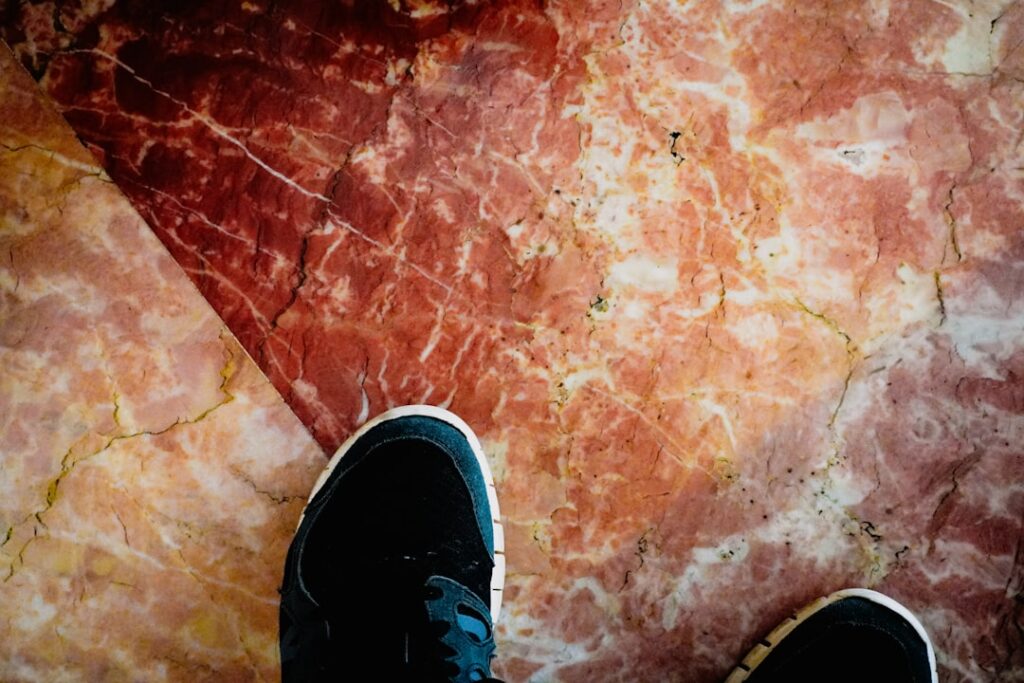
- Marble-look: The most popular. Soft gray or gold veining on a white field reads as luxury and hides better than you would expect.
- Travertine-look: Warm, earthy, with printed pitting. Great for Mediterranean and transitional rooms without the sealing real travertine demands.
- Slate-look: Deep charcoal and multitone surfaces with a cleft texture, ideal for entries and mudrooms.
- Limestone and concrete-look: Quiet, matte neutrals that suit modern interiors.
Slip Resistance: Read the DCOF Number
Because floors get wet, slip resistance is not optional. The industry measure is DCOF (Dynamic Coefficient of Friction). For interior floors that may get wet, look for a DCOF of 0.42 or higher, the widely referenced threshold. Textured slate-look and travertine-look surfaces usually clear this easily because their relief adds grip. Polished marble-look tile is the risky one. It looks gorgeous but can get slick, so save high-gloss stone-look tile for walls and low-traffic dry areas, and choose a matte or textured finish anywhere feet get wet.
The Real Advantage Over Natural Stone
Porcelain does not care about your wine, your dog, or your mop. Genuine marble and travertine are porous, so they need periodic sealing and can etch or stain from acids like citrus and vinegar. Stone-look porcelain is fired dense, is effectively non-porous, and needs no sealing ever. It resists scratches, freeze-thaw cycles, and staining, which is why it works from a sunroom to an exterior patio when rated for it. You get the look you fell in love with and a floor you can clean with a damp mop.
Cost Compared to the Genuine Article
This is where the category really wins. Stone-look porcelain typically runs $3 to $8 per square foot for material, with premium large-format and designer marble-look tiles reaching $10 to $12. Real marble and travertine often start higher and then add ongoing sealing costs and pricier, more careful installation. Because porcelain is consistent in thickness and hardness, install labor usually runs $7 to $14 per square foot, and you avoid the specialty handling that fragile natural slabs require.
- Stone-look porcelain: $3 to $12 per sq ft material, no sealing, low lifetime cost.
- Natural marble/travertine: Often $10 to $40+ per sq ft material, plus sealing and delicate maintenance.
Format and Size Choices
Size shapes the illusion as much as the print does. Large-format tiles, 12×24 inches and up, best imitate the look of quarried stone slabs because they show more of the veining pattern per piece and use fewer grout lines. That is why marble-look floors so often come in big rectangles or even gauged porcelain panels. Smaller formats and hexagons lean into a more traditional or craft feel, which suits travertine-look and slate-look in bathrooms and entries. Whatever the size, buy from a single production batch or lot number so shade and caliber stay consistent, and dry-lay a section first to spread the printed pattern faces around for maximum realism.
Grout: The Detail That Sells the Illusion
Nothing gives away fake stone faster than the wrong grout. Wide, contrasting grout lines chop the floor into an obvious tile grid and break the natural look you paid for. To keep the stone illusion seamless, choose a grout color drawn from the mid-tone of the tile, keep joints as narrow as the tile’s rectified edges allow, and consider a stain-resistant grout in kitchens and baths. On a marble-look floor, a soft gray grout that matches the veining disappears; on travertine-look, a warm beige joint blends into the field. Get the grout right and even guests standing on the floor assume it is real stone.
Installation Considerations
Porcelain is hard, dense, and heavy, which makes it durable but also demanding to cut and set. Large-format stone-look tiles in particular need a very flat subfloor and a leveling clip system to prevent lippage, where one tile edge sits proud of its neighbor. Cutting dense porcelain calls for a wet saw with a quality diamond blade rather than a snap cutter. Many homeowners handle small stone-look tile projects themselves, but for large marble-look formats, hiring an experienced tile setter is money well spent to get flat, tight, natural-looking results.
Matching the Look to Your Style
The beauty of stone-look porcelain is that you can dial in almost any aesthetic without committing to a single natural stone’s quirks. For a modern, minimal room, a large-format concrete-look or limestone-look tile in a soft gray keeps things calm and contemporary. For a warm, rustic kitchen, a travertine-look tile with pitting and gold undertones brings Old-World character. Marble-look tile suits elegant, transitional baths, while slate-look grounds a mudroom or entry with rugged texture. Because the color and pattern are printed, you also get consistency you could never guarantee with a quarried slab, which means the floor you approve on a sample is the floor you actually get across the whole room.
Where This Tile Wins
Choose tile that looks like stone for floor projects when you want natural-stone drama in a kitchen, bathroom, entry, or open living area but you refuse to babysit the surface. Pick a matte or textured finish with a DCOF at or above 0.42 for wet zones, favor collections with many pattern faces for realism, and use a grout color that blends with the tile’s field to keep the stone illusion seamless. You end up with the beauty of the quarry and the practicality of porcelain.
Prefer to explore on your own?
See how new flooring looks in your actual room in seconds — free, no signup.
Try the free Floor Studio →