
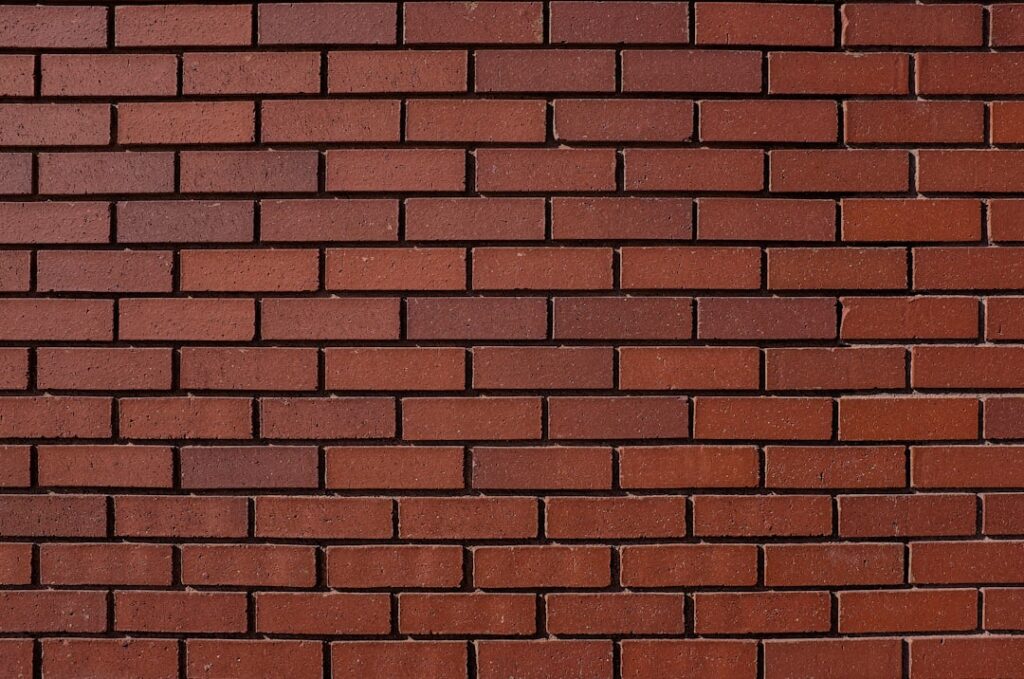
Exposed brick sells houses, but real structural brick floors and walls are heavy, porous, and rough enough to shred a sock. Tile that looks like brick delivers the loft-apartment look without those penalties: porcelain and ceramic pieces printed and textured to mimic clay brick, sealed against stains, and thin enough to install anywhere ordinary tile goes. Alongside it sits thin brick veneer — actual kiln-fired clay sliced to tile thickness — which muddies the shopping decision in useful ways. This guide sorts out both materials, the layouts that make or break the illusion, the outsized role of grout color, and what everything costs in 2026.
Part of our Tile & Grout guide — explore the full guide →
The Two Materials: Brick-Look Tile vs. Thin Brick Veneer
Porcelain and Ceramic Brick-Look Tile
Modern inkjet printing puts convincingly irregular brick faces — tumbled edges, kiln flashing, mottled reds and creams — onto dense porcelain bodies, typically in single “brick” formats around 2.5×10 or 3×12 inches, or in mesh-mounted mosaic sheets that install several bricks at a time. Porcelain versions are nearly waterproof (under 0.5 percent absorption), stain-resistant without sealing, consistent in thickness, and rated for floors, showers, and freeze-thaw exteriors. Cost runs $4 to $12 per square foot for quality lines.
Thin Brick Veneer
Real clay brick cut or manufactured at 1/2-to-3/4-inch thickness. Because it is genuine fired clay, the color runs through the body, the texture is authentically rough, and no printing pattern ever repeats. The trade-offs: clay is porous and needs sealing in kitchens and wet areas, thickness varies piece to piece (part of the charm, harder to install flat), the rough face is tougher to clean, and floor-rated products must be verified — many thin bricks are wall-only. Materials cost $5 to $12 per square foot.
The quick rule: showers, floors that see mopping, and anyone prioritizing cleanability should choose porcelain brick-look tile; accent walls and fireplace surrounds where authentic texture matters most reward thin brick veneer.
Where Brick-Look Tile Shines
- Kitchen backsplashes: The number-one application. A whitewashed brick-look backsplash warms white kitchens without the grease-trapping porosity of real clay.
- Fireplace surrounds and accent walls: Instant age and texture in new construction that lacks both.
- Mudroom, laundry, and entry floors: Brick-look porcelain in herringbone is durable, grit-hiding, and period-appropriate in older homes.
- Sunrooms and covered patios: Frost-rated porcelain brick brings the courtyard look outdoors without efflorescence or moss-prone pores.
- Shower and tub walls: Only porcelain versions belong here — done in white glazed brick formats, the look borders on classic subway with more character.
Layouts: The Pattern Sells the Illusion
Brick reads as brick largely because of its bond pattern, so layout choice carries the design.
- Running bond (offset): The classic 50 percent stagger — the default for walls and backsplashes. On tile longer than 10 inches, a 33 percent offset avoids lippage from any slight crowning.
- Herringbone: The premium floor look — bricks at 90 degrees to each other in a zigzag. Herringbone brick-look floors in entries and kitchens are the strongest current trend in this category. Expect 25 to 50 percent higher labor and about 15 percent material waste from angled perimeter cuts.
- Basketweave: Pairs of bricks alternating direction — vintage and busy, best in small doses like a fireplace hearth.
- Stack bond: Bricks in a clean grid, no offset — the modern take, popular in contemporary bathrooms.
One layout warning: brick-look tile with heavily rectified, uniform edges laid in perfect running bond can look like printed tile instead of brick. Products with slight size variation, tumbled edges, and multiple face patterns per box sell the illusion far better — check how many unique faces a line prints (eight or more is good) so repeats do not jump out on a large wall.
Grout: The Detail That Makes It Real
Nothing signals fake brick faster than tile-style grout joints. Real brick has mortar joints of 3/8 inch or wider, often smeared and irregular; tile habits of 1/8-inch joints in matching grout kill the effect instantly.
- Go wide: Set joints at 3/8 to 1/2 inch using spacers, and choose a sanded grout or a mortar-look grout product rated for wide joints.
- Choose mortar colors: Warm gray, oyster, and sand-toned grouts read as mortar. Against red brick tones, a slightly light gray is the most authentic; against whitewashed brick, soft warm white keeps the aged look.
- Consider the schmear: For maximum age, some installers float grout partially across the brick faces — a German schmear or overgrout technique. Practice on a mock-up board first; it is permanent.
- Contrast intentionally: High contrast (white mortar, dark brick) emphasizes the bond pattern; low contrast calms it. Sample both on a square yard before committing.
What Projects Cost in 2026
Installed pricing lands close to ordinary tile work with a pattern premium. Brick-look porcelain: $4 to $12 per square foot material plus $8 to $18 installation, so $12 to $30 installed depending on layout — herringbone at the top. Thin brick veneer installs similarly at $10 to $28 per square foot including sealing. Typical projects: a 30-square-foot backsplash runs $450 to $900 installed; a 120-square-foot mudroom floor in herringbone $1,800 to $3,600; a fireplace surround $500 to $1,500. DIYers with tile experience can halve those numbers — the small formats are forgiving to handle, and mosaic-mounted sheets speed walls dramatically, though wide-joint grouting is messier than standard tile work.
Design Directions That Work Right Now
A few combinations dominate the best current installs. Whitewashed and limewash-look brick tile with soft white grout suits modern farmhouse kitchens and keeps small spaces bright. Deep red and brown multi-tone brick with gray mortar-look grout in herringbone reads authentically industrial for lofts, bars, and fireplace walls. Black and charcoal brick formats with matching dark grout create dramatic modern fireplaces and powder rooms. And glazed brick-format tile in sage, navy, or cream — glossy, irregular, hand-made looking — bridges brick texture and designer color for backsplashes. In every case the sample-board rule applies: lay out at least a dozen pieces with your actual grout color before the installer starts, because grout joints occupy nearly 20 percent of a wide-joint brick wall and change the finished color more than the tile choice does.
Living With It
Porcelain brick-look tile maintains like any porcelain: sweep, damp mop with neutral cleaner, and re-seal nothing ever — only the grout may want a penetrating sealer annually in kitchens. Thin brick veneer asks more: seal the clay and joints at installation and every few years after, expect the textured face to hold dust in raked light, and clean with a soft brush rather than a flat mop that skates over the topography. Both materials are effectively lifetime surfaces; the maintenance difference is the honest tiebreaker for busy kitchens. Whichever way you go, order a full box before committing — tile that looks like brick succeeds or fails at arm’s length, and no online photo substitutes for leaning real samples against your actual wall.
Prefer to explore on your own?
See how new flooring looks in your actual room in seconds — free, no signup.
Try the free Floor Studio →

