
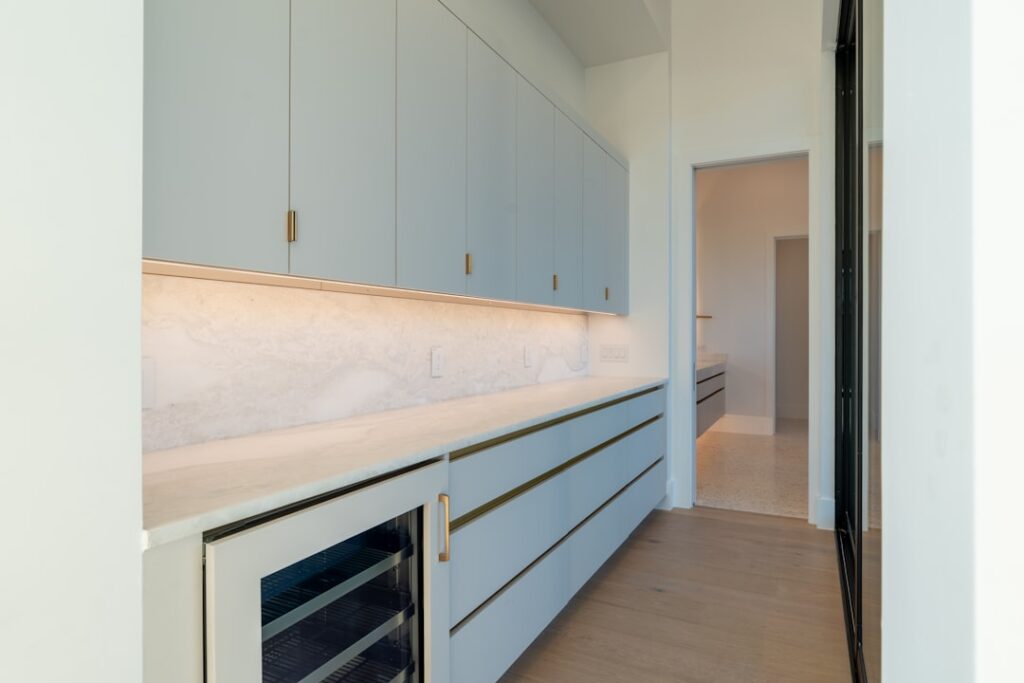
The knobs and pulls on your cabinets are the jewelry of the kitchen and bath—small pieces that shape the entire look and get touched dozens of times a day. Top Knobs cabinet hardware is a well-known American brand offering an enormous range of decorative knobs, pulls, and appliance handles across finishes and styles. This guide explains the categories, sizing, finishes, and installation so you can choose confidently.
Part of our Kitchen Remodeling guide — explore the full guide →
- Who Is Top Knobs?
- Knobs vs. Pulls: What Goes Where
- Popular Styles and Collections
- Finish Options and How to Choose
- Sizing Knobs and Pulls
- How Much Hardware Do You Need?
- Installation: Tools and Steps
- Screw Length Matters
- Mixing and Matching Hardware
- Quality and Durability
- Common Mistakes to Avoid
- Frequently Asked Questions
- Placement Conventions That Look Right
- Matching Hardware to Cabinet Style
- Appliance Pulls and Coordination
- Budgeting and Ordering Tips
- The Bottom Line
Who Is Top Knobs?
Top Knobs is a U.S.-based decorative hardware manufacturer known for a broad catalog spanning traditional, transitional, modern, and rustic collections. The brand is popular with designers and remodelers for its consistent finishes, solid construction, and coordinated families of knobs and pulls that let you mix pieces while keeping a cohesive look. Products are widely sold through cabinet dealers, showrooms, and online hardware retailers.
Knobs vs. Pulls: What Goes Where
The classic convention is simple, though it’s flexible:
- Knobs traditionally go on doors—both upper and lower cabinet doors.
- Pulls (bar or cup) traditionally go on drawers, where a larger grip helps you open a loaded drawer.
Modern kitchens increasingly use pulls everywhere for a streamlined look, or mix cup pulls on drawers with knobs on doors. There’s no hard rule—consistency within a room is what matters.
Popular Styles and Collections
Top Knobs organizes hardware into design families so you can coordinate easily:
- Traditional: ornate, detailed knobs and cup pulls with vintage character.
- Transitional: clean lines with subtle detailing—the most versatile category.
- Modern/contemporary: sleek bar pulls and minimalist knobs.
- Rustic/artisan: hammered, forged, and textured pieces for farmhouse and lodge kitchens.
Finish Options and How to Choose
Finish sets the mood and should coordinate with faucets, lighting, and appliances. Common options include:
- Brushed/satin nickel: the versatile everyday standard that hides fingerprints.
- Matte black: bold, modern, and popular in transitional kitchens.
- Brass and champagne bronze: warm, on-trend metallics.
- Polished chrome: bright and clean for contemporary baths.
- Oil-rubbed bronze: dark, warm, and traditional.
You don’t have to match metals exactly across the room, but keep hardware, faucet, and lighting within a coordinated warm or cool family.
Sizing Knobs and Pulls
Proportion is everything. General sizing guidance:
- Knobs: 1 to 1.5 inches in diameter for most cabinets.
- Door pulls: 3 to 4 inches center-to-center.
- Drawer pulls: roughly one-third the drawer’s width—so 4 to 5 inches for standard drawers, and 8 to 12 inches for wide pot drawers.
“Center-to-center” measures the distance between the two mounting holes; it’s the critical number when ordering pulls to match existing drilled holes.
How Much Hardware Do You Need?
Count every door and drawer, then add a few spares. A typical kitchen might use 25 to 40 pieces. Doors take one knob or pull each; drawers take one pull (or two on very wide drawers). At $8 to $30 per piece for quality decorative hardware, budget roughly $250 to $1,000 for an average kitchen.
Installation: Tools and Steps
- Gather a drill, the correct bit, a hardware installation jig or template, a tape measure, and a pencil.
- Decide placement—knobs typically 2.5 to 3 inches from the corner of a door; pulls centered on drawer fronts.
- Use a jig to mark hole locations consistently across every door and drawer.
- Drill through the marked points from the front, backing the exit side to prevent splintering.
- Fasten hardware with the included machine screws, choosing the right screw length for your door thickness.
A drilling jig is worth the modest cost—it guarantees identical placement and saves hours on a full kitchen.
Screw Length Matters
Cabinet doors and drawer fronts vary in thickness, so hardware ships with standard screws that may be too short or too long. Thicker Shaker fronts or drawers with applied faces often need 1.25-inch or longer screws. Keep a small assortment of machine screws (usually 8-32 thread) on hand so every piece seats fully without protruding inside the drawer.
Mixing and Matching Hardware
A designer trick is mixing knobs and pulls from the same finish family—cup pulls on drawers with matching knobs on doors, for example. You can also use an oversized appliance pull on the refrigerator and dishwasher panels that coordinates with your smaller cabinet pulls. Keeping everything within one finish and one collection ties the mix together.
Quality and Durability
Solid metal hardware—zinc, brass, or stainless—feels substantial and lasts decades, unlike hollow or plated plastic pieces that wear and chip. Look for a durable, baked-on or physical-vapor-deposition (PVD) finish, especially in bathrooms where humidity is high. Well-made decorative hardware is a piece you install once and enjoy for the life of the cabinets.
Common Mistakes to Avoid
- Ordering pulls without checking the center-to-center measurement against existing holes.
- Choosing hardware out of proportion—tiny knobs on big doors or oversized pulls that overwhelm.
- Skipping a jig and ending up with crooked, inconsistent placement.
- Forgetting to buy longer screws for thick drawer fronts.
- Mixing too many finishes so the room looks unplanned.
Frequently Asked Questions
Can I reuse existing holes? Only if the new pull’s center-to-center spacing matches; otherwise you’ll patch and redrill.
Knobs or pulls—which is better? Neither is objectively better; pulls are easier to grip on heavy drawers, knobs suit doors and cost less.
Do finishes have to match the faucet? They should coordinate within a warm or cool family, but exact matching isn’t required.
Placement Conventions That Look Right
Where you position hardware is as important as what you choose. Standard placement guidelines that read as intentional include:
- Upper cabinet doors: knobs mounted on the bottom corner of the door, about 2.5 to 3 inches from the corner.
- Lower cabinet doors: knobs on the top corner, again 2.5 to 3 inches in.
- Drawers: pulls centered horizontally, and either centered vertically on shallow drawers or in the upper third on tall ones.
Consistency across every cabinet is what makes hardware look professionally installed. A drilling template or jig locks in these measurements so no two pieces drift out of alignment.
Matching Hardware to Cabinet Style
Hardware should echo the cabinet’s design language. Sleek bar pulls and minimalist knobs suit flat-slab modern doors; cup pulls and detailed knobs complement Shaker and traditional doors; hammered or forged pieces reinforce a rustic look. Scale matters too—longer pulls balance larger, taller drawers and doors, while a big kitchen island of drawers can carry oversized appliance-style pulls that would overwhelm a small cabinet. When in doubt, order a single sample of each candidate and hold it against your cabinet before committing to a full set.
Appliance Pulls and Coordination
Panel-ready refrigerators and dishwashers with cabinet fronts need appliance pulls—longer, sturdier handles sized for the tall panels. Coordinating these with your cabinet hardware ties the whole kitchen together. A common approach is choosing an oversized version of the same pull design in the same finish for the appliance panels. Because these pulls get heavy daily use, invest in solid-metal construction with robust mounting so they don’t loosen or sag over time.
Budgeting and Ordering Tips
Before ordering, walk your kitchen with a notepad and count every door and drawer, noting which get knobs versus pulls. Add a few spare pieces to your order in case of damage or future additions—finishes and styles get discontinued, and matching later can be impossible. Order all your hardware in a single batch from the same production run to ensure the finish is perfectly consistent, since slight batch-to-batch variation can occur in metallic finishes. Keep the model numbers and finish name recorded for future reference.
The Bottom Line
Choosing Top Knobs cabinet hardware comes down to picking a style and finish that coordinate with your kitchen or bath, sizing knobs and pulls in proportion to your doors and drawers, and installing them consistently with a jig. Invest in solid-metal pieces with durable finishes, mind your center-to-center measurements, and your hardware will look sharp and function flawlessly for the life of your cabinets.


