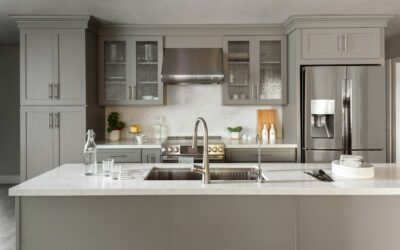
Walk into a kitchen built before 1990 and you will likely see traditional cabinetry in some form: framed boxes, raised-panel doors, and a stained wood finish that reads warm rather than stark. After framing and trimming dozens of these kitchens over the years, I can tell you the style endures because it hides wear well, suits almost any home, and resells better than the trend of the moment. This guide breaks down what defines the look, which materials hold up, and what you should expect to pay.
Part of our Kitchen Remodeling guide — explore the full guide →
What Defines the Traditional Look
Several recurring details separate a traditional cabinet from a modern slab-front. Most are structural or decorative rather than functional, but together they create the layered, furniture-like feel buyers recognize.
- Raised-panel doors — a center panel that sits proud of the frame, often with a beveled edge and a profiled inner rail
- Face-frame (framed) construction — a solid wood frame attached to the front of the box, giving a 1.5-inch visible border around each opening
- Decorative molding — crown at the top, light rail underneath, and sometimes a furniture-style toe kick or feet
- Warm wood tones or painted neutrals — cherry, oak, and maple stains, or off-white and cream paints rather than cool grays
- Visible hardware — cup pulls, knobs, and bin pulls in oil-rubbed bronze, brushed nickel, or antique brass
You can mix a few of these and still land in the traditional camp. A Shaker door with crown molding and a stained finish, for instance, reads as transitional-traditional, which is currently the safest choice for resale.
Framed Versus Frameless Construction
Genuine traditional cabinetry is almost always framed. The face frame adds rigidity, lets you mount doors with partial-overlay or inset hinges, and gives that classic reveal between doors. Frameless (European) boxes maximize interior space and pair with full-overlay slab doors, but they look contemporary and rarely suit a traditional design.
The trade-off is access. A face frame narrows the opening by roughly an inch on each side, so wide drawers and pull-out trays lose a little clearance. For most homeowners that loss is negligible, and the sturdier feel of a framed box is worth it.
Choosing a Wood Species
Door material drives both the look and the budget more than any other single choice. Here is how the common species behave in a real kitchen.
Cherry
Cherry darkens and reddens with age and light exposure, deepening over the first year or two. It takes stain beautifully and has a smooth, fine grain. Expect to pay a premium — cherry doors typically run 15 to 30 percent more than maple.
Maple
Maple is the workhorse for painted traditional cabinetry. Its tight, even grain takes paint cleanly without telegraphing wood lines, which is why most quality white kitchens start here. Stained maple can blotch, so insist on a conditioner or a glazed finish.
Oak
Red and white oak show a strong open grain that defines the country and craftsman traditions. Oak fell out of favor in the 2000s but has returned in rift-cut and white-stained forms. It is durable and forgiving of dents.
Birch and Paint-Grade MDF
Birch offers a maple-like surface at a lower cost. For painted doors, many manufacturers use MDF center panels because they resist the seasonal cracking that solid wood panels show along the paint line.
Finishes, Glazes, and Distressing
Finish work is where traditional cabinetry earns its character. A clear or tinted stain with a catalyzed lacquer topcoat is the durable standard. Glazing — wiping a contrasting tint into the door profiles and corners — adds depth and is a hallmark of higher-end traditional jobs. Distressing, including worm holes, rasping, and rub-through, mimics age but is easy to overdo; ask for a sample door before committing.
Whatever the finish, confirm the topcoat is a conversion varnish or catalyzed lacquer rather than a basic nitrocellulose lacquer. The catalyzed coatings resist water rings, grease, and cleaning chemicals far better around a sink and range.
Layering in Molding and Detail
Molding turns a row of boxes into built-in furniture. The pieces worth budgeting for include stacked crown at the ceiling, a light rail to conceal under-cabinet lighting, fluted pilasters flanking the range, and a furniture base or turned legs on an island. None of these are cheap to install — crown alone can add several hundred dollars in labor to a mid-size kitchen — but they are the details that separate a stock install from a custom-looking one.
If the budget is tight, prioritize crown molding and decorative hardware. Those two changes deliver the biggest visual return for the dollar.
What Traditional Cabinetry Costs
Pricing is most useful per linear foot of installed cabinetry, which bundles boxes, doors, and basic hardware. Use these ranges as planning figures; regional labor and wood choice move them.
- Stock cabinets: roughly $100 to $300 per linear foot
- Semi-custom: roughly $150 to $650 per linear foot — the sweet spot for most traditional kitchens
- Full custom: $500 to $1,200+ per linear foot
A typical 25-linear-foot kitchen in semi-custom maple with raised-panel doors, glazing, and crown molding commonly lands between $12,000 and $20,000 installed. Add another 10 to 20 percent for upgraded species like cherry or for heavy distressing and stacked molding.
Care and Long-Term Maintenance
Traditional cabinetry rewards gentle, consistent care. Wipe spills promptly, especially around the dishwasher and sink where steam attacks the finish over time. Clean with a damp microfiber cloth and a mild dish soap solution — skip ammonia, bleach, and abrasive pads, which dull the topcoat. Once or twice a year, a quality cabinet cream or beeswax-based polish restores luster on stained finishes.
The most common failure point is the painted door near the sink and the joint where rails meet stiles. Small hairline cracks at those seasonal joints are normal in solid wood and can be touched up with a matching caulk and paint pen. Adjust hinge screws yearly so doors stay aligned; a quarter-turn keeps reveals even and prevents rubbing.
Is Traditional Cabinetry Right for Your Home
If you own a colonial, craftsman, farmhouse, or transitional home, traditional cabinetry will feel native rather than forced. It also ages gracefully, which matters if you plan to stay put for a decade or sell to a broad buyer pool. For a strictly modern build with flat ceilings and minimalist trim, a slab-front frameless system will suit better. For everyone in between, a Shaker-leaning traditional door in painted maple remains the most defensible choice you can make — timeless, repairable, and easy to live with for the long haul.