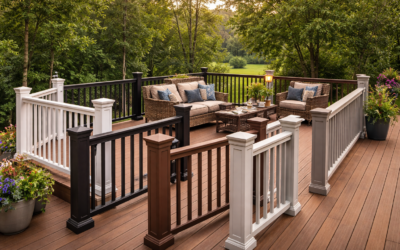
Most deck railings make you choose between a slim modern look and low maintenance. Trex Signature railing is the manufacturer’s powder-coated aluminum line, built to give you both: thin profiles that keep the view open, a finish that never needs paint or stain, and four very different infill styles on the same basic system. The infill you pick (aluminum balusters, stainless mesh, tempered glass or horizontal rods) changes the look far more than the frame does.
In short, Signature comes in 36 and 42 inch rail heights, in 6 or 8 foot sections for most infills, with 2.5 inch square aluminum posts or composite post options. Color choices depend on the infill. Charcoal Black is offered across all four; Classic White is offered for aluminum balusters and glass; Bronze appears for mesh and as a bronze-and-platinum rod rail kit. It usually costs more than composite railings like Transcend, but it is lighter, slimmer and more contemporary.
- Trex Signature Railing Infill Options and Colors
- Choosing an Infill
- Trex Signature vs Transcend Railing
- Tools and Materials for Installation
- Installation Overview
- Glass Handling and Safety
- Care and Maintenance
- Troubleshooting
- Typical Price Range
- When to Call a Pro
- Frequently Asked Questions
- What infill options does Trex Signature railing offer?
- What colors does Trex Signature aluminum railing come in?
- What heights does Trex Signature railing come in?
- Is Trex Signature better than Transcend railing?
- Can Trex Signature railing be curved?
- Is the glass included with Trex Signature glass railing?
Trex Signature Railing Infill Options and Colors
The colors and sizes here come from the manufacturer’s current Signature product page. Trex adjusts its color and kit lineup from time to time, so confirm availability with the current spec sheet before ordering.
| Infill | What it is | Colors listed | Best for |
|---|---|---|---|
| Aluminum balusters | Square or round powder-coated aluminum balusters | Charcoal Black, Classic White | Classic look, most budgets within the line, curved runs |
| Mesh | Crosshatch stainless steel mesh panels framed in aluminum | Charcoal Black, Bronze | Industrial or modern homes, pets and small kids |
| Glass | Tempered glass panels in an aluminum frame | Charcoal Black, Classic White | Waterfront, mountain and city views |
| Rod rail | Slim horizontal aluminum rods | Charcoal Black rails or Bronze rails, both with Platinum rods | Contemporary and mid-century designs |
| Spec | Value | What it means |
|---|---|---|
| Rail heights | 36 in and 42 in | 36 in is common for low residential decks; many codes require 42 in for higher decks or specific uses |
| Section lengths | 6 ft or 8 ft (glass kit 6 ft) | Post spacing follows section length |
| Aluminum posts | 2.5 in x 2.5 in; 37, 43 and 53 in (stair, cut-to-length) | Slim posts keep sightlines open |
| Mesh material | Stainless steel (stair panel listed as 316 stainless) | 316 stainless resists corrosion well |
| Options | Curved railing, cocktail rail, lighting, ADA | Add-ons for custom layouts |
| Warranty | Limited residential (product pages show a 50-year badge) | Read current terms for finish and structural coverage |
Choosing an Infill
Aluminum balusters
The most traditional choice and the easiest to live with. Square balusters look crisp on farmhouse and craftsman homes; round balusters feel lighter and more modern. Baluster railing hides wear well, works on stairs and is the infill most associated with curved runs. It blocks a little more view than glass or rods.
Mesh
Mesh gives a see-through, architectural look and adds a barrier that small pets and toddlers cannot squeeze through. The stainless steel weave catches light and looks sharp next to black window frames and metal roofing. Leaves and pollen can collect on the mesh, so expect an occasional rinse.
Glass
Tempered glass gives the most open view and blocks wind, which matters on lakefront and high decks. The trade-off is upkeep: glass shows water spots, pollen and fingerprints, and it needs regular cleaning to look its best. The glass is sold separately and sourced locally; the glass rail kit includes the rails, hardware and a foot block.
Rod rail
Horizontal rods create long, clean lines that suit modern homes. Check local code before choosing any horizontal infill. Some jurisdictions restrict horizontal members because children can climb them, so confirm with your building department first.
Trex Signature vs Transcend Railing
Transcend is the manufacturer’s composite railing line, with composite rails and post sleeves (4×4 or 6×6) and composite or round aluminum balusters. It is offered in Charcoal Black, Classic White and Vintage Lantern, and has a glass panel accessory kit with glass not included.
- Look: Signature is slim and modern. Transcend has thicker rails and posts that read more traditional and match composite decking closely.
- Infill range: Signature offers mesh and rod rail, which Transcend does not.
- Weight and handling: Aluminum sections are lighter and stiff for their size. Composite rails are heavier and need careful support over longer spans.
- Heat: Dark aluminum gets hot in direct sun, and so do dark composite rails. Neither is ideal for leaning on in midday summer heat.
- Cost: Signature generally costs more per foot, especially with glass or mesh.
- Mixing: Signature can be paired with composite posts, which helps match it to a composite deck.
Tools and Materials for Installation
- Post-level and a 4 ft level
- Drill-driver, impact driver and bits listed in the installation guide
- Miter saw with a non-ferrous metal cutting blade for aluminum rails
- Tape measure, speed square and marking pencil
- Post mounting hardware and blocking for the deck framing
- Safety glasses, hearing protection and cut-resistant gloves
- Suction cups and a helper for glass panels
Installation Overview
- Check code and plan layout. Confirm required rail height, guard load requirements and opening limits with your local building department. Lay out posts so sections land at or under 6 or 8 feet.
- Add blocking. Posts must anchor into solid framing. Add blocking between joists under every surface-mounted post as the installation guide specifies.
- Mount posts and plumb them. Use a post-level on two faces. A post that is slightly out of plumb shows clearly in slim aluminum railing.
- Install brackets and rails. Measure each opening, cut rails square, and fasten brackets at the heights the guide calls for.
- Set the infill. Balusters, mesh, rods or glass go in according to the kit instructions. Keep spacing consistent.
- Add caps and trim. Finish with post caps and any lighting or cocktail rail options.
Glass Handling and Safety
Tempered glass is strong but can shatter if an edge or corner is struck. Wear gloves and eye protection, carry each panel upright with two people, and never flex the panel or rest it on a corner. Store panels upright on padded blocks, away from foot traffic. Use only the tempered glass specified for the system; ordinary glass is unsafe for a guard. Work from a stable surface, keep everyone clear of open deck edges while railing is incomplete, and use proper ladder or scaffold safety on elevated decks.
Care and Maintenance
- Wash powder-coated aluminum with mild soap and water and a soft brush a few times a year.
- Rinse mesh with a garden hose to clear leaves and pollen.
- Clean glass with a non-abrasive glass cleaner and a soft cloth; avoid razor blades and abrasive pads.
- Near salt water, rinse railings more often to remove salt deposits.
- Check post fasteners each spring and tighten anything loose.
Troubleshooting
- Wobbly posts: Usually missing or weak blocking. The fix is in the framing, not the post.
- Uneven baluster spacing: Re-measure each section and center the infill before final fastening.
- Scratched powder coat: Use the manufacturer’s touch-up paint to seal small scratches.
- Water spots on glass: Rinse after watering plants and dry with a squeegee.
- Rails do not line up at corners: Recheck post plumb and bracket heights.
Typical Price Range
The manufacturer rates Signature as a premium line. Installed aluminum railing commonly runs about $60 to $150 per linear foot, with glass and mesh infills at the upper end or above it. Stairs, curved sections, lighting and cocktail rails add cost. Get quotes that list infill type, rail height and post count so you can compare installers fairly.
When to Call a Pro
Hire a licensed deck builder for decks more than a few feet off the ground, second-story decks, stairs, curved runs and all glass installations. Guards must meet local code and pass inspection, and posts must anchor into properly built framing. If your existing deck framing is old or soft, have it inspected before adding new railing.
Frequently Asked Questions
What infill options does Trex Signature railing offer?
Four: square or round aluminum balusters, stainless steel mesh, tempered glass panels and horizontal aluminum rod rail.
What colors does Trex Signature aluminum railing come in?
It depends on the infill. Charcoal Black is offered for all four. Classic White is listed for balusters and glass, Bronze for mesh, and rod rail comes as Charcoal Black or Bronze rails with Platinum rods.
What heights does Trex Signature railing come in?
Sections come in 36 inch and 42 inch rail heights. Your local code sets which height you need.
Is Trex Signature better than Transcend railing?
Neither is better for every deck. Signature is slimmer, more modern and offers mesh and rod rail. Transcend is a composite railing with chunkier posts that match composite decking closely and usually costs less.
Can Trex Signature railing be curved?
The manufacturer lists curved railing as an option for Signature. Curved runs are typically done with baluster infill; confirm options with a dealer.
Is the glass included with Trex Signature glass railing?
No. The manufacturer says the glass infill is sold separately and should be sourced locally; the glass rail kit includes the rails, hardware and a foot block. Budget for the tempered glass on top of the kit.