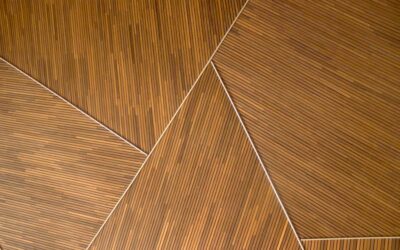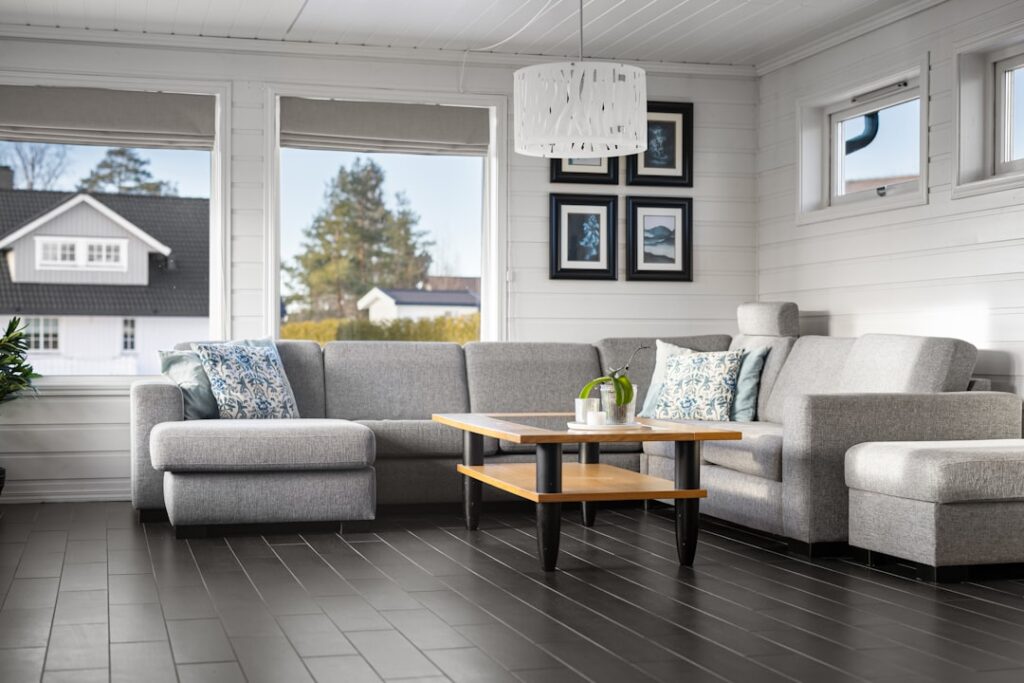
Vinyl flooring has shed its grandma-kitchen reputation thanks to sharp printed visuals and modern pattern options. Today’s vinyl flooring patterns range from classic wood-look planks in straight lay to high-design herringbone, chevron, and stone-look tile layouts that read like expensive natural materials. Choosing the right pattern changes how a room feels more than the specific color or style, and some layouts drive installation complexity way up. Here is how to think about each option.
Plank Patterns and Layouts
Luxury vinyl plank (LVP) is by far the biggest category, and most LVP gets installed in one of four layouts.
- Straight lay (running bond): Each row offset 1/3 from the previous. Standard. Most forgiving of room imperfections.
- Brick pattern (1/2 offset): Each row offset exactly 50%. Creates regular rhythm — reads more casual.
- Random stagger: Rows offset 6-16 inches randomly. Most natural-looking for long planks.
- Herringbone: 90-degree interlocking rectangular pattern. Formal, adds 20-30% labor cost.
- Chevron: 45-degree angled rectangles meeting in V-shapes. Most visually striking but requires mitered cuts.
- Diagonal: Straight lay rotated 45 degrees. Makes small rooms feel larger.
Herringbone vs. Chevron
These two high-design patterns often get confused, but installing them is very different.
Herringbone uses standard rectangular planks laid at 90-degree angles — each plank’s end butts against the side of another. The installation is slower than straight lay because every plank must be carefully aligned, and most herringbone LVP comes in specific short plank formats. Expect 15-25% waste versus 5-10% for straight lay.
Chevron uses planks pre-cut at an angle (typically 45 degrees) so the ends meet point-to-point in a continuous V. It produces a cleaner, more formal line than herringbone. Only specialty manufacturers like Karndean, Shaw Floorte Pro, and Mannington make true chevron planks. Cost runs 30-50% higher than standard LVP.
Tile and Stone-Look Patterns
Luxury vinyl tile (LVT) in square or rectangular formats mimics stone, ceramic, and concrete. Common patterns:
- Grid (straight tile): Standard square layout, often with contrasting grout lines
- Checkerboard: Two tile colors alternating. Classic bathroom and kitchen look.
- Subway lay: Rectangular tiles in 1/2 or 1/3 offset brick pattern
- Versailles pattern: Multiple tile sizes mixed in a repeating module. Looks like natural limestone.
- Running bond tile: Rectangular tiles offset by 50%
Grouted LVT (with groutable planks or tiles like COREtec Stone or Shaw Tile & Stone) brings tile realism a step closer without the cold hardness of real ceramic.
Pattern Scale and Room Size
Scale the pattern to the room, not the other way around:
- Small rooms (under 150 sq ft): Stick with narrow planks (5-7 inches wide) or small-scale tile patterns. Wide planks dwarf small rooms.
- Medium rooms (150-400 sq ft): 7-9 inch wide planks in straight lay or random stagger work well.
- Large rooms (400+ sq ft): Wide planks (9-12 inches) or herringbone/chevron keep the floor interesting.
- Open floor plans: Consistent pattern throughout ties spaces together. Avoid changing direction at transitions.
Visual Realism Depends on the Print
Pattern layout can only do so much if the underlying print is cheap. Key quality markers on wood-look LVP:
- Number of unique plank prints: Better LVP has 12-30 unique prints that randomize across a floor. Cheap LVP repeats every 4-8 planks, creating an obvious pattern.
- Embossing in register (EIR): Texture aligns with print — wood grain you can feel matches grain you see.
- Micro-beveled edges: Creates shadow lines between planks, mimicking real hardwood.
- Matte finish: Low-gloss wear layer looks more like real wood. Glossy finishes scream fake.
Color and Visual Patterns
Beyond layout, color patterns affect the mood of a room:
- Multi-tonal wood: Planks with varied color within a single look mimic natural wood aging
- Wire-brushed or hand-scraped visual: Distressed patterns hide scratches and wear
- Marble and travertine patterns: Large-format tile visuals for luxurious bathrooms and entries
- Concrete and cement: Industrial flat look for modern interiors
- Parquet patterns: Geometric wood blocks, often pre-printed into square tiles
- Encaustic patterns: Colorful geometric tile designs for feature spaces
Installation Tips by Pattern
Each pattern has quirks:
- Straight lay: Start from the longest unbroken wall. Check the first three rows for square before proceeding.
- Diagonal: Snap 45-degree chalk lines from room center. Work outward. Save cuts for the perimeter.
- Herringbone: Snap perpendicular centerlines. Dry-lay the first 4×4 section before locking it together to verify the interlock works.
- Chevron: Requires factory-angled planks. Never try to miter-cut field planks yourself.
- Tile grid: Use spacers if the product takes them. Dry-lay the first row to check for weird cuts at the walls.
Waste Factor by Pattern
Order enough material — running short mid-job can mean dye-lot mismatches. Typical waste factors:
- Straight lay: 5-10%
- Diagonal: 12-18%
- Brick pattern: 7-10%
- Herringbone: 15-25%
- Chevron: 18-30%
- Tile grid: 8-12%
For any pattern with diagonal cuts, round up to the next full box.
Cost Impact of Pattern Choice
Pattern adds cost through both material and labor:
- Straight lay: baseline LVP install around $4-$8 per sq ft installed
- Herringbone: $6-$12 per sq ft installed
- Chevron: $8-$14 per sq ft installed
- Versailles or tile mosaic: $7-$13 per sq ft installed
For most homeowners, a random stagger straight lay in a high-quality plank looks nearly as good as herringbone at half the price. Reserve herringbone and chevron for rooms where the pattern is the design feature.
Durability Across Patterns
The pattern itself does not affect durability, but layout interacts with seam stress. Herringbone has 2-3x the seam length per square foot of straight lay, which means more seams to potentially lift over time. Always choose a rigid-core SPC or WPC product for herringbone and chevron installations — flexible glue-down products stretch and shift at seams.
Bottom Line
The best vinyl flooring patterns for most homeowners are random-stagger straight lay for everyday rooms and herringbone as an accent in entries, dining rooms, or primary suites. Match the scale of the pattern to the size of the room, prioritize print quality over layout complexity, and budget extra material for any angled installation. Done right, modern vinyl flooring patterns deliver the visual richness of real hardwood parquet at a fraction of the price and with none of the maintenance.
Prefer to explore on your own?
See how new flooring looks in your actual room in seconds — free, no signup.
Try the free Floor Studio →