Quartz is the second most abundant mineral in the earth’s crust, and it leads a double life: as raw silica it is the backbone of glass, electronics, and concrete, and as engineered stone it has become the number-one countertop material in American kitchens. When homeowners ask what is quartz used for, they usually mean the countertop product — but the honest answer spans from your kitchen island to the chip in your phone. Here is the full picture, with most of the detail on the building and remodeling uses.
Part of our Countertops guide — explore the full guide →
- The Two Meanings of “Quartz”
- Quartz Countertops: The Headline Use
- Quartz in Bathrooms: Vanities, Showers, and Tub Surrounds
- Quartz Flooring and Wall Tile
- Construction Uses Beyond the Slab
- Industrial and Technology Uses
- Quartz Countertops vs. the Alternatives at a Glance
- Caring for Quartz Surfaces
- Buying Advice If Quartz Is on Your Shortlist
The Two Meanings of “Quartz”
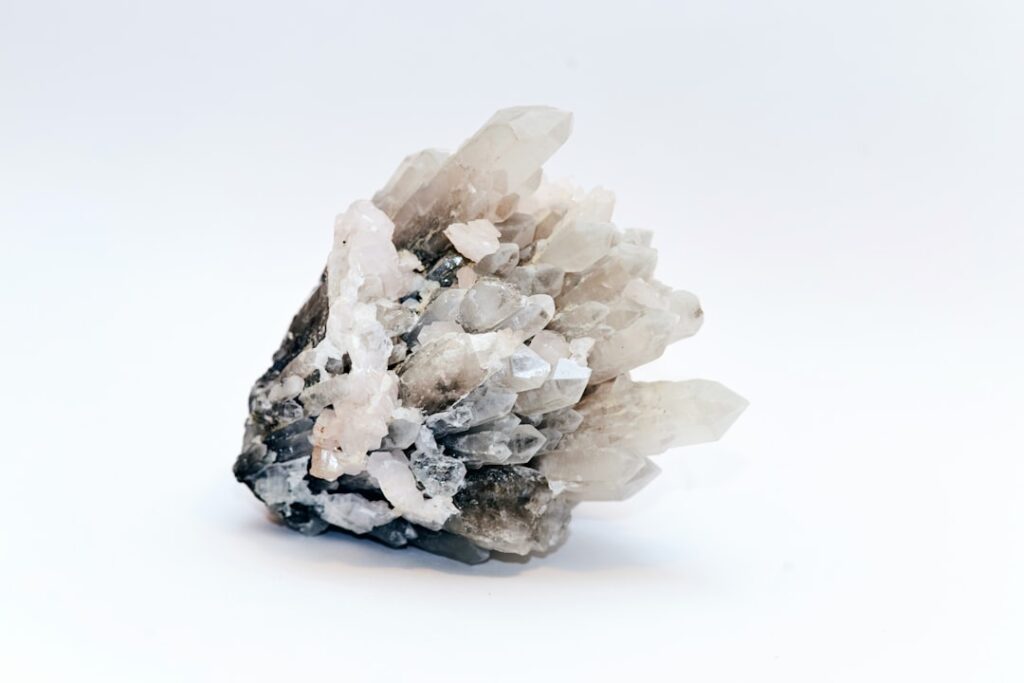
Natural quartz is crystalline silicon dioxide (SiO2) — the clear or milky crystals in geodes, the sand on most beaches, and a hard mineral rating 7 on the Mohs scale. “Quartz” in a kitchen showroom means engineered quartz: roughly 88 to 93 percent ground natural quartz bound in polymer resin with pigments, pressed into slabs under vacuum and vibration. Brands like Caesarstone, Cambria, Silestone, and MSI Q all make versions of the same recipe. The engineered product inherits natural quartz’s hardness while the resin makes it non-porous — which is why it took over the countertop market.
Quartz Countertops: The Headline Use
Engineered quartz passed granite years ago as the most-installed countertop surface in the US, and it is easy to see why:
- Non-porous: no sealing ever, and wine, coffee, and oil wipe off instead of soaking in. Granite needs periodic sealing; marble stains if you look at it wrong.
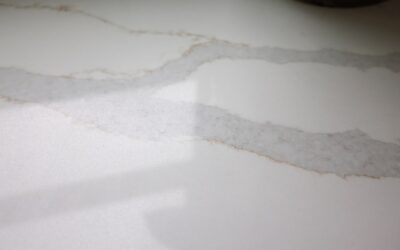
- Consistent: the slab you see in the showroom is the slab you get. Patterns run from solid colors to convincing marble-look veining.
- Durable: scratch resistance near granite’s, better crack resistance than natural stone in transport and daily use.
- Cost: installed prices run $55 to $125 per sq ft depending on brand and pattern complexity — squarely between laminate and premium natural stone. A typical 40 sq ft kitchen lands at $2,500 to $5,000 installed.
Its two genuine weaknesses: heat (the resin scorches around 300°F, so trivets are mandatory — a hot pan that granite would shrug off will leave a permanent mark) and UV (most quartz yellows outdoors, so it stays inside). The trade-off in short: quartz for low-maintenance family kitchens, granite or porcelain for outdoor kitchens and hardcore cooks who put hot cast iron everywhere.
Quartz in Bathrooms: Vanities, Showers, and Tub Surrounds
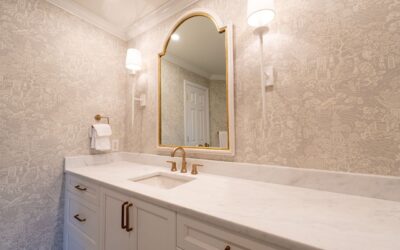
Bathrooms are quartz’s second-biggest remodeling role. Vanity tops in quartz outsell everything else in mid-to-upper remodels because they laugh at cosmetics, toothpaste, and hair dye that stain marble. Full-height quartz shower walls are a fast-growing install: 1/2-inch or 3/4-inch slabs cut to wall panels give you a grout-free shower — two or three joints instead of hundreds of grout lines. Material and fabrication for a slab shower runs $1,500 to $4,000-plus per wall set, versus a few hundred dollars in tile, but homeowners who hate scrubbing grout consider it money well spent.
Quartz Flooring and Wall Tile
Engineered quartz tile exists — typically 12 x 12 to 24 x 24 — and quartz-aggregate flooring shows up in two other forms on commercial jobs: quartz-broadcast epoxy floors (colored quartz granules broadcast into epoxy, the speckled seamless floors in locker rooms and commercial kitchens, $5 to $12 per sq ft installed) and quartz-rich terrazzo. For residential floors, quartz slab or tile is rare — porcelain delivers the same look with better heat and UV behavior at lower cost — but quartz windowsills, stair treads, and waterfall island panels are everyday fabrication work.
Construction Uses Beyond the Slab
Strip away the resin and raw quartz is everywhere on a job site:
- Concrete and mortar: most sand is predominantly quartz, making it the fine aggregate in nearly every bag of concrete, mortar, and sanded grout you have ever mixed.
- Glass: windows, shower doors, and glass tile all start as melted high-purity quartz sand.
- Fiberglass and insulation: silica sand again, drawn into fibers.
- Epoxy garage floors: the anti-slip broadcast media is colored quartz granule.
- Sandblasting media and filtration sand for pool filters and water treatment.
- Silica fume and quartz fillers in high-strength concrete, paints, and caulks.
Industrial and Technology Uses
Outside construction, quartz’s chemistry and physics carry entire industries:
- Electronics and semiconductors: silicon chips begin as ultra-pure quartz refined into polysilicon; quartz crucibles hold the molten silicon during crystal growing.
- Quartz watches and clocks: a tiny quartz tuning fork vibrates at exactly 32,768 times per second when charged — piezoelectricity keeping time on a few billion wrists.
- Oscillators and radio circuitry: the same piezoelectric property stabilizes frequencies in phones, computers, and GPS.
- Laboratory and optical glassware: fused quartz survives thermal shock and passes UV light that ordinary glass blocks — lab crucibles, halogen bulb envelopes, semiconductor process tubes.
- Solar panels: photovoltaic silicon traces straight back to quartz sand.
- Foundry molds, ceramics, and abrasives round out the industrial list.
And on the decorative side, amethyst, citrine, rose quartz, and smoky quartz are all just colored varieties of the same mineral, cut for jewelry and sold as specimens.
Quartz Countertops vs. the Alternatives at a Glance
| Surface | Installed cost/sq ft | Sealing | Heat tolerance | Best fit |
|---|---|---|---|---|
| Engineered quartz | $55–$125 | Never | Fair (~300°F limit) | Busy family kitchens, baths |
| Granite | $45–$120 | Every 1–3 yrs | Excellent | Heat-heavy cooks, outdoor |
| Marble | $60–$150 | Frequent | Good (etches) | Baking stations, looks-first baths |
| Porcelain slab | $60–$120 | Never | Excellent | Outdoor kitchens, modern looks |
| Butcher block | $40–$100 | Oil monthly | Poor | Warm looks, prep zones |
| Laminate | $20–$45 | Never | Poor | Budget refreshes, rentals |
Caring for Quartz Surfaces
Part of what quartz is used for, frankly, is not being cared for — and the maintenance list is short enough to give in full. Daily cleaning is dish soap and water or any pH-neutral cleaner; skip abrasive powders and harsh solvents like paint thinner or oven cleaner, which can dull the resin. Dried gunk scrapes off with a plastic razor. There is no sealing, ever — a salesperson offering a quartz sealing package is selling you something the material cannot absorb. The two standing rules are trivets under anything hot and cutting boards under knives, less because a knife will badly scratch quartz (it usually will not) and more because quartz will destroy your knife edges. Follow those and a quartz top’s tenth birthday looks like its first.
One more note for fabrication-minded DIYers: cutting or grinding quartz releases crystalline silica dust, which is a serious lung hazard. Slab cutting belongs with pros running wet saws and extraction. Homeowner-level trimming of a prefab vanity top is doable with a diamond blade, water, and a real respirator — never dry-cut it in a closed garage.
Buying Advice If Quartz Is on Your Shortlist
- Shop the slab, not the sample. Veined patterns vary across a slab; view your actual slabs at the fabricator and approve seam locations on the drawing.
- Thickness: 3 cm (1 1/4 inch) is the standard full-thickness top; 2 cm with a built-up edge saves money on verticals and baths.
- Budget tiers: builder-grade solid colors from $55/sq ft installed; designer marble-look patterns from premium brands push $100–$125.
- Ask about UV and outdoor warranties — a few newer lines are rated for exterior use, but assume yours is not unless documented.
- Trivets and cutting boards are the entire maintenance manual. That is the point of the product.
So: quartz is used for countertops first in the remodeling world — plus vanities, shower walls, sills, and commercial floors — while raw quartz quietly underwrites your windows, your concrete, your phone, and your watch. If you are here deciding on a kitchen surface, the practical takeaway is simple: engineered quartz buys you near-granite toughness with zero maintenance, in exchange for respecting it with a trivet. For most households, that is the best trade on the market.