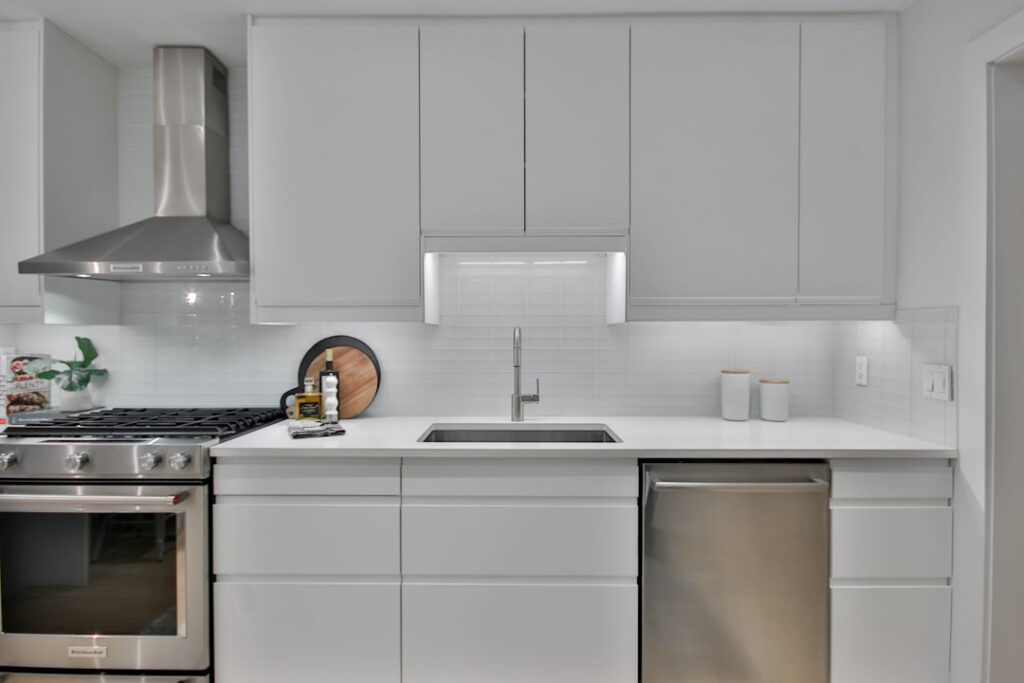
Some finishes cycle in and out of fashion every decade; white tile has outlasted all of them. A white tile backsplash kitchen remains the most requested look in American remodeling because it solves three problems at once: it bounces light into the work zone, it flatters every cabinet and counter combination, and it never scares off a future buyer. The interesting decisions are all in the details, tile shape, finish, layout, and above all grout color, because those choices are what separate a builder-flip backsplash from one that looks designed. Here is how to get the details right, with honest numbers.
Part of our Kitchen Remodeling guide — explore the full guide →
Why White Still Wins
Backsplashes occupy the eye-level band of the kitchen, the zone you actually look at while cooking and the zone that dominates listing photos. White tile amplifies both natural and under-cabinet light, visually pushes the wall back in tight kitchens, and gives future you the freedom to repaint or re-cabinet without a tile tear-out, since white pairs with everything. It also hides less than people assume: grease film and tomato-sauce spatter show plainly on white, which sounds like a con but works as a pro, because you clean what you can see, and glazed tile wipes clean in seconds. The material is fundamentally practical; the risk is blandness, and the cure for blandness is texture, shape, and grout, not color.
Choosing the White: Tile Types Compared
- Classic ceramic subway (3×6): $2 to $8 per sq ft. Crisp, machine-made, timeless. Glossy glaze is the traditional pick; matte reads more modern.
- Zellige and handmade-look: $12 to $30 per sq ft. Undulating surfaces and glaze variation catch light beautifully; even “white” zellige shimmers with cream and gray. The imperfection is the point, so warn your tile setter and expect irregular edges and lippage by design.
- Porcelain large-format (12×24 and up): $6 to $15 per sq ft. Fewer grout lines, sleek contemporary feel, and some marble-look whites carry subtle veining that softens the field.
- Picket, hexagon, and elongated shapes: $8 to $20 per sq ft. Same white palette, distinctive geometry; a white picket tile is currently the easiest way to look current without gambling on color.
- Glass tile: $10 to $25 per sq ft. Deep glossy whites with dimension; demands a skilled setter because adhesive shows through poorly troweled areas.
Whites vary in temperature. Bright blue-whites suit cool palettes and stainless; warm whites (cream, ivory, bone) flatter wood tones and brass. Hold samples against your counter in daylight before ordering, because a blue-white tile against a cream quartz counter looks dingy by comparison, and vice versa.
Grout Color Is the Real Design Decision
Identical tile, three different kitchens, depending on grout:
- White grout: seamless, airy, and the safest resale look. It demands the most maintenance near the range, though modern stain-resistant urethane and epoxy grouts have closed that gap.
- Gray or greige grout: outlines each tile, adds subtle graphic structure, and hides cooking grime. The practical designer default.
- Dark charcoal or black grout: full graphic grid, very deliberate, pairs well with matte black hardware. Commit confidently or not at all, and note that dark grout can shadow-stain light unsealed tile edges during install.
Whatever the color, spend up on grout chemistry. Epoxy or urethane grout adds $50 to $150 in material on a typical backsplash and essentially ends sealing, staining, and yellowing worries behind a range. Cement grout is fine elsewhere if sealed annually.
Layouts That Elevate Plain White Tile
Pattern costs almost nothing in material and transforms the result. Running bond (the classic 50 percent offset) is the standard; a 30 percent offset reads slightly more tailored and avoids lippage issues with longer tiles. Stacked layouts, vertical or horizontal, turn the same subway tile modern, and vertical stack visually raises low ceilings over the range. Herringbone adds 10 to 15 percent to tile waste and a chunk to labor, but behind a range hood it creates a focal panel that rivals a slab feature for a fraction of the cost. If the field is simple, consider a framed herringbone or vertical-stack inset behind the cooktop, using the same white tile, so the interest comes from geometry rather than a dated accent strip.
What a White Backsplash Costs in 2026
A typical kitchen has 25 to 40 sq ft of splash area. Realistic installed budgets:
- Ceramic subway, pro install: $400 to $1,200
- Porcelain or shaped tile, pro install: $700 to $2,000
- Zellige or handmade, pro install: $1,000 to $2,800
- DIY ceramic subway: $150 to $450 in materials and rental tools
Labor runs $10 to $25 per sq ft because backsplash work is all cuts: outlets, window returns, hood flanges, and uneven counter lines. Backsplash tiling is also one of the friendliest DIY tile projects, small area, no foot traffic, no waterproofing membrane required, so a careful first-timer with a snap cutter, a level ledger board, and pre-mixed mastic can produce a professional result over a weekend. Take the field to the underside of the upper cabinets at minimum, and to the hood or ceiling behind the range if the budget allows; short 4-inch splashes date a kitchen instantly.
Pairing White Tile With Counters and Hardware
White tile is a team player, but a few pairings outperform the rest. Against white quartz counters, vary the texture so the room does not flatline: glossy or handmade tile above a matte counter, or a gray grout to draw the grid. Against butcher block or warm stone, warm whites keep the palette coherent. Dark counters, soapstone looks, black granite, deep green quartz, are where bright white subway earns its keep, delivering the contrast those surfaces need to read as dramatic instead of dark. Hardware and fixtures then set the accent temperature: brass and bronze warm a white wall instantly, while chrome and black keep it graphic. If open shelving crosses the tile, run the field behind the shelves without interruption; brackets mount through tile cleanly with the right bit, and the continuous white plane is what makes styled shelves photograph so well.
Keeping White Tile White
Glazed tile itself is nearly maintenance-free; grout is the whole game. Wipe the splash zone weekly with dish soap and warm water or a spray of diluted all-purpose cleaner, and degrease behind the range monthly with a stronger alkaline cleaner so film never builds. For cement grout, seal once a year ($15 bottle, 20 minutes) and brighten stains with a baking-soda paste or an oxygen-bleach soak rather than chlorine bleach, which can yellow some whites over time. Avoid abrasive pads on glossy glaze. Do that little, and white tile is the rare finish that looks the same in year fifteen as it did on day one.
Bottom Line
A white tile backsplash kitchen is the safest bet in remodeling, and it does not have to be the most boring one. Pick your white against your counter in daylight, choose grout color like it is a design feature (because it is), favor epoxy grout near the range, and use layout, stack, herringbone, or a handmade tile, to supply the personality. Whether you spend $200 on DIY subway or $2,500 on zellige, white is the one backsplash decision you will not be talked out of by the next decade’s trend cycle.
Prefer to explore on your own?
See how new flooring looks in your actual room in seconds — free, no signup.
Try the free Floor Studio →