Pairing white tile with white grout is one of the most requested looks in modern kitchens and bathrooms because it produces a seamless, bright, and spacious feel that photographs beautifully and never goes out of style. But that crisp magazine appearance comes with real-world trade-offs around cleaning, grout selection, and installation precision. This guide walks American homeowners through choosing the right grout shade, keeping it clean, understanding the costs, and avoiding the mistakes that turn a dream backsplash into a maintenance headache.
Part of our Tile & Grout guide — explore the full guide →
- Why Homeowners Love the Monochrome Look
- Not All White Grout Is the Same
- Cement Grout Versus Epoxy Grout
- The Cleaning Reality
- Sealing Is Essential
- Cost Breakdown
- Installation Tips for a Flawless Result
- Common Mistakes to Avoid
- Tile Shape and Size Affect the Look
- Bathroom Versus Kitchen Applications
- Making the Look Last
Why Homeowners Love the Monochrome Look
When grout matches the tile, the grout lines nearly disappear, and the eye reads the surface as one continuous plane. This makes small bathrooms feel larger, reflects more light, and gives a clean, contemporary aesthetic that suits everything from farmhouse to minimalist design. On a subway-tile backsplash, white-on-white feels calm and elevated. On floors, it can make a compact room appear more open. The effect is especially striking with large-format tiles, where fewer visible seams amplify the seamless quality.
Not All White Grout Is the Same
The single biggest surprise for homeowners is that white grout comes in several shades, and true bright white is different from off-white or “bright white” branded colors. Manufacturers like Mapei, Custom Building Products, and Laticrete each offer multiple whites. Common options include a warm antique white, a neutral bright white, and a very stark super white. To match your tile, buy a grout sample or color chart and hold it against the actual tile in your room’s lighting before committing. Fluorescent, LED, and natural daylight all shift how white reads.
- Bright white: The most popular choice for a clean, modern match with white tile.
- Warm or antique white: Slightly softer, pairs well with cream or off-white tile.
- Snow or super white: The starkest option, best with high-gloss pure-white tile.
Cement Grout Versus Epoxy Grout
Grout type matters even more than shade when you choose white. Traditional cement-based grout is affordable, easy to work with, and available in every color, but it is porous and stains readily, which is a serious concern with white. Epoxy grout costs more and is trickier to install, but it is stain-resistant, waterproof, and holds its color far better over time. For white grout in a kitchen backsplash, shower, or high-traffic floor, many professionals strongly recommend epoxy despite the higher price. If you use cement grout, sealing is non-negotiable.
The Cleaning Reality
White grout shows dirt, mildew, grease, and coffee spills more than any other color. In a shower, soap scum and mildew can gray the lines within months if not maintained. On a kitchen floor, foot traffic grinds dirt into porous cement grout. This does not mean you should avoid the look; it means you should plan for maintenance. Wipe backsplashes after cooking, squeegee shower walls, and clean grout lines regularly with a soft brush and a pH-neutral cleaner. Avoid harsh acids, which erode cement grout and can etch some tiles.
Sealing Is Essential
If you choose cement grout, sealing is what keeps white looking white. Apply a penetrating grout sealer 48 to 72 hours after installation once the grout has fully cured, then reseal every one to two years, or more often in wet areas. A quality sealer runs $15 to $40 per bottle and covers a typical backsplash or small floor. Epoxy grout does not require sealing because it is inherently non-porous, which is a major reason it wins for white applications despite costing more upfront.
Cost Breakdown
- White ceramic or porcelain tile: $2 to $15 per square foot for materials
- Cement grout: $12 to $25 per bag
- Epoxy grout: $40 to $90 per unit, covering less area per unit
- Grout sealer: $15 to $40 per bottle
- Professional installation: $7 to $20 per square foot depending on tile size and pattern
Choosing epoxy grout raises material cost but reduces long-term maintenance and the risk of discoloration, often making it the better value for white installations over the life of the surface.
Installation Tips for a Flawless Result
White-on-white is unforgiving of sloppy work because there is no contrast to hide inconsistencies. Keep grout lines uniform using consistent spacers, typically 1/16 inch for a tight modern look or 1/8 inch for standard spacing. Mix grout to a consistent color batch by batch, since variations in water ratio can shift the shade. Clean excess grout thoroughly during installation, because dried grout haze is very visible on white. Work in small sections and use clean water and sponges frequently.
- Use uniform spacers for perfectly even lines.
- Mix full bags at once for color consistency across the project.
- Remove haze promptly with a damp sponge, then a dry microfiber cloth.
- Choose a slightly warmer white grout to disguise future minor staining if you prefer low maintenance.
Common Mistakes to Avoid
The most frequent error is using standard cement grout in a wet or greasy area without sealing, leading to gray, mildewed lines within a year. Another is assuming all white grout matches all white tile; mismatched undertones can make the pairing look off. Homeowners also underestimate cleaning frequency and then feel the look failed them, when the real issue was a maintenance plan that never existed. Finally, skipping haze removal during installation leaves a permanent cloudy film.
Tile Shape and Size Affect the Look
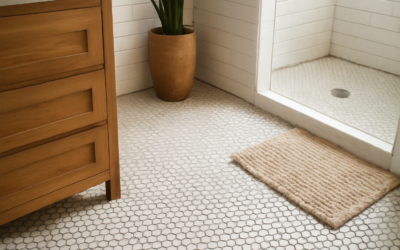
The white-on-white effect changes dramatically depending on the tile you choose. Large-format tiles, such as 12-by-24-inch porcelain, have fewer grout lines, so matching white grout produces an almost seamless expanse of white that feels luxurious and modern. Subway tiles, by contrast, create a rhythmic grid, and white grout softens the pattern into a gentle, cohesive backdrop rather than a bold statement. Hexagon, penny-round, and mosaic tiles have far more grout lines per square foot, which means white grout keeps small-tile installations from looking busy while dramatically increasing the surface area you must keep clean.
Texture matters too. Glossy white tile reflects light and amplifies the bright, airy quality of a white-on-white scheme, making small rooms feel larger. Matte and honed tiles create a softer, more contemporary spa feel but can show water spots and require different cleaning. Handmade and zellige-style tiles have irregular edges and subtle color variation, so a matching white grout lets their organic character shine without competing grout lines. Consider how much visual texture you want before committing to a tile shape.
Bathroom Versus Kitchen Applications
Where you install white tile with white grout should influence your material choices. In a shower or tub surround, constant moisture and soap scum make epoxy grout almost essential, since cement grout in these conditions grays and mildews quickly no matter how diligently you seal it. Proper waterproofing behind the tile, a quality sealer if you use cement grout, and good ventilation with an exhaust fan all extend the life of the look. Squeegeeing the walls after each shower is the single most effective habit for keeping white grout white in a bathroom.
In a kitchen backsplash, the enemy is grease and cooking splatter rather than standing water. White grout behind a range collects oil mist that yellows over time, so wiping the backsplash regularly with a degreasing cleaner keeps it fresh. On a kitchen floor, foot traffic grinds dirt into grout lines, making epoxy or a heavily sealed cement grout the smart choice. Matching the maintenance approach to the room’s specific challenges is what separates a white-on-white surface that stays beautiful from one that disappoints within a year.
Making the Look Last
To keep white tile with white grout crisp for years, choose epoxy grout in wet and high-use zones, seal cement grout diligently, and adopt simple daily habits like wiping and squeegeeing. Keep a soft grout brush and neutral cleaner on hand, and address stains before they set. Done right, this classic pairing rewards you with a luminous, seamless surface that makes rooms feel larger and cleaner. With realistic expectations and the right grout choice up front, the white-on-white look stays as beautiful as the day it was installed.
Prefer to explore on your own?
See how new flooring looks in your actual room in seconds — free, no signup.
Try the free Floor Studio →