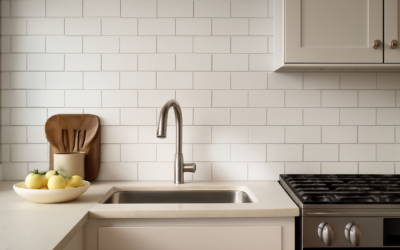
Some materials never go out of style, and 6×6 white tile is one of them, a square ceramic field tile that has covered American kitchens, bathrooms, and mudrooms for a century. At six inches on a side, it strikes a friendly middle ground: larger and faster to install than a mosaic, smaller and more forgiving than a big-format slab. If you love the clean look of subway tile but want something with a little more geometry and vintage charm, the classic white square is a smart, affordable answer. This guide covers layouts, grout, cost, and how to get a crisp, professional result.
Part of our Tile & Grout guide — explore the full guide →
Why the 6×6 Square Endures
The appeal starts with proportion. A six-inch square reads as balanced and calm on a wall, neither busy nor blank. It’s the tile you see in early-1900s bathrooms, mid-century kitchens, and today’s transitional remodels, which is exactly why it feels both familiar and current. White amplifies that timelessness, reflecting light, making small rooms feel bigger, and pairing with any cabinet color, countertop, or fixture finish you throw at it.
There’s also a practical side. Field tile in this size is widely stocked, inexpensive, and easy to cut, so it’s a favorite for DIYers and budget-conscious remodels. You can commit to a full wall of it without breaking the bank, then dress it up with a colored grout or a contrasting trim.
Shades of White and Finishes
White is never just white. When you shop 6×6 tile, you’ll find a surprising range that changes the whole feel of a room:
- Bright white: Crisp and clean, ideal for modern and contemporary spaces.
- Soft or off-white: A warmer, creamier tone that suits farmhouse and traditional looks and hides soap film better.
- Antique or crackle glaze: A subtly aged surface with fine crazing for vintage character.
- Matte vs. glossy: Glossy reflects more light and wipes clean easily, while matte reads modern and hides water spots.
Bring samples home and view them against your cabinets and countertop in daylight and at night. A white that looks perfect in the store can turn gray or yellow under your kitchen’s lighting.
Layout Options That Change Everything
The same tile looks completely different depending on how you set it. Consider these layouts:
- Straight grid (stacked): Tiles align in even rows and columns for a clean, modern, gridded look. It’s the most common and the easiest to execute.
- Diagonal (diamond): Rotate the grid 45 degrees for a dynamic, slightly formal pattern that draws the eye and can make a narrow space feel wider.
- Offset (brick/running bond): Shift each row by half a tile for a softer, more casual rhythm that echoes subway tile.
- Grid with accent: Break up a large field with a border strip, a band of contrasting color, or a decorative insert.
Dry-lay a small section on the floor before you commit. Seeing the pattern at scale helps you catch layout issues and decide where cut tiles will land.
Getting Grout Right
Grout is the styling lever most homeowners underestimate. With white tile you have two directions:
- White or light gray grout: Blends into the tile for a seamless, expansive surface that emphasizes the white field over the grid.
- Dark or contrasting grout: Charcoal, black, or medium gray outlines every square, highlighting the geometry for a graphic, on-trend look.
Grout choice also affects upkeep. Bright white grout stains and yellows fastest, especially on floors, so many pros steer clients toward a light gray or an epoxy grout that resists staining. Whatever the color, seal cement-based grout after it cures and keep it clean to protect your investment.
Where 6×6 White Tile Works
This size is a genuine all-rounder. On walls, it makes a bright, classic kitchen backsplash and a clean bathroom or shower surround. On floors, glazed porcelain versions handle mudrooms, laundry rooms, powder rooms, and vintage-style bathrooms beautifully. It even works on fireplace surrounds and as wainscoting up to a chair rail.
One caution for floors: choose a tile rated for floor use with adequate slip resistance, and confirm the PEI wear rating suits the traffic. Wall-only glazed tiles are too soft and slick to walk on safely, so read the box before you buy for a floor application.
What It Costs
Affordability is a big part of the appeal. Basic 6×6 white ceramic wall tile often runs just $1 to $4 per square foot, with premium, handmade, or crackle-glaze versions climbing to $8 to $15. Floor-rated porcelain in the same size typically lands in the $2 to $6 range. For a standard kitchen backsplash of 25 to 40 square feet, materials might total only $40 to $200, which leaves room in the budget for nice trim or a splurge grout.
Professional installation adds roughly $8 to $15 per square foot depending on layout complexity, with diagonal and accented patterns costing more than a simple straight grid. Always buy about 10 percent extra for cuts, breakage, and future repairs, and keep a few spare tiles in the garage.
6×6 vs. Subway and Other Sizes
Homeowners often bounce between the classic square and a few alternatives. Here’s how the 6×6 stacks up:
- vs. 3×6 subway: Subway reads more elongated and trendy; the 6×6 square feels more balanced and vintage. The square also covers more area per tile, meaning fewer grout lines and a faster set.
- vs. 4×4 tile: The smaller 4×4 gives a busier, more retro grid with more grout, while the 6×6 feels calmer and more current.
- vs. large-format 12×24: Big tile is sleek and modern with minimal grout, but it needs a very flat substrate and lacks the traditional charm of the square.
If you want a classic look that isn’t the ubiquitous subway rectangle, the 6×6 square is a refreshing middle path that still feels timeless.
Ceramic vs. Porcelain in 6×6
The white square comes in both ceramic and porcelain, and the difference matters depending on where it’s going. Ceramic is softer, cheaper, and perfect for walls and backsplashes that never take foot traffic. Porcelain is denser, more water-resistant, and rated for floors and high-moisture areas. For a shower floor or a mudroom, insist on porcelain rated for that use; for a kitchen backsplash, budget-friendly ceramic is completely fine. Check the tile’s PEI rating and water absorption on the spec sheet if you’re unsure which you’re holding.
Installation and Care Tips
Set 6×6 tile over a clean, flat, appropriate substrate: cement board or a waterproof membrane for wet areas, a properly prepared subfloor for floors. Use consistent spacers, typically 1/16 to 1/8 inch, to keep grout lines even, and check your work with a level as you go so no tile edge sits proud of its neighbor. On floors, back-butter tiles for full adhesive coverage and use a large-notch trowel.
Maintenance is simple. Glazed ceramic and porcelain wipe clean with mild soap and water, resist stains, and never need sealing themselves. The grout is what needs attention: seal it, clean spills promptly, and refresh the sealer periodically. Handled that way, a 6×6 white tile installation looks as fresh in fifteen years as it did on day one, which is exactly why this humble square keeps showing up in great-looking homes.
Prefer to explore on your own?
See how new flooring looks in your actual room in seconds — free, no signup.
Try the free Floor Studio →