Ask any kitchen designer for the single most requested cabinet color of the last several years and one name keeps surfacing. Alabaster kitchen cabinets hit a sweet spot that pure white never manages: they read as clean and bright without the cold, clinical edge that makes a stark white kitchen feel like a hospital. Sherwin-Williams Alabaster (color SW 7008) is a soft, creamy white with just enough warmth to feel inviting under both daylight and evening lamps. It was Sherwin-Williams’ Color of the Year in 2016 and has only grown more popular since. If you want a timeless white kitchen that still feels cozy, this is the shade to understand before you commit.
Part of our Kitchen Remodeling guide — explore the full guide →
What Makes Alabaster Different
The difference is all in the undertone. A true bright white like Sherwin-Williams Pure White or Extra White reflects light hard and can look blue or gray in north-facing rooms. Alabaster carries a barely-there warm undertone, a whisper of yellow and beige, that keeps it feeling soft and organic instead of sterile.
Its LRV, or light reflectance value, sits around 82, which means it still reads clearly as white and bounces plenty of light, but not so much that it glares. That balance is why it flatters almost every kitchen, from a sun-drenched south-facing room to a dim galley with one small window.
Why Homeowners Love It
The color’s staying power comes from its versatility and forgiveness. A few reasons it keeps topping the charts:
- It works with warm and cool accents alike, so you are not locked into one metal or countertop.
- The soft undertone hides minor scuffs and fingerprints better than a stark white.
- It photographs beautifully, which matters if you ever sell, since white kitchens dominate listing photos.
- It pairs naturally with the warm woods, brass, and organic textures trending in kitchens now.
Unlike a bold color that can date a kitchen in five years, alabaster is a safe, classic choice that resists going out of style. That makes it a smart pick if you plan to stay put for a decade or want broad resale appeal.
Colors and Finishes That Pair Well
Alabaster is a team player, and the surfaces you set against it define the whole mood of the room.
- Countertops: warm-veined quartz like Cambria Brittanicca or a creamy marble-look slab keeps the warmth consistent. Avoid cool gray quartz, which can make the cabinets look dingy by comparison.
- Hardware: brushed brass and champagne bronze amplify the warmth, while matte black adds crisp contrast for a modern-farmhouse feel.
- Backsplash: a soft white subway tile with warm grout blends seamlessly; a natural stone or zellige tile adds texture without clashing.
- Islands and floors: a contrasting island in a warm wood tone, greige, or a soft sage green looks stunning against alabaster perimeter cabinets.
The one pairing to watch is flooring. Cool gray-toned floors can fight the cabinet’s warmth, so lean toward warm oak, walnut, or a greige tile to keep the palette harmonious.
Getting the Look: Paint vs. Factory Finish
You can arrive at alabaster cabinets two ways, and the route affects both cost and durability. Ordering new cabinets with a factory-applied finish gets you a hard, uniform, conversion-varnish coating that resists chips and moisture better than anything you can spray at home. Many cabinet lines offer a comparable soft white, or you can request a custom color match to SW 7008.
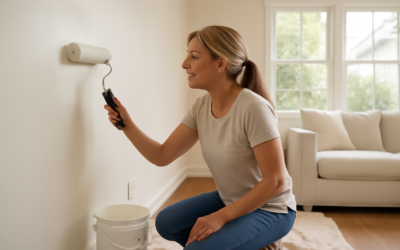
Painting existing cabinets is the budget path and a genuinely popular DIY or contractor project. The keys to a lasting result are thorough degreasing, a quality bonding primer, and a durable enamel like Benjamin Moore Advance or a sprayed conversion varnish. Brush marks and skipped prep are what separate a five-year finish from a one-year peel. If you tackle it yourself, plan on light sanding between coats and at least two topcoats for even coverage.
What It Costs
The price swings widely based on whether you are buying, painting, or refacing. Factory-finished alabaster cabinets fall in line with any painted cabinet line, typically $200 to $600 per linear foot for semi-custom and more for custom.
Repainting your existing cabinets a professional alabaster runs $3,000 to $8,000 for an average kitchen when you hire it out, or $300 to $700 in materials if you do it yourself over a long weekend. Refacing, where new doors and drawer fronts are installed over existing boxes, lands in the middle at $5,000 to $12,000. For most homeowners with solid existing cabinet boxes, painting delivers the biggest visual change for the least money.
Keeping Alabaster Cabinets Clean
A warm white shows grease and grime less than stark white, but light cabinets near a stove still need routine care. A simple maintenance rhythm keeps them looking fresh:
- Wipe high-touch areas around handles and the range weekly with a soft cloth and mild dish soap in warm water.
- Skip abrasive scrubbers and harsh degreasers, which can dull or yellow the finish over time.
- Blot spills and splatters promptly, especially oils and turmeric or tomato-based sauces that can stain.
- Dry with a clean cloth to avoid water marks along the bottom edges of doors.
Keep a small touch-up jar of the paint on hand. Cabinet corners and edges take the most abuse, and a dab of matching enamel keeps small dings from becoming eyesores.
Will It Look Dated?
Every homeowner asks this, and it is a fair question after years of gray taking over. Soft, warm whites like alabaster are about as timeless as cabinet colors get, precisely because they are neutral and adaptable. Even if you tire of your current accents, you can update hardware, backsplash, or the island color while the alabaster perimeter stays relevant. That flexibility is the whole argument for choosing it over a trend color that peaks and fades.
How Lighting Changes Alabaster
One quirk of any warm white is that it shifts noticeably depending on the light in the room, and understanding this before you commit saves disappointment. In a north-facing kitchen with cool, indirect daylight, alabaster’s warm undertone helps counteract the blue cast and keeps the space from feeling cold, which is exactly why designers reach for it in darker rooms. In a bright south-facing kitchen flooded with warm afternoon sun, that same undertone can read slightly creamier, which most people find pleasant.
Artificial lighting matters just as much. Test your paint under the actual bulbs you use:
- Warm white bulbs (2700K) deepen alabaster’s coziness and can push it toward cream in the evening.
- Neutral bulbs (3000K to 3500K) show the truest version of the color and are the safest choice for a kitchen.
- Cool daylight bulbs (4000K and up) crisp it up toward a brighter white but can flatten the warmth.
Always buy a sample quart, paint a large poster board, and move it around the kitchen across a full day before ordering cabinets. Judging a warm white from a tiny chip under store lighting is how homeowners end up surprised by the finished result.
The Bottom Line
Alabaster kitchen cabinets give you a bright, clean white without the cold sterility of a stark white, thanks to a soft warm undertone and a friendly 82 LRV that flatters nearly any room. Pair them with warm quartz, brass or matte-black hardware, and a contrasting wood island for a look that feels both current and lasting. Whether you order factory-finished cabinets or repaint what you have, prioritize a durable enamel and thorough prep. Do that, keep a touch-up jar handy, and you will have a kitchen that stays inviting and on-trend for years without ever feeling like a passing fad.