
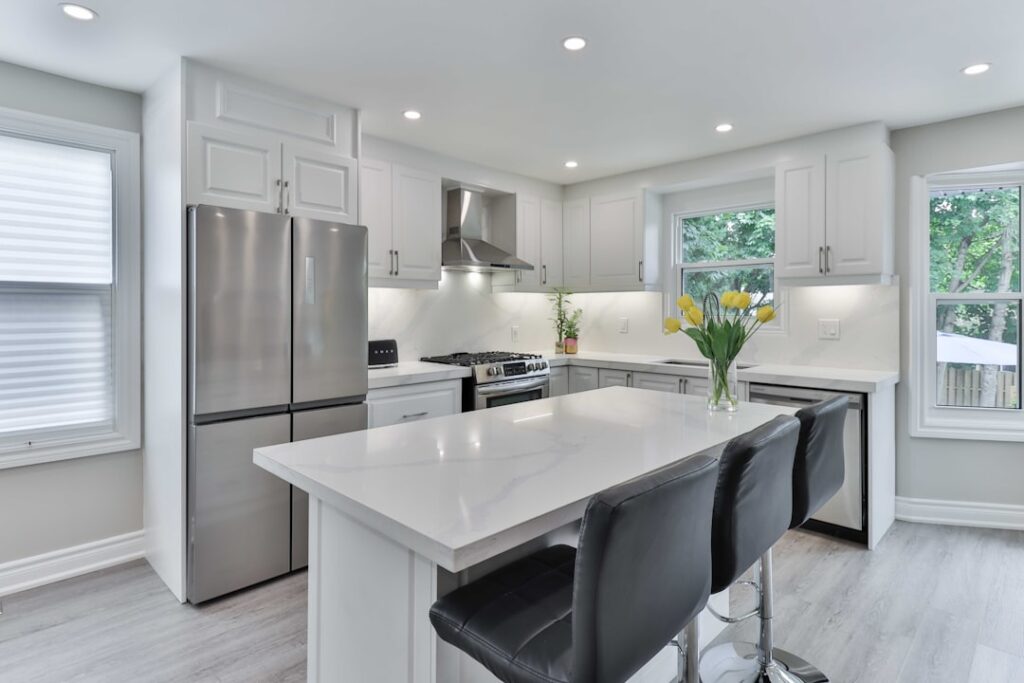
White kitchens dominated the last decade, but designers and homeowners are shifting toward warmer neutrals — and beige kitchen cabinets are leading that trend. Beige offers the same light, airy quality as white without the sterile, clinical feel that many homeowners have grown tired of. From creamy tans to warm greige tones, beige works in virtually every kitchen style and pairs beautifully with both cool and warm countertop materials.
Part of our Kitchen Remodeling guide — explore the full guide →
Why Beige Is Having a Moment
Several factors are driving the beige cabinet trend. Social media platforms have popularized warm, organic aesthetics that favor earth tones over stark whites. Practically speaking, beige cabinets hide fingerprints, water spots, and cooking splatters far better than bright white — a real advantage in a heavily used kitchen. And unlike bold color choices that feel dated within a few years, beige is a timeless neutral that holds resale value.
Real estate agents consistently report that neutral kitchens appeal to the broadest range of buyers. Beige kitchen cabinets photograph well in listing photos while avoiding the cold, impersonal look that all-white kitchens sometimes project in images.
Popular Beige Cabinet Shades
Not all beiges are created equal. The undertone of your beige dramatically affects how the cabinets interact with your countertops, backsplash, and flooring.
- Warm beige (yellow undertone): Think Sherwin-Williams Accessible Beige (SW 7036) or Benjamin Moore Manchester Tan (HC-81). These pair naturally with gold hardware, butcher block countertops, and warm wood floors.
- Greige (gray undertone): Colors like Sherwin-Williams Agreeable Gray (SW 7029) or Benjamin Moore Revere Pewter (HC-172). These bridge the gap between warm and cool, working with both stainless steel and brass hardware.
- Cream (white undertone): Softer than true beige, cream cabinets like Benjamin Moore White Dove (OC-17) feel elegant in traditional and farmhouse kitchens without reading as stark white.
- Taupe (brown-purple undertone): A deeper, moodier beige that works in contemporary kitchens. Think Farrow and Ball Elephant’s Breath or Sherwin-Williams Tony Taupe (SW 7038).
Countertop Pairings That Work
Choosing the right countertop material and color alongside beige cabinets is where good kitchens become great ones. Contrast is your friend — pairing beige cabinets with a beige countertop creates a washed-out, monotone look that lacks visual interest.
White Quartz or Marble
Crisp white countertops with subtle veining create clean contrast against warm beige cabinets. Calacatta-style quartz with gold veining picks up the warm undertones in beige beautifully. Budget-friendly options like MSI Calacatta Laza ($55 to $75 per sq ft installed) deliver this look without the maintenance demands of real marble.
Dark Granite or Soapstone
Black or charcoal countertops make beige cabinets pop dramatically. Absolute Black granite ($40 to $60 per sq ft installed) or soapstone ($70 to $100 per sq ft installed) both pair exceptionally well, especially in kitchens with stainless steel appliances and matte black hardware.
Butcher Block
For farmhouse and cottage-style kitchens, butcher block countertops in walnut or maple create a warm, layered look with beige cabinets. Walnut butcher block ($50 to $80 per sq ft installed) adds depth without competing visually, while lighter maple ($30 to $50 per sq ft installed) keeps the palette cohesive.
Hardware and Fixture Choices
Cabinet hardware is the jewelry of the kitchen, and beige cabinets are unusually versatile in the metals they complement.
- Brushed brass or gold: The most popular pairing right now. Warm metal on warm cabinets creates a cohesive, luxurious feel. Expect $3 to $8 per pull from brands like Amerock and Liberty.
- Matte black: Provides sharp contrast against light beige. Works especially well with black-framed windows and dark countertops for a modern farmhouse aesthetic.
- Brushed nickel or chrome: The safe, timeless choice. Cool-toned metals work best with greige cabinets that already have a cool undertone.
- Unlacquered brass: Develops a natural patina over time that adds character. Higher cost ($10 to $25 per pull) but delivers an authentic, aged look.
Backsplash Ideas for Beige Cabinets
The backsplash is your opportunity to introduce pattern, texture, or a complementary color that ties the kitchen design together.
White subway tile remains a reliable choice at $2 to $5 per square foot, but consider zellige tile ($10 to $18 per sq ft) for its handmade texture and subtle color variation that brings depth next to flat beige cabinet fronts. For a bolder statement, sage green or dusty blue tile creates a natural, calming contrast that works particularly well with warm beige tones.
Natural stone backsplashes — thin marble slabs or stacked stone — complement beige cabinets in transitional and modern kitchens. A full-height quartz backsplash matching your countertop creates a sleek, continuous look that makes the kitchen feel more expansive.
Beige Cabinets in Different Kitchen Styles
Beige is one of the rare colors that adapts convincingly across kitchen design styles.
- Modern: Flat-panel (slab) beige cabinets with integrated pulls, waterfall-edge quartz countertops, and matte black accents
- Traditional: Raised-panel beige cabinets with crown molding, marble countertops, and polished brass hardware
- Farmhouse: Shaker-style beige cabinets with open shelving, butcher block countertops, and cup-pull hardware in oil-rubbed bronze
- Transitional: Shaker beige cabinets with quartz countertops, brushed gold hardware, and a mix of open and closed storage
- Scandinavian: Light cream cabinets with white oak accents, minimal hardware, and natural stone countertops
Cost to Paint or Reface Existing Cabinets in Beige
You do not need new cabinets to achieve this look. Professional cabinet painting runs $3,000 to $7,000 for an average kitchen with 20 to 30 cabinet doors, including proper prep, priming, and two coats of paint. DIY painting costs $200 to $500 in materials — high-quality cabinet paint like Benjamin Moore Advance ($55 to $65 per gallon) and a good primer are the critical investments.
Cabinet refacing — replacing the doors and drawer fronts while keeping the existing boxes — costs $5,000 to $12,000 professionally but gives you the option of switching door styles along with the color change. For homeowners happy with their cabinet layout but tired of the current finish, painting delivers the most dramatic transformation for the least investment.


