A beige tile bathroom remains one of the safest, most resale-friendly choices you can make, and after two decades of renovating bathrooms I still recommend it to homeowners who want warmth without locking themselves into a trend. Beige works because it sits between cool gray and warm cream, flattering nearly every fixture finish and lighting condition. Done thoughtfully, it reads as calm and spa-like rather than dated.
The trick is in the details. Anyone can slap a builder-grade beige square on the wall, but the difference between a flat, forgettable room and a layered, inviting one comes down to tile size, grout color, texture, and the accents you pair with it. This guide walks you through every decision.
Why Beige Still Works
Beige is a neutral with undertones, and those undertones do the heavy lifting. A pinkish beige warms a north-facing bathroom that gets little natural light. A greige (gray-beige) leans modern and pairs beautifully with matte black faucets. A yellow-beige can feel sunny but risks looking dated under warm bulbs, so test it carefully.
From a practical standpoint, beige hides water spots, dried soap, and the everyday grime that shows instantly on glossy white or dark slate. That alone saves you cleaning time. It also photographs well for resale listings, which matters more than most people realize when it comes time to sell.
Choosing the Right Shade and Material
Start by collecting at least three or four samples and taping them to the wall for a full day. Lighting changes everything: a tile that looks creamy at the showroom can turn gray under LED fixtures at home. Look at each sample in morning light, midday, and under your actual bathroom bulbs.
For material, porcelain is my default recommendation. It absorbs less than 0.5% water, resists scratching, and handles a humid bathroom for decades. Ceramic costs a bit less and works fine on walls but is softer underfoot. Natural stone like travertine or limestone delivers gorgeous organic beige tones, but it needs sealing every one to two years and stains if neglected.
- Porcelain: $3 to $10 per sq ft, low maintenance, ideal for floors and walls.
- Ceramic: $1.50 to $7 per sq ft, budget-friendly, best for walls.
- Travertine/limestone: $5 to $15 per sq ft, luxurious but high maintenance.
- Porcelain that mimics stone: the look of travertine without the sealing chores.
Tile Size and Layout
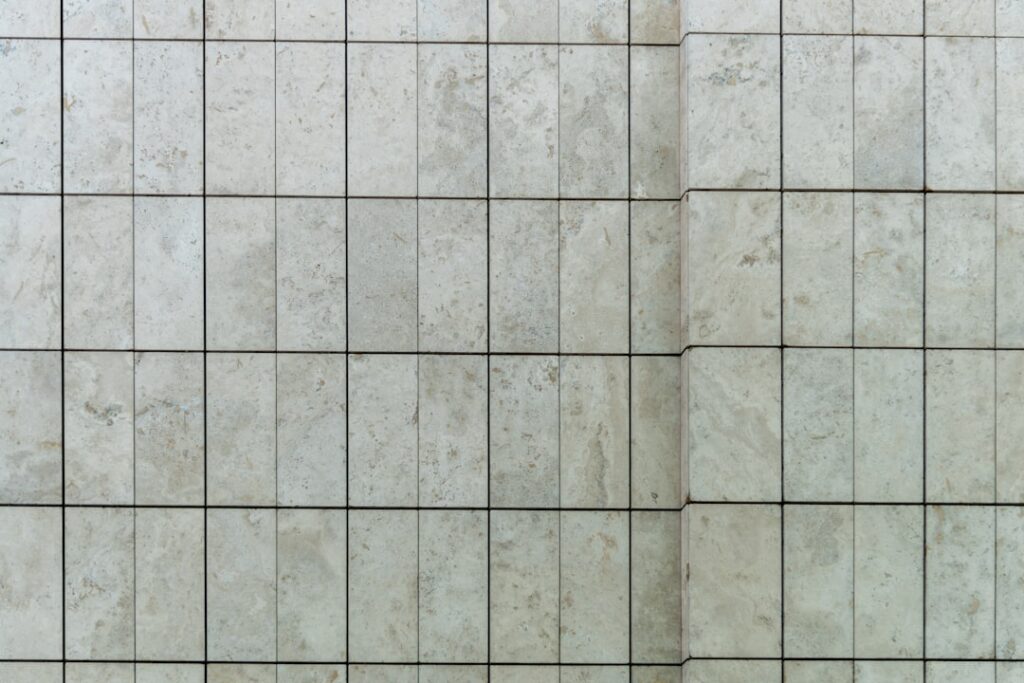
Larger tiles, think 12×24 inches, make a small bathroom feel bigger because they reduce grout lines and visual clutter. For floors, 12×12 or 18×18 are reliable. If you love texture, a mosaic or penny-round beige works beautifully on a shower floor where smaller tiles improve drainage slope and slip resistance.
Layout matters as much as size. A straight stack reads contemporary, a classic offset (running bond) feels traditional, and a herringbone or vertical stack adds movement to an otherwise plain palette. In a beige scheme, layout is often where you inject the personality the color intentionally holds back.
Grout: The Detail That Makes or Breaks It
Grout color quietly controls the entire mood. Match the grout to the tile for a seamless, expansive look. Go a shade or two darker for subtle definition that highlights a nice layout. Avoid bright white grout with beige tile; the contrast looks unfinished and shows dirt fast.
Use a stain-resistant grout, ideally an epoxy or a high-quality urethane formula, in wet zones. Standard cementitious grout works but should be sealed within a few weeks of installation and re-sealed annually. Whatever you choose, a slightly warm beige or taupe grout almost always flatters a beige tile bathroom.
Pairing Colors and Fixtures
Beige is a backdrop, so let your fixtures and accents carry contrast. Matte black hardware looks crisp and current. Brushed brass or champagne bronze adds warmth and a touch of luxury. Polished chrome keeps things classic and bright.
For walls and cabinetry, white vanities pop cleanly against beige, while walnut or oak vanities deepen the warm, organic feel. Bring in greenery, woven baskets, and plush white towels to keep the room from feeling monotone. A single accent wall in a textured beige tile or a beige-and-white mosaic can add depth without breaking the calm.
Cost and Installation Expectations
Budget realistically. A standard 5×8-foot bathroom typically needs 80 to 120 sq ft of tile once you account for walls and waste. Always order 10% to 15% extra for cuts and future repairs. Material plus professional installation generally runs $7 to $25 per sq ft depending on tile quality and pattern complexity; intricate layouts like herringbone cost more in labor.
A full beige tile bathroom installation, including waterproofing the shower, usually lands somewhere between $2,500 and $7,000 for an average space. If you are handy, wall tiling is approachable, but I strongly recommend a pro for shower pans and waterproofing membranes, where mistakes lead to expensive leaks.
Maintenance and Longevity
One reason a beige tile bathroom ages so gracefully is its forgiving nature, but it still needs basic care. Wipe down surfaces weekly with a pH-neutral cleaner, avoid acidic products on natural stone, and run the exhaust fan during and after showers to control humidity and mildew. Reseal grout and stone on schedule.
Treated well, quality porcelain or ceramic beige tile easily lasts 20 years or more, and because the color never screams a particular decade, you will not feel pressured to rip it out the moment styles shift. That timelessness is exactly why beige endures.
Common Mistakes to Avoid
A few avoidable errors derail otherwise good beige bathrooms. The most common is choosing the wrong undertone for the room’s light; a beige with a heavy yellow cast that looked fine in the store can turn dingy under your fixtures, which is why on-site sampling is non-negotiable. Another frequent misstep is pairing beige tile with stark white grout, which fights the warmth and shows every speck of grime.
Watch out for going too monochrome, too. A bathroom in beige tile, beige walls, beige towels, and beige fixtures reads flat and lifeless. Inject contrast through hardware, a wood vanity, greenery, or a darker accent so the space has depth. Finally, do not neglect the transitions, where beige tile meets the tub, vanity, or floor; clean caulk lines and proper trim pieces separate a polished job from an amateur one. Plan these details before tiling, not after.
Design Styles That Suit Beige
Part of beige’s staying power is how many design directions it supports. For a spa-inspired retreat, pair soft greige tile with matte fixtures, natural wood, and plush textiles. For a traditional look, lean into warmer beige with classic subway tile, polished chrome, and a furniture-style vanity. A modern farmhouse scheme loves beige floor tile under white shiplap and black hardware.
If your taste runs contemporary, choose large-format greige porcelain in a straight stack with minimalist fixtures for a clean, gallery-like feel. The point is that beige is a foundation, not a finished style; it bends to whatever direction you commit to, which makes it one of the most flexible starting points in any bathroom renovation.
Prefer to explore on your own?
See how new flooring looks in your actual room in seconds — free, no signup.
Try the free Floor Studio →