For a shower floor that feels like a natural riverbed underfoot, few materials rival black pebble tile. Made from smooth, rounded stones mounted on mesh sheets, it brings organic texture, a soothing spa atmosphere, and excellent slip resistance to bathrooms and beyond. The deep, dramatic color adds sophistication and pairs beautifully with both light and dark palettes. This complete guide covers the types available, real-world costs, installation steps, sealing needs, and the pros and cons you should weigh before choosing this distinctive natural tile.
Part of our Tile & Grout guide — explore the full guide →
- What Is Black Pebble Tile
- Types of Black Pebble Tile
- Where to Use Black Pebble Tile
- How Much Does Black Pebble Tile Cost
- How to Install Black Pebble Tile
- Sealing and Maintenance
- Pros and Cons
- Rounded vs Sliced Pebbles
- Design Pairings for Black Pebble Tile
- Avoiding Common Problems
- Pairing Pebble Floors With Wall Tile
- Final Thoughts
What Is Black Pebble Tile
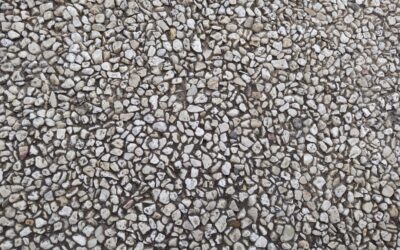
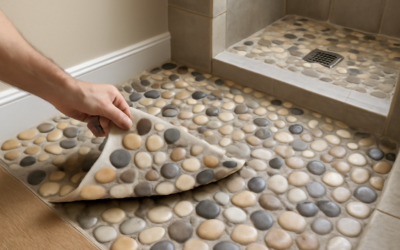
Black pebble tile consists of small, smooth river stones in dark charcoal-to-black tones, adhered to flexible mesh backing sheets, typically about 12 inches square. Rather than placing each stone by hand, an installer sets the sheets as units and then fills the gaps with grout, locking the pebbles into a continuous, textured surface. The stones are usually natural river rock, tumbled smooth by water, though some products use sliced or “standing” pebbles for a flatter, more uniform surface. The result is a floor or wall that feels tactile and organic, evoking a zen garden or natural spring.
Types of Black Pebble Tile
There are a few variations to consider based on the look and feel you want:
- Natural rounded pebbles: The classic riverbed look with a bumpy, massaging texture underfoot.
- Sliced (flat) pebbles: Stones cut to reveal a flatter surface, easier to walk on and clean while keeping the natural shape.
- Standing pebbles: Stones set on end for a taller, more dimensional texture, often used on accent walls.
- Polished versus matte: Polished pebbles glisten and deepen the black, while matte stones read more natural and muted.
For shower floors, rounded or sliced pebbles are most common, with sliced versions offering a good balance of natural look and comfort.
Where to Use Black Pebble Tile
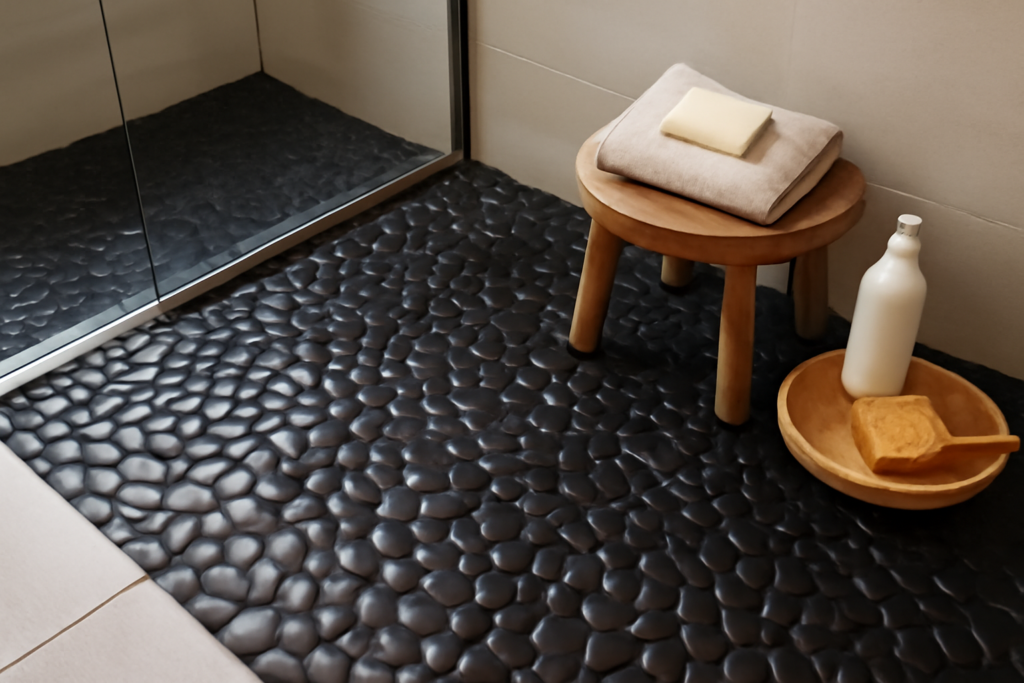
The most popular application is a shower floor, where the rounded stones grip wet feet and conform to the slope toward the drain, providing both safety and a gentle foot massage. It also works beautifully as a full spa-style shower feature, a bathroom accent strip, a border around a larger tile field, and outdoor uses like garden paths, patios, and pool surrounds. On walls, standing pebbles create a dramatic textured feature. Because the surface is uneven, rounded pebble tile is less ideal for main bathroom floors where furniture and comfort matter, but sliced versions can work in those spots.
How Much Does Black Pebble Tile Cost
Pricing reflects the natural material and the labor-intensive grouting:
- Natural pebble tile sheets: $8 to $20 per square foot.
- Sliced or standing pebble tile: $12 to $25 per square foot.
- Installation: $10 to $20 per square foot, higher than flat tile because grouting around each stone is meticulous work.
A typical shower floor of about 15 square feet might total $300 to $700 installed. Order 10 to 15 percent extra, since fitting pebble sheets around a drain and against walls wastes more material than rectangular tile. Natural stone color varies between sheets, so blend from several boxes as you work.
How to Install Black Pebble Tile
Installing pebble tile is more involved than flat tile because of the grouting, but the mesh sheets make placement manageable:
- Prepare a properly sloped, waterproofed shower base or a flat, clean substrate.
- Apply thinset with a notched trowel and press each sheet firmly, embedding the pebbles evenly.
- Match the spacing between sheets to the spacing within them so seams disappear.
- Cut individual pebbles off the mesh with nippers to fill edges and around the drain.
- Once set, apply grout carefully, working it fully into the gaps around every stone.
- Choose the grout height: filling nearly to the top of the stones is easier to clean, while a lower grout line shows more pebble.
Grouting is the most time-consuming step, so work in sections and clean haze off the stones promptly.
Sealing and Maintenance
Natural pebbles are porous, so sealing is essential, especially in a wet shower. Apply a penetrating stone sealer before grouting to ease grout cleanup, then again after grouting, and reapply periodically. For daily care, rinse and squeegee the shower to reduce soap scum, and clean with a pH-neutral stone cleaner and a soft brush that can reach into the textured gaps. Avoid harsh acidic cleaners that etch stone. The many crevices can trap soap residue over time, so periodic deeper cleaning keeps the black looking rich.
Pros and Cons
The benefits include excellent slip resistance, a natural spa-like aesthetic, a soothing foot-massage texture, and conforming flexibility on sloped shower floors. The drawbacks are more grout to clean, essential sealing, a bumpier surface that some find less comfortable, and more labor-intensive installation. Choosing sliced pebbles reduces the comfort and cleaning concerns while keeping the natural look.
Rounded vs Sliced Pebbles
One of the most important decisions is whether to use rounded or sliced pebbles, since it affects comfort, cleaning, and looks. Rounded pebbles keep their full natural shape, delivering the classic riverbed texture and a gentle foot massage, but the bumpy surface is less comfortable for standing and traps more soap in the deeper gaps. Sliced pebbles are cut to reveal a flat top while keeping the organic outline, creating a surface that is far easier to walk on and clean while still reading as natural stone. Standing pebbles, set on end, offer the most dramatic texture and are best reserved for accent walls rather than floors you stand on daily.
Design Pairings for Black Pebble Tile
The rich, dark color of black pebble tile pairs beautifully with a range of surrounding materials. Against white or light gray wall tile, a black pebble shower floor creates a crisp, spa-like contrast that feels clean and modern. With warm wood accents and greenery, it evokes a natural, zen-garden retreat. Paired with large-format stone-look tile, it adds textural contrast that keeps a monochrome bathroom from feeling flat. Because the pebble floor is busy and dark, keep the surrounding walls relatively simple and light so the space feels open rather than heavy, and let the pebbles serve as the natural focal point.
Avoiding Common Problems
A few pitfalls can undermine an otherwise beautiful pebble installation. The most common is inadequate sealing, which lets water and soap penetrate the porous stone and leads to staining and mildew, so seal thoroughly before and after grouting. Another is uneven grout height, which looks sloppy and creates hard-to-clean pockets, so aim for consistent coverage that fills most of the way up each stone. Poor drainage slope causes standing water, so confirm the base drains properly before setting. Finally, using harsh acidic cleaners etches and dulls the stone over time, so stick to pH-neutral products and a soft brush for routine care.
Pairing Pebble Floors With Wall Tile
Because a black pebble floor is textured and dark, the walls around it deserve thoughtful coordination to keep a shower feeling balanced. Large-format light tile on the walls provides a calm, smooth counterpoint to the busy, dimensional floor, making the space feel open and letting the pebbles read as the natural focal point. Vertical stacked or subway tile in white or soft gray keeps the look crisp and modern. If you want a fully immersive natural spa, you can carry a pebble or stone-look accent onto a single wall or niche, but avoid surrounding the floor with too much competing texture, which can feel overwhelming and closed in. The goal is contrast: a serene, simple wall treatment that highlights rather than competes with the rich texture underfoot, giving the whole shower a cohesive, natural retreat atmosphere.
Final Thoughts
A black pebble tile floor turns an ordinary shower into a natural, spa-like retreat, delivering safety, texture, and dramatic color in one material. By selecting rounded or sliced pebbles to suit your comfort preferences, budgeting for the meticulous grouting labor, sealing the porous stone thoroughly, and keeping the crevices clean, you can enjoy a striking, riverbed-inspired surface for many years. For homeowners who want their bathroom to feel like a natural escape, black pebble tile is a beautiful and practical choice.
Prefer to explore on your own?
See how new flooring looks in your actual room in seconds — free, no signup.
Try the free Floor Studio →