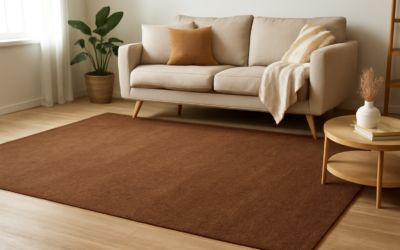
Brown vinyl flooring remains the most popular color family in the vinyl flooring market, and for good reason. Brown tones evoke the warmth of natural wood, complement virtually any decor style, and hide everyday dirt and wear better than lighter alternatives. From deep espresso walnut to light caramel oak, the range of brown shades available in today’s vinyl products is enormous.
This guide walks you through every major brown shade, format option, room pairing strategy, and top product pick so you can choose the perfect brown vinyl flooring for your home.
Why Brown Vinyl Is So Popular
Brown dominates vinyl flooring sales for several practical and aesthetic reasons:
- Natural wood replication: The most realistic wood-look vinyl planks are brown because real wood is overwhelmingly brown. Manufacturers invest their best embossing and printing technology in brown wood-look products.
- Versatility: Brown works with traditional, modern, farmhouse, coastal, mid-century, and industrial design styles. It is the safest color choice for resale value.
- Dirt concealment: Medium brown tones hide dust, pet hair, crumbs, and light scuffs far better than white, gray, or black flooring.
- Warmth: Brown adds visual warmth to a room in a way that gray and white floors cannot replicate, making spaces feel inviting and grounded.
- Timelessness: While gray flooring surged in popularity from 2015–2022, brown tones have been the default for centuries and show no signs of going out of style.
Brown Shade Guide
Light Browns: Honey, Caramel, and Natural Oak
Light brown vinyl mimics the look of white oak, natural maple, and unstained hickory. These shades brighten rooms while still delivering warmth. They are excellent for small spaces, Scandinavian-inspired interiors, and rooms with limited natural light.
- Honey oak: A golden-brown with warm amber undertones. Classic and universally appealing.
- Caramel oak: Slightly deeper than honey with more orange warmth. Pairs well with cream walls and white trim.
- Natural oak: A balanced, neutral light brown that closely replicates unfinished white oak. The most versatile light brown option.
Medium Browns: Walnut, Pecan, and Teak
Medium brown is the sweet spot for most homeowners. These shades balance warmth and depth without making rooms feel dark. They work in virtually any room size and lighting condition.
- Walnut: A sophisticated brown with subtle gray or purple undertones. The most popular medium brown shade in vinyl flooring.
- Pecan: A warm, reddish-tan brown with prominent grain patterns. Southern charm in plank form.
- Teak: A golden-brown with amber highlights and tight grain. Adds an exotic, tropical feel.
Dark Browns: Espresso, Mahogany, and Chestnut
Dark brown vinyl creates drama and sophistication but requires careful room pairing. These shades look best in large, well-lit rooms where the dark floor serves as an anchor for lighter walls, furniture, and decor.
- Espresso: A near-black brown with warm undertones. Dramatic and modern. Shows dust and pet hair more than lighter options.
- Mahogany: A deep, rich reddish-brown. Formal and traditional. Beautiful in dining rooms and home offices.
- Chestnut: A warm, deep brown without red undertones. Rich but approachable. Works in both traditional and contemporary settings.
Brown with Gray Undertones
The “greige” trend — brown with gray undertones — remains popular in 2026. These shades split the difference between warm brown and cool gray, making them exceptionally easy to decorate around. Look for color names like “drift oak,” “weathered walnut,” “aged hickory,” or “smoky brown.”
Vinyl Format Options
Brown vinyl flooring comes in three main formats, each with distinct advantages:
Luxury Vinyl Plank (LVP)
LVP is the most popular format for brown vinyl flooring. Planks typically measure 6″–9″ wide by 36″–72″ long and install via click-lock or glue-down methods. The plank format creates the most realistic wood-look floor because the proportions match actual hardwood planks.
Luxury Vinyl Tile (LVT)
LVT comes in square tile formats (12″ x 12″, 12″ x 24″, 18″ x 18″) and is typically used for stone-look designs. Brown LVT mimics travertine, sandstone, and warm-toned slate. It is less common than plank format for brown vinyl but works well in bathrooms and entryways.
Sheet Vinyl
Sheet vinyl comes in rolls 6′ or 12′ wide and installs in one or two large pieces with minimal seams. Brown sheet vinyl is the most affordable option and the most waterproof (fewer seams), but it lacks the dimensional realism of rigid-core LVP. It is best for budget renovations, rentals, and utility spaces.
Room Pairing Guide
Living Rooms and Family Rooms
Medium brown walnut or natural oak LVP in a wide plank (7″–9″) format is the most popular choice for main living areas. The warm tone creates a welcoming atmosphere, and the wide format gives the space a modern, open feel. Look for planks with embossed-in-register (EIR) texture for maximum realism.
Kitchens
Brown vinyl excels in kitchens thanks to its waterproof properties and stain resistance. Medium to dark brown tones hide food spills and foot traffic wear. Choose an SPC (stone polymer composite) core for maximum dent resistance under heavy appliances. For more on kitchen-specific options, see our guide to waterproof flooring.
Bedrooms
Light brown tones — honey oak, caramel, natural oak — create a serene, restful bedroom atmosphere. The softer visual weight of light brown keeps the room feeling airy and calm. Pair with plush area rugs for added warmth and comfort underfoot.
Bathrooms
Any brown vinyl shade works in bathrooms. Waterproof construction is non-negotiable — choose SPC or WPC core products with sealed edges. Medium brown walnut and warm gray-brown shades coordinate well with white fixtures and subway tile.
Basements
Medium brown LVP with SPC core is ideal for basements. The rigid core resists moisture from concrete slabs, and brown tones warm up what are often cold, artificially lit spaces. Avoid glue-down vinyl in basements unless moisture testing confirms the slab is dry.
Best Wall Colors with Brown Vinyl
- Light brown floors: White, soft gray, pale blue, sage green, warm cream
- Medium brown floors: Warm white, greige, soft navy, olive, terracotta accents
- Dark brown floors: Bright white, light gray, pale blush, soft gold, light sage
- Brown-gray (greige) floors: Cool white, blue-gray, dusty rose, charcoal accent walls
The general rule: lighter walls with darker floors and vice versa. Contrast between floor and wall color makes both elements stand out and prevents the room from feeling visually flat.
Textures and Finishes
Embossed-in-Register (EIR)
EIR technology aligns the physical texture of the vinyl surface with the printed wood grain pattern. When you run your hand across an EIR plank, you feel the grain where you see it. This is the gold standard for realistic wood-look vinyl and is available in most mid-range and premium brown vinyl products.
Hand-Scraped
A textured surface that mimics the look of hand-scraped hardwood. Deeper, more irregular texture than EIR. Works well with darker brown shades for a rustic or farmhouse aesthetic.
Wire-Brushed
A subtle, linear texture that replicates the look of wire-brushed hardwood. More refined than hand-scraped but more textured than smooth. The most popular texture for modern and transitional interiors.
Matte vs. Satin vs. Gloss
Matte finishes dominate the 2026 market. They look more natural, hide micro-scratches, and photograph better than glossy surfaces. Satin provides a subtle sheen that some homeowners prefer. High-gloss brown vinyl exists but has fallen out of favor due to its tendency to show every footprint, scratch, and dust particle.
What to Look for in Specs
- Wear layer: 12mil for light residential, 20mil for standard residential, 28mil+ for heavy traffic or commercial
- Core type: SPC (stone polymer composite) for maximum dent resistance and stability; WPC (wood polymer composite) for softer feel and sound absorption
- Total thickness: 4mm minimum; 6mm–8mm is the residential sweet spot
- Underlayment: Attached cork or IXPE pad simplifies installation and improves sound/comfort
- Waterproof rating: All quality vinyl is waterproof. Confirm sealed edges and waterproof core construction.
- Warranty: Residential lifetime warranty is standard from reputable brands. Check for coverage specifics on fading, staining, and wear-through.
Top Brown Vinyl Products for 2026
Budget Pick: TrafficMaster Allure (Home Depot)
Available in multiple brown shades including Walnut and Caramel Oak. 6mm total thickness with 6mil wear layer. Peel-and-stick or click-lock formats. Around $1.50–$2.00 per square foot. Best for low-traffic areas, rentals, and budget renovations.
Mid-Range Pick: LifeProof Sterling Oak (Home Depot)
One of the best-selling vinyl planks in the country. Sterling Oak is a warm medium brown with subtle gray undertones. 7mm rigid SPC core, 12mil wear layer, attached underlayment. Around $2.50–$3.50 per square foot. Solid performance for the price.
Best Value: COREtec Pro Plus Enhanced
Available in multiple brown tones including Pembroke and Kendal. 7mm SPC core with attached cork underlayment, 20mil wear layer, EIR texture. Around $3.50–$4.50 per square foot. Excellent balance of quality and price.
Premium Pick: Shaw Floorte Pantheon HD Plus
Deep, realistic EIR textures in rich brown tones like Fiano and Orso. 7mm SPC core, 20mil wear layer, attached pad. Around $4.00–$5.00 per square foot. Shaw’s lifetime residential warranty backs this product.
Luxury Pick: Mohawk RevWood Premier
While technically a wood-composite product rather than pure vinyl, RevWood offers the most realistic wood visuals in the market. Multiple brown shades with ultra-deep EIR textures. Around $4.50–$6.00 per square foot. Stunning aesthetics with waterproof performance.
Installation Tips for Brown Vinyl
- Acclimate planks: Let vinyl acclimate in the room for 48 hours before installation, especially in extreme temperature environments
- Randomize planks: Mix planks from multiple boxes during installation to distribute color and pattern variation naturally
- Stagger end joints: Maintain at least 6″ offset between end joints in adjacent rows to avoid a repeating pattern
- Direction: Install planks parallel to the longest wall or the primary light source for the most natural appearance
- Expansion gap: Leave 1/4″ gap at all walls, transitions, and fixed objects. Brown vinyl expands and contracts with temperature changes.
- Subfloor prep: Ensure the subfloor is flat within 3/16″ per 10 feet. Any bumps or dips will telegraph through the vinyl surface.
Maintenance Guide
- Sweep or vacuum (hard floor setting) daily in high-traffic areas
- Damp mop weekly with a pH-neutral vinyl floor cleaner
- Wipe spills immediately — vinyl is waterproof but standing water at seam edges can eventually penetrate
- Use felt pads under furniture legs to prevent dents and scratches
- Avoid rubber-backed mats, which can stain vinyl over time
- Keep direct sunlight managed with curtains or UV-filtering window film to prevent fading
Cost Overview
| Quality Tier | Cost per Sq Ft | Wear Layer | Expected Lifespan |
|---|---|---|---|
| Budget | $1.00 – $2.50 | 6–8mil | 5–10 years |
| Mid-range | $2.50 – $4.00 | 12–20mil | 15–20 years |
| Premium | $4.00 – $6.00 | 20–28mil | 20–30 years |
| Luxury | $5.00 – $8.00 | 28mil+ | 25+ years |
Professional installation adds $1.50–$3.00 per square foot. DIY click-lock installation is straightforward for most homeowners and saves significant labor cost.
Frequently Asked Questions
What shade of brown vinyl is best for small rooms?
Light to medium brown shades (honey oak, natural oak, light walnut) make small rooms feel larger and brighter. Avoid dark espresso or mahogany in rooms under 150 square feet unless they have abundant natural light.
Does brown vinyl flooring look cheap?
Budget brown vinyl from a decade ago often looked artificial. Modern mid-range and premium products with EIR textures are virtually indistinguishable from real wood at normal viewing distances. The key is choosing a product with embossed-in-register texture and a matte or satin finish.
Is brown vinyl flooring going out of style?
No. Brown is the most enduring flooring color because it replicates natural wood. While gray vinyl had a trend peak around 2018–2022, brown vinyl has been popular for decades and continues to dominate sales. It is the safest long-term color choice.
Can I mix brown vinyl flooring with gray walls?
Yes. Brown floors with cool gray walls is a classic combination that creates sophisticated contrast. The warm-cool interplay keeps rooms visually interesting. Choose a brown with slight gray undertones (greige family) for the smoothest transition.
What is the most realistic brown vinyl flooring?
Products with embossed-in-register (EIR) texture, matte finishes, and varied plank-to-plank color variation look the most realistic. Brands like COREtec, Shaw Floorte, and Mohawk RevWood consistently produce the most convincing brown wood-look vinyl.
Prefer to explore on your own?
See how new flooring looks in your actual room in seconds — free, no signup.
Try the free Floor Studio →