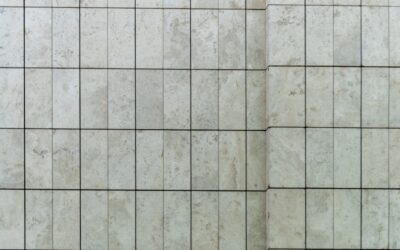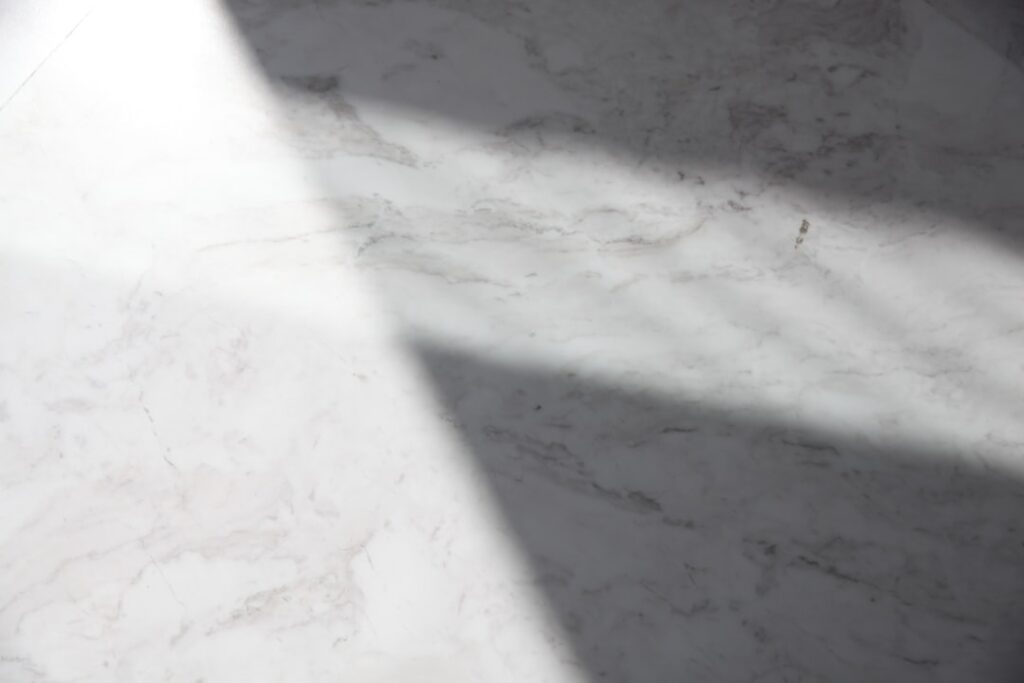
Walk into a showroom and it is almost impossible to tell the difference at arm’s length. Carrara porcelain tile copies the soft gray veining of genuine Carrara marble so convincingly that most guests never realize your floor is fired clay, not quarried stone. The catch that sells homeowners on it is simple: real marble stains if you spill red wine, etches if you set down a lemon, and needs sealing twice a year. Porcelain does none of that. It gives you the same cool, luminous white-and-gray look with the durability of a material rated to survive a busy kitchen for decades.
Why Choose Porcelain Over Real Carrara Marble
Genuine Carrara marble is beautiful, but it is a soft, porous calcite stone. Cooking oil, coffee, and anything acidic will leave permanent dull spots called etches, and grout-line staining is common in wet zones. Porcelain is fired at roughly 2,200°F to 2,500°F, which vitrifies the clay into a dense, glass-hard body with a water absorption rate under 0.5 percent.
What that low absorption buys you is real. A porcelain floor does not need sealing, resists staining from wine and grease, and shrugs off freeze-thaw cycles that would crack natural stone on a covered porch. Marble runs $10 to $40 per square foot for the material alone before fabrication and sealing; a comparable Carrara-look porcelain typically lands between $3 and $8 per square foot. You get the aesthetic at a fraction of the lifetime cost.
Understanding the Look: Veining and Color
Not all Carrara-look tile is created equal. The best product uses high-definition inkjet printing with a dozen or more unique face patterns, so you do not see the same vein repeating every fourth tile. Cheaper lines recycle three or four faces, and the repetition becomes obvious once the floor is down.
Authentic Carrara has a bluish-white to soft-gray background crossed by feathery, feathered gray veins, quieter than the bold gray streaks of Calacatta. When you shop, dry-lay six to eight loose tiles on the floor and step back ten feet. You are checking that the veining flows naturally and that no two adjacent tiles are obvious clones.
Finishes: Polished vs. Matte
Finish changes both the look and where the tile belongs.
- Polished: A glossy, reflective surface that mimics honed-then-buffed marble. Stunning on walls, shower surrounds, and low-traffic floors, but slick when wet. Skip polished on a bathroom or entry floor.
- Matte (natural): A soft, low-sheen surface with better slip resistance. This is the safe pick for kitchen and bath floors.
- Honed: A satin, non-reflective finish that reads most like real honed marble. Excellent all-around choice.
For a floor that gets wet, look for a Dynamic Coefficient of Friction (DCOF) rating of 0.42 or higher. Manufacturers print this on the spec sheet, and it is your single best guide to slip safety.
Sizes and Formats
Format drives the entire feel of the room. Smaller tiles read busy; large-format planks and slabs read like continuous stone.
- 12×24 inch: The workhorse. Great for floors and shower walls, and easy for a DIYer to handle.
- 24×24 inch: A clean, modern square that minimizes grout lines on open floors.
- 24×48 inch and larger: Large-format panels that create an almost seamless marble look. These need a very flat subfloor and are best left to a pro.
- Hexagon and mosaic sheets: Popular for shower floors and accent walls.
There are also Carrara-look porcelain plank tiles cut in 6×36 or 8×48 formats for people who want a marble aesthetic laid in a wood-plank pattern.
PEI Rating and Where to Install
Every glazed tile carries a PEI wear rating from 1 to 5. For residential floors, choose PEI 3 or higher; PEI 4 is ideal for busy kitchens and entryways with grit tracked in from outside. Wall tile can be PEI 0 or 1 because it takes no foot traffic.
Carrara porcelain works almost anywhere: kitchen floors and backsplashes, full bathroom floors and shower walls, laundry rooms, fireplace surrounds, and even covered exterior patios if the tile is rated frost-resistant. Because it is waterproof and does not stain, it is one of the few materials that looks high-end in a shower yet needs almost no babysitting.
Grout Color Makes or Breaks It
This is where amateurs give themselves away. Real marble has thin, nearly invisible seams, so wide dark grout lines instantly look fake. Choose a grout that matches the tile background: a soft warm white or the palest gray. Names like Mapei Frost, Warm Gray, or Silver work well.
Keep joints tight. On a rectified tile with crisp, machine-cut edges, a 1/16-inch to 1/8-inch joint reads closest to a slab. Use an unsanded grout for joints under 1/8 inch, and consider a stain-resistant urethane or epoxy grout in wet areas so the white lines do not gray over time.
Cleaning and Long-Term Care
Day-to-day upkeep is one of this tile’s biggest selling points. Because the body is vitrified and does not absorb liquid, you never seal it, and spills wipe up with nothing more than a damp microfiber mop. For routine cleaning, use warm water with a pH-neutral tile cleaner such as Bona or a splash of dish soap; skip acidic vinegar solutions and harsh bleach, which do the tile no harm but slowly degrade grout.
The one maintenance point that matters is the grout, not the tile. Wipe wet-area grout dry after showers, and re-apply a penetrating grout sealer once a year unless you installed epoxy or urethane grout, which never needs it. Polished Carrara porcelain can show water spots in hard-water regions, so buff those away with a soft cloth. Do this and the floor looks new for 20 years or more.
Carrara Porcelain vs. the Alternatives
It helps to know where this tile sits against its rivals before you buy. Compared to real marble, porcelain wins on durability, stain resistance, and price, but it lacks the subtle depth and cool touch of genuine stone that some purists crave. Against luxury vinyl plank printed with a marble pattern, porcelain is far more heat- and scratch-resistant and reads more convincing underfoot, though vinyl is warmer, softer, and easier to install yourself.
Set beside a solid slab of quartz with marble veining, tile costs a fraction as much and works on floors and walls where slabs are impractical, but you accept grout lines that a seamless slab avoids. For most kitchens and bathrooms, a well-chosen Carrara porcelain tile hits the sweet spot of looks, cost, and toughness.
Installation Notes and Cost
Installing Carrara porcelain follows standard tile practice with a few large-format cautions. Start with a subfloor that is flat within 1/8 inch over 10 feet; large tiles telegraph every hump. Use a modified thinset rated for porcelain, and for tiles 15 inches or longer on any side, back-butter each piece and use a leveling clip system to prevent lippage where one tile edge sits proud of its neighbor.
Budget-wise, expect $3 to $8 per square foot for the tile, $1 to $2 for thinset and grout, and $5 to $12 per square foot for professional installation depending on your region and layout complexity. A straightforward 200-square-foot kitchen floor typically runs $2,000 to $4,000 installed. Cutting porcelain requires a wet saw with a diamond blade; a dry score-and-snap cutter will chip these dense tiles.
One last pro tip: buy 10 to 15 percent extra for cuts, waste, and future repairs, and keep a full box in storage. Tile dye lots vary, and matching a discontinued Carrara porcelain three years later is nearly impossible. Done right, this floor will outlast the kitchen around it.
Prefer to explore on your own?
See how new flooring looks in your actual room in seconds — free, no signup.
Try the free Floor Studio →