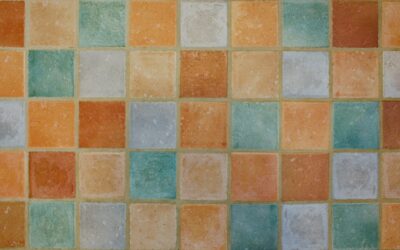
Look down in an older school, a diner, or a classic black-and-white bathroom and there is a good chance you are standing on Daltile Keystones mosaic tile. Keystones is an unglazed colorbody porcelain mosaic line, which means the color runs through the full body of each small chip instead of sitting in a glaze on top. Wear, scuffs and chips reveal the same color underneath, so the floor ages slowly.
Part of our Tile & Grout guide — explore the full guide →
That construction is why Keystones remains a favorite for shower floors, bathroom floors, patterned entry rugs and even pools. Daltile lists the line for floors, walls, countertops, shower floors and exterior floors, and the collection is made in the USA with recycled content. Small chips on mesh or dot-mounted sheets follow slopes easily and add many grout joints, which improves grip underfoot.
- Daltile Keystones Mosaic Colors, Blends and Chip Sizes
- Why Unglazed Colorbody Porcelain Works So Well
- Keystones on Shower Floors
- Pattern Ideas with Keystones
- Installing Keystones Mosaic Sheets
- Grout Color and Care
- Cost Ranges
- Troubleshooting Common Problems
- When to Call a Pro
- Daltile Penny Round Options: Matte Keystones or Glossy Glazed
- Frequently Asked Questions
Keystones should not be confused with similarly named flooring from other brands. This is a porcelain mosaic program, not a vinyl plank or laminate line. Colors and blends rotate over the years, so confirm current availability with a dealer before you plan a pattern around a specific shade.
Daltile Keystones Mosaic Colors, Blends and Chip Sizes
The daltile keystones mosaic program is large, and no single page lists every color, shape and blend. The table gathers the formats and color families that appear on Daltile’s collection page and consistently across dealer listings.
| Format | Typical sheet or piece | Best uses |
|---|---|---|
| 1 x 1 inch square | Mounted sheets, often about 12 x 24 inches | Shower floors, patterned bath floors, borders |
| 2 x 2 inch square | Dot-mounted on 12 x 24 inch sheets | Bathroom and shower floors, utility rooms |
| 2 inch hexagon | Mounted on about 12 x 24 inch sheets, matte or textured | Vintage-style bath floors |
| Penny round (about 1 inch) | Mounted on about 10 x 22 inch sheets, including printed patterns | Shower floors, retro baths, backsplashes |
| Blends (Keystone Blends) | Pre-mixed random color sheets in 1 x 1 and other shapes | Speckled floors that hide dirt |
| Trim and pool pieces | Bullnose corners, built-up base, 1 x 2 pool nosing | Finished edges, pool steps and coping areas |
Solid colors seen across listings include Arctic White, Black, Almond, Desert Gray, Urban Putty, Ocean Blue and Spa, along with speckled options such as Suede Gray Speckle and Desert Gray Speckle. The separate Keystone Blends series uses mixed-color sheets with names like Olive Blend, plus printed penny patterns such as Arctic White and Black in rosette and retro dot layouts. Keystones colors are sold in price groups, with lighter neutrals typically in the lowest group and saturated colors costing more.
Why Unglazed Colorbody Porcelain Works So Well
Glazed mosaics get their color and shine from a thin glass coating. Unglazed porcelain skips that coating, so the surface has a natural matte texture and the pigment runs through the tile. Three practical benefits follow.
- Durability: heavy foot traffic and chair legs cannot wear through to a different color, which is why the line appears in commercial spaces.
- Traction: a matte unglazed face plus frequent grout joints gives better grip than large glossy tile, especially on wet shower floors.
- Design freedom: because colors are consistent, you can mix solids into borders, rugs, checkerboards and lettering without worrying about glaze mismatches.
One trade-off: unglazed porcelain is slightly more prone to holding surface dirt in its texture than a glossy glaze. Regular cleaning with a pH-neutral cleaner and a scrub brush keeps it bright.
Keystones on Shower Floors
Shower floors are where this daltile keystone mosaic line shines. A shower pan slopes toward the drain, typically about 1/4 inch per foot, and large tiles cannot bend to follow that compound slope. One-inch and two-inch chips can.
- Choose 1 x 1 or 2 x 2 squares, hex or penny rounds. All follow slopes well; penny rounds carry the most grout and the most grip.
- Waterproof first. Install a sheet or liquid waterproofing membrane, or a traditional liner with a sloped mortar bed, before setting any tile.
- Pick a grout suited to wet areas. Many installers use a high-performance cement grout or epoxy grout for shower floors to reduce staining and mildew.
- Coordinate the walls. A popular combination is white subway tile on walls with a black, gray or speckled Keystones floor.
Pattern Ideas with Keystones
Because the line comes in many solid colors on the same chip size, designers use it like pixels. A few patterns that work well:
- Classic checkerboard: alternate 2 x 2 black and white sheets, or cut 1 x 1 sheets into a fine check.
- Bordered rug: run a field color across the room, then frame it with a band of a contrasting color two or three chips wide.
- Random blend: use a pre-mixed blend sheet, or make your own by pulling chips from three colors.
- Flower or rosette penny pattern: printed penny sheets create vintage motifs without hand placement.
- Lettering or numbers: custom mosaic work for entries, pools and commercial spaces; Daltile marks the line as customizable.
Before committing, lay a few full sheets on the floor and look at them from standing height. Patterns that look busy on a sample board often calm down across a whole room, and vice versa.
Installing Keystones Mosaic Sheets
Tools and materials
- Polymer-modified thinset suited to porcelain
- 3/16 inch V-notch or 1/4 inch square-notch trowel, depending on sheet backing and the box instructions
- Beating block or flat float and a rubber mallet
- Tile spacers or a straightedge to keep sheet joints matched to chip joints
- Utility knife to cut mesh, plus a wet saw or tile nippers for chip cuts
- Grout, grout float, sponges and buckets
Steps
- Prepare a flat, clean substrate. Mosaics telegraph every bump; fill low spots first.
- Snap layout lines. Start from the most visible area, such as the doorway or shower entry.
- Spread thinset in small sections. Mosaic sheets set fast, and thinset that skins over will not bond.
- Press sheets in and tap them flat. Use a beating block so all chips sit at one height.
- Match sheet joints to chip joints. The gap between sheets should equal the gap between chips; tile spacers help keep long runs straight.
- Clean thinset out of joints before it hardens so grout has room.
- Grout after the thinset cures, then sponge carefully, since mosaics hold more grout haze than large tile.
Grout Color and Care
Grout covers a large share of a mosaic surface, so its color shapes the final look as much as the tile does. A matching grout makes a solid floor read as one calm color. A contrasting grout, such as charcoal with white chips, emphasizes the grid and looks more vintage. For speckled colors and blends, a mid-gray or warm gray hides dirt well.
For cleaning, use a pH-neutral tile cleaner and a soft-bristle brush. Avoid bleach-heavy cleaners on colored grout and never mix cleaning chemicals. Sealing unglazed porcelain is generally not required, but sealing cement grout helps it resist stains. In showers, squeegee walls and floors after use to cut down on soap scum and mildew.
Cost Ranges
Keystones prices vary by color group, chip shape and region. In general:
- Solid neutral colors in 1 x 1 or 2 x 2: usually the most affordable, often in the mid single digits per square foot.
- Saturated colors, speckles and blends: higher price groups, sometimes noticeably more per square foot.
- Printed or custom patterns: priced per sheet and can run well above plain sheets.
- Installation: mosaics take more labor than large tile; shower floors with waterproofing typically cost several hundred to a few thousand dollars depending on size and prep.
Some colors are special-order with lead times of a week or more, so order early.
Troubleshooting Common Problems
- Visible sheet lines: sheet joints are wider or narrower than chip joints. Adjust with spacers and a straightedge as you set.
- Thinset squeezing up between chips: too large a trowel notch. Drop to a smaller notch and clean joints immediately.
- Uneven chips: not beaten in. Tap each sheet with a beating block.
- Grout haze on unglazed surface: remove promptly with clean water passes; use a haze remover rated for porcelain if it persists.
- Darkened grout in a shower: poor ventilation or soap residue. Clean with a neutral cleaner, run the fan, and consider sealing.
When to Call a Pro
Laying mosaic sheets on a flat bathroom floor is a manageable weekend project. Bring in a tile setter for shower pans and waterproofing, pools, intricate custom patterns or lettering, and floors over subfloors that flex. A failed shower pan can rot framing long before you notice, so a correct waterproof build is worth paying for.
Daltile Penny Round Options: Matte Keystones or Glossy Glazed
Daltile penny round tile comes in two broad types on the maker’s penny round page: matte unglazed Keystones penny rounds and glossy glazed penny rounds from a separate mosaic series. The matte version is the safer pick for shower and bathroom floors because of its grip, while the glossy version shines on backsplashes, shower walls and niches. Many bathrooms use both, with matte on the floor and glossy on the wall.
Matte vs Glossy Penny Rounds
| Feature | Matte unglazed (Keystones) | Glossy glazed |
|---|---|---|
| Best location | Shower floors, bath floors, entries | Backsplashes, shower walls, niches |
| Grip when wet | Good | Lower, not ideal for floors |
| Color depth | Color runs through the body | Color sits in the glaze |
| Look | Soft, vintage, chalky | Bright, reflective, more modern |
| Cleaning | Texture can hold surface dirt | Wipes clean easily |
Planning a Penny Round Layout
Penny rounds have more grout than square mosaics because of the gaps between circles, so plan on extra grout compared with a square chip of similar size. A matching grout makes the pattern look like a single soft texture. A contrasting grout, such as dark gray with white pennies, makes each circle pop and reads strongly vintage.
Sheet edges are the hardest part. Penny sheets interlock rather than meeting on a straight line, so dry-fit several sheets to see how they nest before you spread thinset. At walls, trim sheets so cut pennies land under the baseboard or against a curb. Around a center drain, remove individual pennies and nip the neighbors to fit, or use a square drain grate sized to land on whole pennies.
Printed Pattern Sheets
The Keystones range also includes printed Arctic White and Black penny sheets with the pattern already set, which saves hours of hand placement for flower and dot layouts. Order all sheets from one lot so the pattern colors match, and lay out the full floor before setting to center the pattern on the doorway or vanity.
- Add about 10 to 15 percent for cuts around drains and walls.
- Use a white thinset under light colors so gray mortar does not show through joints.
- Seal cement grout after it cures, especially on shower floors.
Frequently Asked Questions
Is Daltile Keystones glazed or unglazed?
The core Keystones mosaics are unglazed colorbody porcelain, so color runs through each chip and the surface is matte.
Can Keystones mosaic be used on a shower floor?
Yes. Daltile lists shower floors among its uses, and small chips follow drain slopes well. Install proper waterproofing first.
What sizes does Keystones come in?
Common formats include 1 x 1 and 2 x 2 squares, 2 inch hexagons and penny rounds, usually mounted on sheets around 12 x 24 inches (penny rounds on about 10 x 22 inch sheets), plus trim pieces.
What is the difference between Keystones and Keystone Blends?
Keystones covers solid and speckled colors, while Keystone Blends offers pre-mixed color sheets and printed patterns built from the same kind of porcelain chips.
Can Keystones be used outdoors or in pools?
Daltile lists exterior floors among its uses, and pool trim pieces exist. Confirm the specific color is rated for freeze-thaw or submerged use with your dealer.
What grout color looks best with Keystones?
Match the grout for a calm, solid look, or contrast it to highlight the grid. Mid-gray suits speckles and blends because it hides dirt.
Prefer to explore on your own?
See how new flooring looks in your actual room in seconds — free, no signup.
Try the free Floor Studio →