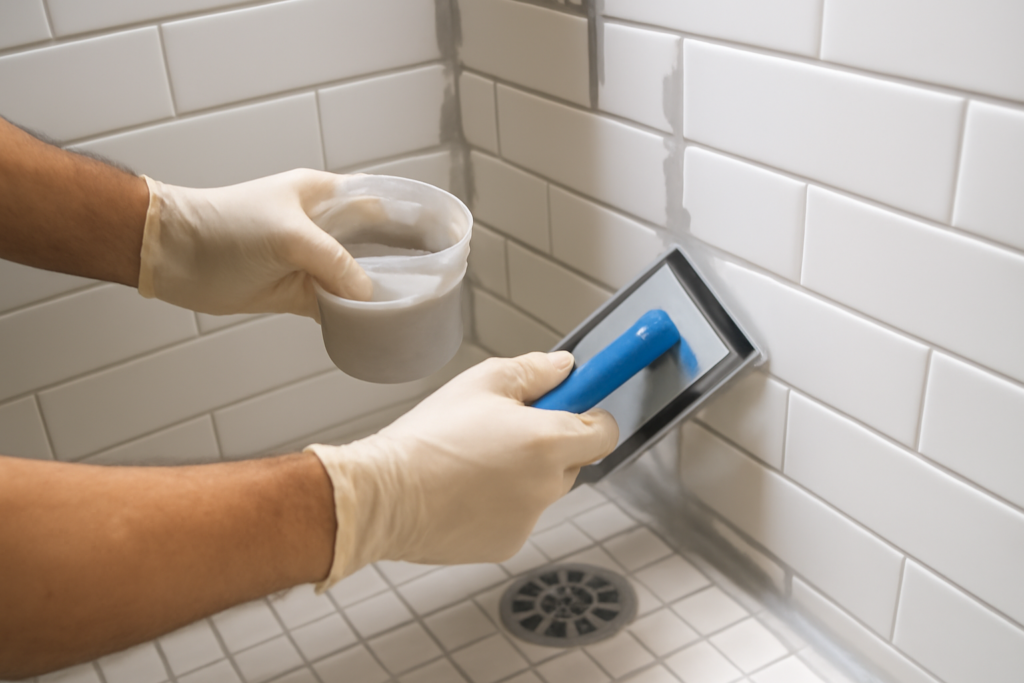
The grout lines are usually the first part of a tiled shower to look tired, turning gray, growing mildew, and crumbling long before the tile itself shows wear. Choosing epoxy grout for shower applications solves most of those headaches at the source. Unlike traditional cement grout, epoxy grout is nonporous, which means it resists water, stains, and the mold that thrives in wet bathrooms. For a high-moisture space you scrub constantly, that durability is hard to beat.
How Epoxy Grout Differs from Cement Grout
Cement grout is a sand-and-cement mix that cures into a porous, slightly absorbent material. That porosity is why it stains, harbors mildew, and needs periodic sealing. Epoxy grout, by contrast, is made from epoxy resins and a hardener that chemically cure into a dense, waterproof, plastic-like solid. Nothing soaks in, so it shrugs off soap scum, hard-water deposits, and the colored stains that ruin cement grout over time.
That same density makes epoxy far stronger and more chemical-resistant, which is why it shows up in commercial kitchens and labs as well as showers.
Why It Excels in Showers
A shower is the toughest environment in a typical home, with constant water, humidity, soap residue, and temperature swings. Epoxy grout handles all of it. Because it is nonporous, it never needs sealing and resists the pink and black mildew that plagues cement joints. It also holds its color far better, so white grout stays white instead of yellowing.
The bond strength is a bonus on shower floors and curbs, where movement and water exposure are highest. Once cured, epoxy grout is genuinely waterproof at the joint, adding a layer of protection to your waterproofing system.
The Trade-Offs
Epoxy grout is not a free lunch. The main drawbacks include:
- Harder to work with: it is stickier and sets faster than cement grout, leaving a shorter working window
- Higher cost: both the material and skilled labor run more than cement grout
- Demanding cleanup: epoxy haze must be wiped off the tile before it cures, or it becomes very difficult to remove
- Less forgiving on rough or porous tile: textured stone and unglazed tile can trap epoxy in their surface
For these reasons, many homeowners hire an experienced tile setter for epoxy work, especially on large or detailed showers.
Epoxy Grout Cost
Expect to pay more than you would for cement grout. As general guidance, epoxy grout material often runs from about $8 to $20 per pound, and a typical shower may need several pounds depending on tile size and joint width. Installed, professional epoxy grouting commonly adds a premium of roughly $2 to $5 per square foot over standard cement grout labor. The upfront cost is higher, but you save on sealing, repeated cleaning, and eventual regrouting, which often pays off over the life of the shower.
Safe Installation Tips
If you take on epoxy grout yourself, preparation and timing are everything. Epoxy contains chemicals, so handle it with care:
- Work in a well-ventilated space, open windows and run a fan to move air.
- Wear chemical-resistant gloves and eye protection, and follow the manufacturer’s safety instructions on the label.
- Mix only what you can apply within the product’s working time, usually well under an hour.
- Force the grout fully into the joints, then wipe haze off the tile promptly with the recommended cleaning solution before it cures.
- Do a second cleaning pass to catch any residue, since cured epoxy haze is stubborn to remove.
- Allow the full cure time before exposing the shower to water.
Test a small, inconspicuous area first if you are using porous or textured tile, and always follow the manufacturer’s specific directions for mixing, application, and cure.
Choosing the Right Color and Tile Pairing
Epoxy grout comes in a wide palette, and because it holds color so reliably, the shade you pick is the shade you keep for the life of the shower. A grout that closely matches the tile minimizes the visual grid and makes a small shower feel larger and calmer. A contrasting grout, by contrast, highlights the tile pattern and suits geometric or subway layouts where you want the lines to show.
Tile choice affects how easily the job goes. Smooth, glazed porcelain and ceramic release epoxy haze readily and are the most forgiving surfaces. Honed stone, textured tile, and unglazed porcelain are riskier, because the epoxy can lodge in surface pores and prove very hard to clean. If your tile is textured, ask your supplier about a grout-release product or run a generous test patch before grouting the whole shower.
Epoxy Grout Versus Sealed Cement Grout
Some homeowners weigh epoxy against simply sealing cement grout well. Sealing helps, but it is a temporary fix. A sealer sits on or just below the surface and wears off with cleaning and foot traffic, so cement grout in a shower needs resealing every year or two to keep resisting water and mildew. Miss a cycle and stains and mold start creeping back into the joints.
Epoxy grout builds the water resistance into the material itself, so there is no sealer to reapply and no maintenance window to forget. For a low-use guest bath, sealed cement grout may be perfectly adequate and easier to install. For a primary shower that runs every day, the set-it-and-forget-it nature of epoxy usually justifies the added cost and effort.
Maintenance and Longevity
Once cured, epoxy grout is remarkably low-maintenance. A regular wipe with a mild bathroom cleaner keeps it looking fresh, and there is no sealing schedule to remember. Avoid abrasive pads that could dull the surface, and rinse thoroughly after cleaning. With proper installation, epoxy grout can last the life of the tile, often 15 to 20 years or more without regrouting.
Is It Worth It for Your Shower?
For a wet, high-use shower that you would rather not scrub and reseal every year, epoxy grout is one of the smartest upgrades available. The higher price and trickier installation are real, but the payoff is a stain-resistant, mold-resistant, waterproof joint that holds its color for decades. If you are remodeling or building a new shower, it is well worth considering, either as a DIY project with careful prep or a job for a seasoned tile installer.