Understanding epoxy resin flooring cost before starting your project prevents budget surprises and helps you choose the right system for your space. Epoxy floors range from affordable garage coatings to high-end metallic finishes that rival luxury flooring in appearance and price. The final cost depends on the type of epoxy, floor condition, square footage, and whether you hire a professional or tackle it yourself.
- Average Epoxy Resin Flooring Costs
- Cost Factors That Affect Your Price
- Residential Epoxy Flooring Costs
- Commercial Epoxy Flooring Costs
- Metallic Epoxy vs. Standard Epoxy Costs
- DIY vs. Professional Installation
- DIY Epoxy: What You Save and What You Risk
- Professional Epoxy: What You Get
- DIY vs. Pro Cost Comparison (500 sq ft Garage)
- Hidden Costs to Budget For
- How to Save Money on Epoxy Flooring
- Epoxy Flooring Cost vs. Other Options
- Final Thoughts
This guide breaks down every cost component so you can budget accurately for your residential or commercial epoxy project.
Average Epoxy Resin Flooring Costs
Here is a quick overview of what you can expect to pay:
| Epoxy Type | DIY Cost (per sq ft) | Professional Cost (per sq ft) |
|---|---|---|
| Basic solid-color epoxy | $1.50 – $3.00 | $4.00 – $7.00 |
| Decorative flake epoxy | $2.00 – $4.00 | $5.00 – $9.00 |
| Metallic epoxy | $4.00 – $7.00 | $8.00 – $15.00 |
| Quartz broadcast epoxy | $3.00 – $5.00 | $6.00 – $12.00 |
| Self-leveling epoxy | $3.50 – $6.00 | $7.00 – $14.00 |
| Commercial/industrial epoxy | N/A (pro only) | $6.00 – $18.00 |
For a standard 2-car garage (400-500 sq ft), expect to pay $600-$2,000 for a DIY installation or $2,000-$5,000 for professional work. For a detailed overview of epoxy systems, visit our epoxy flooring guide.
Cost Factors That Affect Your Price
Floor Condition and Preparation
Floor preparation is often the most labor-intensive and costly part of an epoxy project. The concrete must be clean, dry, free of coatings, and properly profiled for the epoxy to bond.
- Clean concrete in good condition: Minimal prep needed. Acid etching or light grinding may suffice. Adds $0.50-$1.00 per sq ft to professional costs.
- Concrete with existing paint or sealer: The old coating must be fully removed by diamond grinding. Adds $1.00-$3.00 per sq ft.
- Cracked or damaged concrete: Cracks must be filled with epoxy filler or polyurea. Spalling and pitting require patching with a cementitious repair compound. Adds $1.00-$4.00 per sq ft depending on severity.
- Moisture issues: High moisture vapor transmission requires a moisture mitigation system before epoxy application. This can add $2.00-$5.00 per sq ft — sometimes more than the epoxy itself.
Square Footage
Larger projects cost less per square foot because mobilization, equipment, and setup costs are spread across more area. A 200 sq ft bathroom floor costs more per square foot than a 2,000 sq ft warehouse floor.
- Under 200 sq ft: Highest per-sq-ft pricing due to minimum charges
- 200-500 sq ft: Standard residential pricing
- 500-2,000 sq ft: Volume discounts begin
- 2,000+ sq ft: Best per-sq-ft rates, especially for commercial projects
Number of Coats
A proper epoxy floor system involves multiple layers, and the number of coats directly impacts cost:
- Primer coat: Penetrates the concrete and provides adhesion for subsequent layers. Required for most systems.
- Base/body coat: The main epoxy layer that provides color and thickness. One coat is standard; two coats are recommended for high-traffic or commercial applications.
- Topcoat: A clear polyurethane, polyaspartic, or epoxy topcoat that provides UV resistance, chemical resistance, and gloss. Essential for metallic and decorative floors.
Each additional coat adds $1.00-$3.00 per square foot in materials and labor.
Geographic Location
Labor rates vary significantly by region. Professional epoxy installation in high-cost-of-living areas (Northeast, West Coast, major metro areas) runs 30-50% higher than in the Southeast or Midwest. Material costs are relatively consistent nationwide, but shipping heavy epoxy products to remote areas can add expense.
Residential Epoxy Flooring Costs
Garage Floors
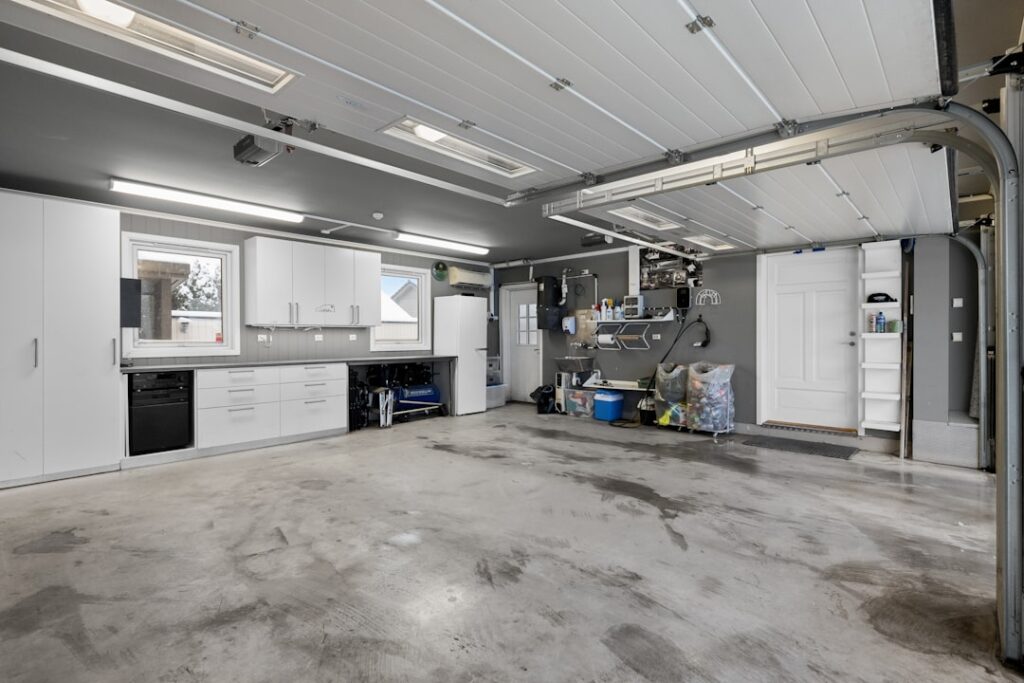
Garage floors are the most common residential epoxy application. Pricing for a standard 2-car garage (450-500 sq ft):
| System | DIY Total | Professional Total |
|---|---|---|
| Basic solid color | $600 – $1,200 | $2,000 – $3,500 |
| Decorative flake | $800 – $1,800 | $2,500 – $4,500 |
| Metallic | $1,800 – $3,500 | $4,000 – $7,500 |
| Full broadcast quartz | $1,500 – $2,500 | $3,000 – $6,000 |
Basement Floors
Basements present unique challenges due to moisture issues common below grade. A moisture test is essential before committing to epoxy. Budget an extra $500-$2,000 for moisture mitigation if needed. Basement epoxy costs are similar to garage pricing on a per-square-foot basis.
Interior Living Spaces
Epoxy in kitchens, living rooms, and bathrooms costs more than garage applications because the finish quality must be higher and furniture, fixtures, and walls require protection during application. Expect to pay 20-30% more per square foot than garage pricing for the same system.
Commercial Epoxy Flooring Costs
Commercial and industrial epoxy systems cost more because they require thicker builds, specialized formulations, and compliance with industry standards.
| Application | System Type | Cost per Sq Ft (Installed) |
|---|---|---|
| Retail/showroom | Decorative metallic or quartz | $8.00 – $15.00 |
| Restaurant kitchen | Non-slip quartz broadcast | $8.00 – $14.00 |
| Warehouse | Heavy-duty solid color | $4.00 – $8.00 |
| Medical facility | Self-leveling with cove base | $10.00 – $18.00 |
| Manufacturing plant | Chemical-resistant novolac | $10.00 – $20.00 |
| Auto dealership | Polyaspartic with flake | $6.00 – $12.00 |
Commercial projects also involve additional costs for off-hours installation (to avoid business disruption), fast-cure systems, and safety markings or line striping.
Metallic Epoxy vs. Standard Epoxy Costs
Metallic epoxy creates a dramatic, one-of-a-kind floor with swirling, three-dimensional effects that resemble molten metal, ocean waves, or polished marble. It is the most visually striking epoxy option — and the most expensive.
Why Metallic Costs More
- Material cost: Metallic pigments are significantly more expensive than standard colorants. A metallic epoxy kit for a 2-car garage costs $800-$1,500 vs. $200-$500 for a standard kit.
- Application skill: Metallic epoxy requires artistic technique to create the desired pattern. The installer manipulates the wet epoxy with tools, solvents, and blowers to create movement and depth. This takes experience and time.
- Multiple layers: Metallic floors typically require a tinted base coat, the metallic body coat, and a clear topcoat — three layers minimum vs. two for basic systems.
- No room for error: Mistakes in metallic application are difficult or impossible to fix once the epoxy begins to set. This risk factor is priced into professional quotes.
Metallic Epoxy Price Range
- DIY: $4.00-$7.00 per sq ft in materials. Recommended only for experienced DIYers due to the technique required.
- Professional: $8.00-$15.00 per sq ft installed. Premium installers in major markets may charge $18-$25 per sq ft for custom multi-color designs.
DIY vs. Professional Installation
DIY Epoxy: What You Save and What You Risk
A DIY garage floor epoxy project saves $1,500-$4,000 compared to hiring a professional. But the savings come with significant risks:
- Surface preparation: Proper concrete grinding requires a walk-behind grinder ($200-$400 rental per day) and experience using it. Acid etching kits are cheaper but provide inferior adhesion.
- Application timing: Epoxy has a limited working time (pot life). Once mixed, you have 20-45 minutes to apply before it begins to harden. Large areas can be difficult to complete in time.
- Temperature and humidity: Epoxy application requires specific temperature (50-85 degrees F) and humidity (under 85%) conditions. Applying outside these parameters causes adhesion failure, bubbling, or clouding.
- Failure costs: If a DIY epoxy floor fails (peeling, bubbling, hot-tire pickup), removal costs $2-$5 per sq ft — sometimes more than hiring a professional from the start.
Professional Epoxy: What You Get
- Proper diamond grinding: Professionals use industrial grinders that create the ideal surface profile for epoxy adhesion. This alone is the biggest factor in long-term performance.
- Commercial-grade products: Pros use 100% solids epoxy (vs. the 40-60% solids in most DIY kits), which builds a thicker, harder, more durable floor.
- Warranty: Most professional installers offer 5-15 year warranties against peeling, delamination, and hot-tire pickup.
- Timeline: A professional crew completes a 2-car garage in 1-2 days, including preparation. DIY projects typically take a full weekend plus 3-7 days of cure time before use.
DIY vs. Pro Cost Comparison (500 sq ft Garage)
| Cost Category | DIY | Professional |
|---|---|---|
| Surface preparation | $100 – $400 (rental + supplies) | Included |
| Epoxy materials | $400 – $1,200 | Included |
| Tools and supplies | $100 – $250 | Included |
| Labor | Your time (8-16 hours) | $1,200 – $3,000 |
| Total | $600 – $1,850 | $2,500 – $5,000 |
| Warranty | Material warranty only | 5-15 year labor + material |
Hidden Costs to Budget For
Beyond the epoxy itself, several costs catch homeowners off guard:
- Concrete repairs: Crack filling, spall patching, and leveling can add $200-$1,000 to a garage project
- Moisture testing: Professional moisture testing costs $200-$500 but prevents catastrophic adhesion failure
- Moisture mitigation: If moisture levels are too high, a mitigation system adds $2-$5 per sq ft
- Moving contents: Everything must be removed from the space. If you need a temporary storage solution, factor in the cost.
- Downtime: The floor cannot be used during curing. Most systems require 24-72 hours before foot traffic and 5-7 days before vehicle traffic.
- Cove base: Running epoxy up the wall 4-6 inches creates a seamless, cleanable transition. Adds $5-$15 per linear foot professionally.
How to Save Money on Epoxy Flooring
- Do your own prep: Rent a grinder and prep the concrete yourself, then hire a professional to apply the epoxy. This splits the difference between full DIY and full professional service.
- Choose solid color over decorative: Basic solid-color epoxy with a clear topcoat costs 40-60% less than metallic or full-broadcast quartz systems.
- Combine with neighbors: Some epoxy installers offer discounts when they do multiple garages in the same neighborhood on one trip.
- Off-season scheduling: Fall and early spring are typically slower for epoxy installers, so you may negotiate better pricing.
- Get multiple quotes: Obtain at least three written quotes. Pricing varies enormously between contractors.
Epoxy Flooring Cost vs. Other Options
To put epoxy resin flooring cost in perspective, here is how it compares to alternative flooring solutions for concrete spaces:
| Flooring Type | Installed Cost per Sq Ft | Lifespan |
|---|---|---|
| Basic epoxy | $4.00 – $7.00 | 10-20 years |
| Metallic epoxy | $8.00 – $15.00 | 15-25 years |
| Polyaspartic coating | $5.00 – $10.00 | 10-20 years |
| Interlocking garage tiles | $3.00 – $8.00 | 10-15 years |
| Polished concrete | $3.00 – $12.00 | 20+ years |
| Concrete stain + sealer | $2.00 – $5.00 | 5-10 years (reseal needed) |
For more information on concrete finishing options, explore our concrete flooring guide.
Final Thoughts
Epoxy resin flooring cost ranges from as low as $1.50 per square foot for a basic DIY garage coating to $20 or more per square foot for a professional commercial installation with specialized finishes. The biggest cost drivers are surface preparation, epoxy system type, and labor. For most residential garage projects, a professional decorative flake system at $5-$9 per square foot offers the best balance of appearance, durability, and value.
Prefer to explore on your own?
See how new flooring looks in your actual room in seconds — free, no signup.
Try the free Floor Studio →