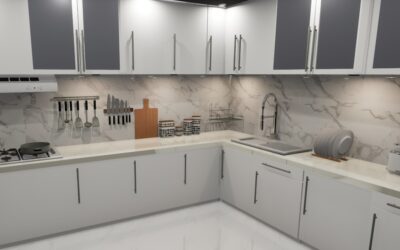
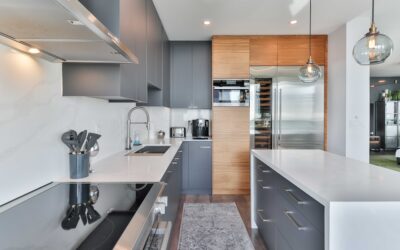
Greige kitchen cabinets solve the problem that plagued a decade of all-white kitchens: coldness. By blending gray and beige into a single warm neutral, greige gives you the clean, timeless look of a painted kitchen without the clinical chill that pure gray or stark white can bring.
Part of our Kitchen Remodeling guide — explore the full guide →
The word itself is a mash-up of “gray” and “beige,” and that dual nature is exactly why it works in so many homes. It reads as a soft, sophisticated backdrop that flatters everything from marble counters to brass hardware. Here is how to pick the right shade and pair it so your kitchen looks designed rather than default.
- What Exactly Is Greige
- Why Greige Beats Plain White or Gray
- Best Paint Colors for Greige Cabinets
- Warm Greige vs. Cool Greige
- Pairing Greige Cabinets with Countertops
- Hardware, Backsplash, and Walls
- Two-Tone and Island Ideas
- How to Test a Greige Before You Commit
- Door Styles and Finishes
- Costs and How to Get the Look
What Exactly Is Greige
Greige is a neutral that sits on the spectrum between gray and beige, borrowing warmth from one and depth from the other. Push it toward gray and it feels cooler and more modern; pull it toward beige and it turns cozy and traditional. That flexibility is the whole appeal, because you can dial the exact temperature to suit your room.
Undertone is everything with greige. Depending on the specific paint, a greige can lean:
- Warm (yellow or tan undertone) — reads almost like a soft taupe, cozy in north-facing rooms with cool light.
- Cool (blue or green undertone) — reads closer to a warmed-up gray, crisp and contemporary.
- Purple or pink undertone — the trap. Some greiges flash mauve under LED lighting, which is why you must test before you commit.
Why Greige Beats Plain White or Gray
Greige has quietly become the go-to cabinet color for good reasons:
- It hides dirt better than white. The slight depth of color forgives fingerprints, splatter, and scuffs that scream on bright white doors.
- It never feels cold. Gray kitchens from the mid-2010s often aged into a chilly, blue-tinged look. Greige keeps the neutral appeal while staying warm and inviting.
- It works with almost any accent. Because it holds both gray and beige, greige bridges cool and warm finishes, so your stone, wood, and metal choices all have room to coordinate.
- It photographs and resells well. Neutral, warm, and current, greige appeals to the widest pool of buyers if you sell.
Best Paint Colors for Greige Cabinets
If you are painting, a handful of proven colors deliver reliable greige results. Always buy a sample quart and paint a large board before you spray a whole kitchen:
- Sherwin-Williams Agreeable Gray (SW 7029) — the most popular greige, a balanced warm-neutral that reads slightly beige and rarely goes wrong.
- Sherwin-Williams Accessible Beige (SW 7036) — warmer and beige-leaning, cozy for traditional kitchens.
- Benjamin Moore Revere Pewter (HC-172) — a classic greenish-gray greige, richer and a touch deeper.
- Benjamin Moore Edgecomb Gray (HC-173) — lighter and airier than Revere Pewter, great for smaller kitchens.
- Sherwin-Williams Anew Gray (SW 7030) — a deeper greige with subtle purple undertones, best in rooms with plenty of natural light.
For a durable finish, have cabinets sprayed in a satin or semi-gloss cabinet-grade enamel. Semi-gloss wipes cleanest around the sink and stove; satin hides surface imperfections better on older doors.
Warm Greige vs. Cool Greige
Choosing between a warm or cool greige comes down to your kitchen’s light and your finishes. Rooms that face north or east get cooler, bluish daylight, so a warm greige balances it and prevents a dreary look. South- and west-facing rooms flood with warm light, which lets a cooler greige stay neutral instead of turning yellow.
Match the undertone to your fixed elements too. If your floor and counters have beige and cream tones, a warm greige harmonizes. If you are working with cool grays, black accents, and marble, a cooler greige keeps the palette consistent. Fighting undertones is the fastest way to make an expensive kitchen feel slightly off without anyone knowing why.
Pairing Greige Cabinets with Countertops
Greige is forgiving, but the best countertops play off its undertone:
- White quartz with soft gray veining — clean and bright, the safest match for any greige.
- Marble or marble-look quartz — elegant and upscale; the gray veins echo the gray in greige beautifully.
- Warm cream or tan granite — cozy and traditional, ideal with a beige-leaning greige.
- Black or charcoal counters — high contrast and modern, sharp against a lighter greige for a two-tone effect.
A common designer move is a slightly warm white or cream counter, which keeps the whole kitchen soft rather than stark.
Hardware, Backsplash, and Walls
Metal finish sets the personality of greige kitchen cabinets. Brushed brass and champagne gold add warmth and a current, upscale feel. Matte black brings crisp, modern contrast. Oil-rubbed bronze leans traditional, and brushed nickel stays quietly neutral. Because greige holds both warm and cool notes, all four finishes can work; pick the one that matches your faucet and lighting.
For the backsplash, white subway tile is the timeless default, while a warm-white zellige or a soft cream picket tile adds texture without competing. On walls, go a shade or two off your cabinets. Pairing greige cabinets with a creamy white or a paler greige on the walls creates a layered, tonal look; a soft sage or muted blue-gray adds gentle color while keeping the neutral base.
Two-Tone and Island Ideas
Greige shines in a two-tone kitchen. Keep the perimeter cabinets greige and paint the island a deeper, coordinating color for depth. A few pairings that consistently look designed:
- Greige perimeter with a warm walnut wood island — the wood grounds the room and adds organic warmth.
- Greige uppers with a charcoal or navy base — grounded and modern, drawing the eye down.
- Greige cabinets with a deep green island — fresh and current without feeling trendy.
How to Test a Greige Before You Commit
Greige is the single trickiest neutral to get right, because its undertone shifts more than any other color under changing light. Never choose from a tiny paint chip or a screen. Instead, follow a simple three-step test that saves you from a repaint:
- Paint a large sample. Coat a two-by-two-foot poster board or a spare cabinet door with two coats of your candidate color. Small chips lie; a big sample tells the truth.
- Move it around the room. Prop the board next to your counter, near the window, and in the darkest corner. A greige that looks perfect by the sink can flash purple or green in a shadowed pantry nook.
- View it at three times of day. Check the color in morning light, at noon, and under your evening bulbs. If it stays neutral all three times, you have a winner.
Pay special attention to your artificial lighting. Warm 2700K bulbs push greige toward beige, while cooler 4000K bulbs pull it toward gray. Whatever bulbs you live with should guide the final call, since that is the light you see most nights.
Door Styles and Finishes
Greige suits nearly every door profile, but the pairing sets the mood. A shaker door is the safe, timeless default that flatters greige in any room. A flat-panel slab reads modern and minimal, letting the color carry the whole look. A raised-panel or beaded shaker leans traditional and adds subtle shadow lines that give a large greige kitchen visual depth.
On sheen, cabinet-grade enamel in satin or semi-gloss holds up to daily wiping and resists the yellowing that plagues cheaper paints over time. Skip flat and matte finishes near the stove and sink, where grease and water leave marks that are hard to scrub off without burnishing the surface.
Costs and How to Get the Look
Repainting existing cabinets greige is the budget path, typically running $3,000 to $8,000 for a professional spray finish on a standard kitchen, or a few hundred dollars in materials if you brush and roll them yourself. New greige cabinets follow standard cabinet pricing: stock runs about $100 to $300 per linear foot installed, semi-custom lands near $150 to $650, and a typical 10-by-10 kitchen totals $8,000 to $16,000 in semi-custom.
Whichever route you take, buy samples, test them on a large board, and view the color at morning, midday, and night under your own bulbs before committing. Greige kitchen cabinets reward that patience with a warm, timeless neutral that outlasts the all-white trend and flatters nearly every finish you pair with it.